
Employee SNS Profiles: The New Frontier of Reverse Recruitment Screening
Benefits of Employees Social Network Sites Profiles for Job Applicants
This paper investigates how job applicants utilize the Social Network Site (SNS) profiles of current employees to gather information during the recruitment process. Using Social Capital Theory and a survey of 362 respondents, the study highlights the strategic importance of employee branding on both business (e.g., LinkedIn) and private (e.g., Facebook) SNS platforms.
TL;DR
In a "candidate market" where talent holds the leverage, the script is flipped: applicants are now screening you as much as you screen them. This research proves that potential hires meticulously analyze the SNS profiles (LinkedIn, Facebook) of current employees to find "realistic" info, prepare for interviews, and put a face to a name. Business SNS platforms remain the king of professional influence, with profile pictures and career paths acting as critical trust signals.
Backgound: The Shift to a Candidate Market
The labor market is no longer a one-way street. Digitalization has empowered job seekers to perform "Reverse Screening." While HR departments have spent a decade learning how to vet candidates on social media, they have largely ignored the signals their own employees are sending out. This study positions employee profiles as a strategic asset—or a potential risk—in the war for talent.
Problem & Motivation: The Information Gap
Why do candidates look at employee profiles? Traditional job ads are often viewed as "polished" or "official" propaganda. Applicants crave the "ground truth."
The authors identify a gap in existing literature: most research looks at how companies use SNS to find people, but very little explores how candidates use employee profiles to judge companies. The motivation here is to help companies understand how to leverage "Social Capital"—the resources and trust embedded in social networks—to become more attractive to job seekers.
Methodology: Business vs. Private Lens
The study surveyed 362 participants, primarily students and employed professionals in Germany (a high-skill demographic). They compared two types of networks:
- Business SNS (e.g., LinkedIn): Focused on professional career steps, skills, and corporate exchange.
- Private SNS (e.g., Facebook): Focused on leisure, hobbies, and personal social circles.
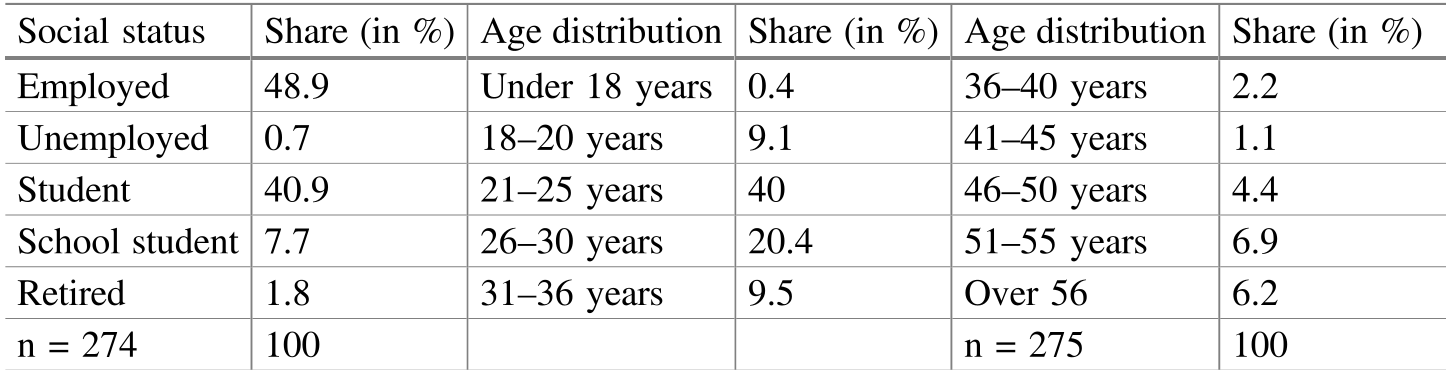
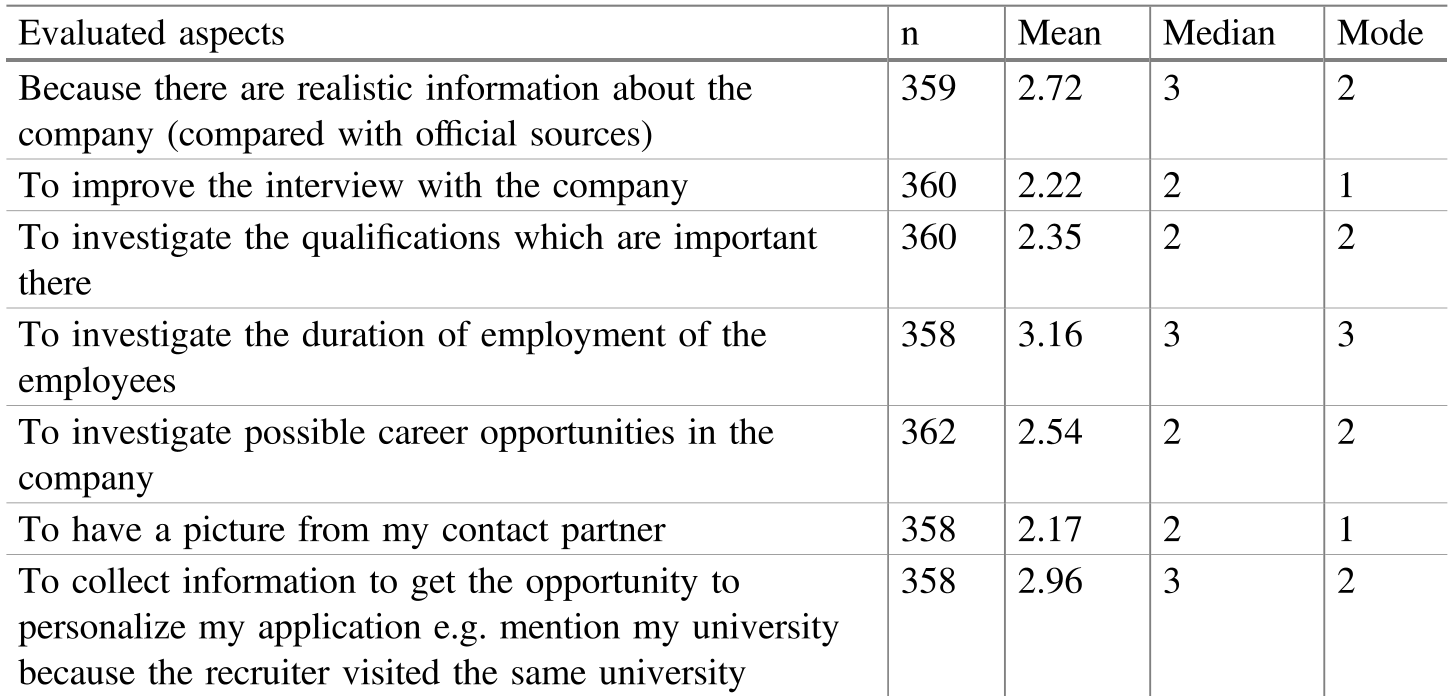
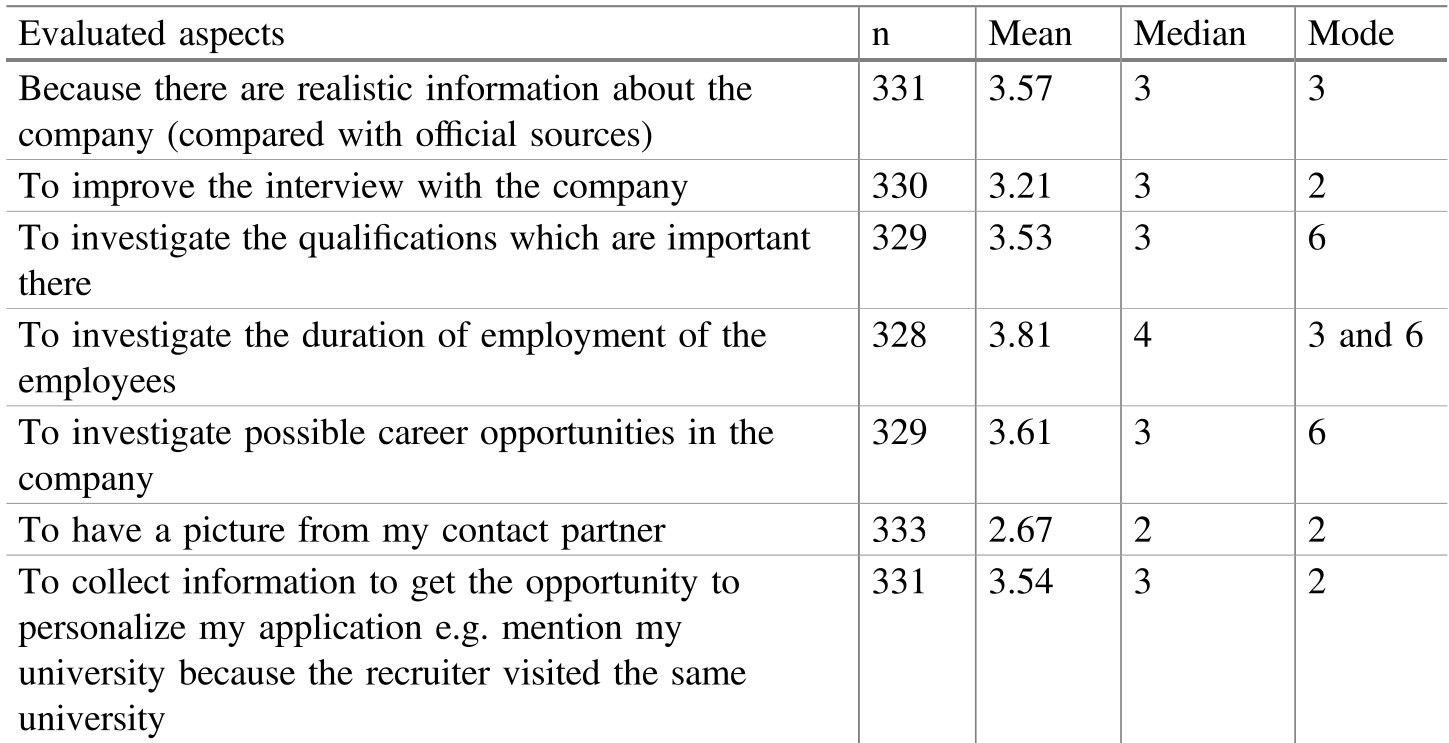
The researchers used a 1-6 Likert scale, where 1 represents "Full Agreement." By analyzing the mean, median, and mode, they determined which factors actually drive applicant behavior.
Key Findings: What Applicants Search For
1. The Power of the Profile Picture
Across both business and private networks, the most sought-after item was the profile picture of the contact partner. This isn't just vanity; it's about "humanizing" the recruiter and identifying the "dress code" and "vibe" of the office.
2. Interview Preparation & Personalization
On Business SNS, a staggering percentage of applicants use employee profiles to "improve the interview" (Mean: 2.22). They look for:
- Shared Backgrounds: "Did the recruiter go to my university?"
- Qualifications: "What skills do the people currently in this role actually have?"
- Career Paths: "How long do people stay at this company?"
3. Business vs. Private Dichotomy
While Business SNS are used for vetting qualifications (Mode: 2), Private SNS are viewed with more skepticism for professional ends. For many users, investigating career opportunities on Facebook was a bridge too far (Mode: 6), indicating that candidates clearly distinguish between professional and personal digital "zones."
Critical Insight: Social Capital as a Recruiting Tool
The study concludes that Social Capital Theory holds true in the digital age. The "Ties" (relationships) between individuals in a network provide exclusive access to information. When a candidate views an employee's profile, they are essentially trying to "borrow" some of that employee's social capital to reduce the uncertainty of switching jobs.
Final Summary & Corporate Implications
This paper is a wake-up call for HR departments.
- Branding is Personal: Your employees are your brand ambassadors. Their LinkedIn profiles are often the first thing a high-value candidate sees.
- Guideline and Support: Companies should provide corporate identity guidelines for business SNS profiles—not to control employees, but to support them in presenting a professional image that benefits both the individual and the firm.
- Limit Private Interference: Tread carefully with private SNS (Facebook). Employees value the separation of work and life, and heavy-handed corporate interference in private spaces could backfire and hurt the employer's reputation.
The Takeaway: If you want the best talent, make sure your team’s digital presence reflects a company worth joining.