
Social Network Sites in Engineering Education: Bridging the Gap Between Entertainment and Learning
Benefits and limitations of social network sites for engineering education — A review study
This paper provides a comprehensive review of the integration of Social Network Sites (SNSs) in higher education, specifically focusing on engineering students. It identifies key platforms—ranging from profile-based tools like Facebook to content-based systems like YouTube—and evaluates their effectiveness through the lens of Connectivism.
TL;DR
Social Network Sites (SNSs) are no longer just for leisure; they are becoming vital components of the modern academic ecosystem. This review explores how engineering education can leverage the "digital native" status of students to foster collaboration, while highlighting the critical need for structured pedagogical frameworks to avoid the pitfalls of decreased critical thinking.
Context & Motivation: The Digital Native Paradox
Most engineering students today are "digital natives"—technology is not a tool they use, but the environment they inhabit. Despite this, there is a lingering disconnect between how students use platforms like Facebook or YouTube for social life and how they use them for technical mastery.
The author argues that while 100% of US higher institutions use some form of social media, the engineering discipline specifically lacks a "manual" for purposeful implementation. The motivation for this study is to move beyond the superficial use of social media and understand its deep pedagogical potential through the lens of Connectivism.
Mapping the Social Landscape
The paper begins by classifying the chaotic world of social platforms into a structured taxonomy. Understanding these categories is essential for educators to choose the right tool for the right task:
- Profile-Based (e.g., Facebook, LinkedIn): Focused on interpersonal connections and "soft" networking.
- Content-Based (e.g., YouTube, Instagram): Prime for sharing lectures and visual engineering demonstrations.
- White-Label (e.g., Ning): Private, customized communities for specific research groups.
- Microblogs (e.g., Twitter/X): Effective for quick updates and real-time class engagement.
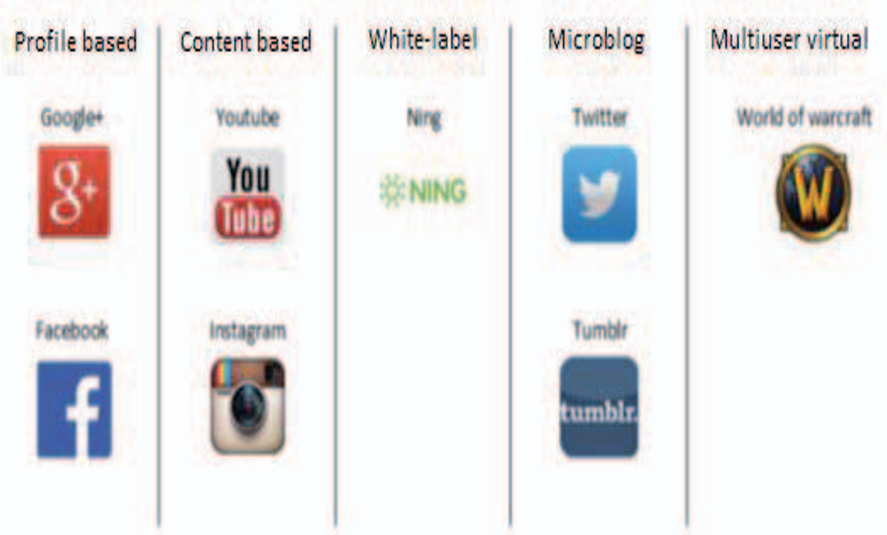 Fig 1: A structured view of how various platforms serve different educational functions.
Methodology: The Connectivist Approach
The core insight of the paper is the application of Connectivism. Unlike traditional learning theories (which assume learning happens only inside a person), Connectivism posits that learning is a process of connecting specialized nodes or information sources.
In an engineering context, this means:
- Acquisition: Using Flickr or Wikipedia to gather facts.
- Participation: Engaging in peer-review on social walls.
- Knowledge Creation: Collaboratively developing artifacts through shared media.
The Double-Edged Sword: Benefits vs. Limitations
The study synthesizes a crucial list of trade-offs that every engineering department should consider.
| Benefits | Limitations |
|---|---|
| Overcoming isolation/shyness | Reduced reasoning and critical thinking |
| Seamless material exchanges | Distraction from core study tasks |
| High student involvement & motivation | Misuse (Cyber-bullying) |
| Personalized learning "on-the-go" | Lack of long-term memory retention |
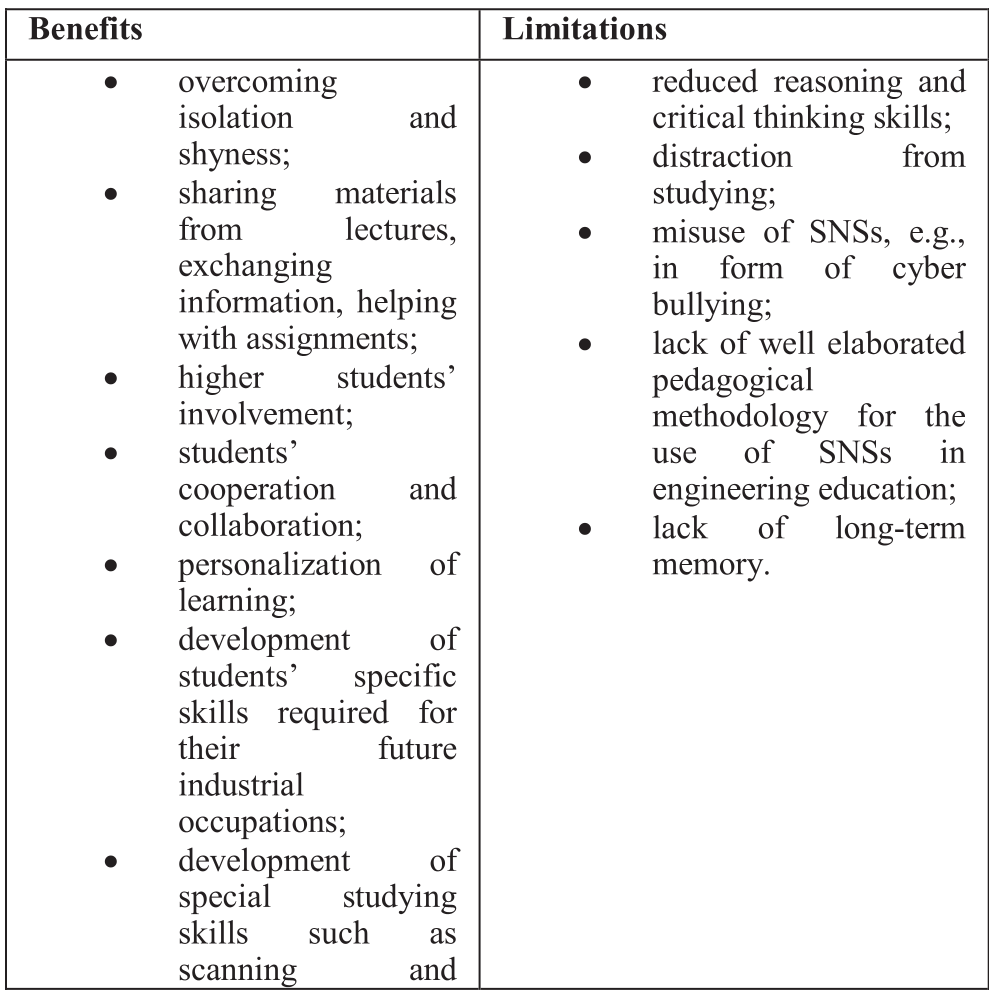 Table 1: The inherent conflict between the connectivity of SNSs and the depth required for engineering.
Critical Insight & Future Outlook
The most striking takeaway is the concept of "Hidden Cognitive Costs." While SNSs are brilliant for engagement, they can erode the deep, concentrated work necessary for complex engineering calculations and reasoning.
The author concludes that for SNSs to succeed in engineering:
- Planning is mandatory: We cannot simply "add" a Facebook group to a course and call it innovation.
- Facilitation is key: Teaching assistants must act as moderators to steer social interactions toward academic outcomes.
- The Bridge: SNSs serve as the bridge between informal peer support and formal institutional curriculum, creating a Personal Learning Network (PLN) that lasts beyond graduation.
Final Thought: The future of engineering education isn't about fighting social media; it's about engineering the social media experience to serve the curriculum.