
Breaking Vertical Silos: How Real-Time Social Networks Revolutionize Technical Documentation
The benefits of communicating and collaborating in a real-time enterprise social network
The paper explores the implementation and benefits of Salesforce Chatter, a real-time Enterprise Social Network (ESN), within the technical documentation team at salesforce.com. It highlights how transitioning from email-centric workflows to social collaboration significantly improves communication, knowledge sharing, and agile project management across functional boundaries.
TL;DR
The shift from traditional email to Enterprise Social Networks (ESNs) like Salesforce Chatter has transformed technical writing from a solitary task into a dynamic, community-driven process. By centering communication around "People" and "Groups" rather than "Threads," salesforce.com has eliminated the "Reply All" fatigue and version control nightmares, creating a more agile and transparent documentation lifecycle.
The Email Bottleneck: Why Traditional Collaboration Fails
In a traditional corporate setting, information is often "trapped" in private inboxes. The author, Sabine Bennett, highlights a common but painful scenario: a project manager emails a plan, receives five different versions back via "Reply All" or individual replies, and must manually merge them. This process is:
- Disassociated from context: Conversations aren't linked to the actual data or records.
- Hidden and unsearchable: Vital "tribal knowledge" disappears into personal archives.
- Inefficient: New team members have no access to previous decision-making history.
Methodology: The Shift to a "Social Enterprise"
The core insight of the Salesforce model is treating the enterprise as a social graph. Instead of siloed departments, the framework utilizes two primary levers:
1. The Power of Groups and "Following"
Writers no longer wait for information to be pushed to them; they "Pull" it by following specific developers, product managers, or records.
- Product Team Groups: These serve as central repositories for design specs and UI mockups.
- Public vs. Private Groups: Public groups allow for crowdsourced problem solving (e.g., a writer asking a formatting question and getting an instant answer from a peer).
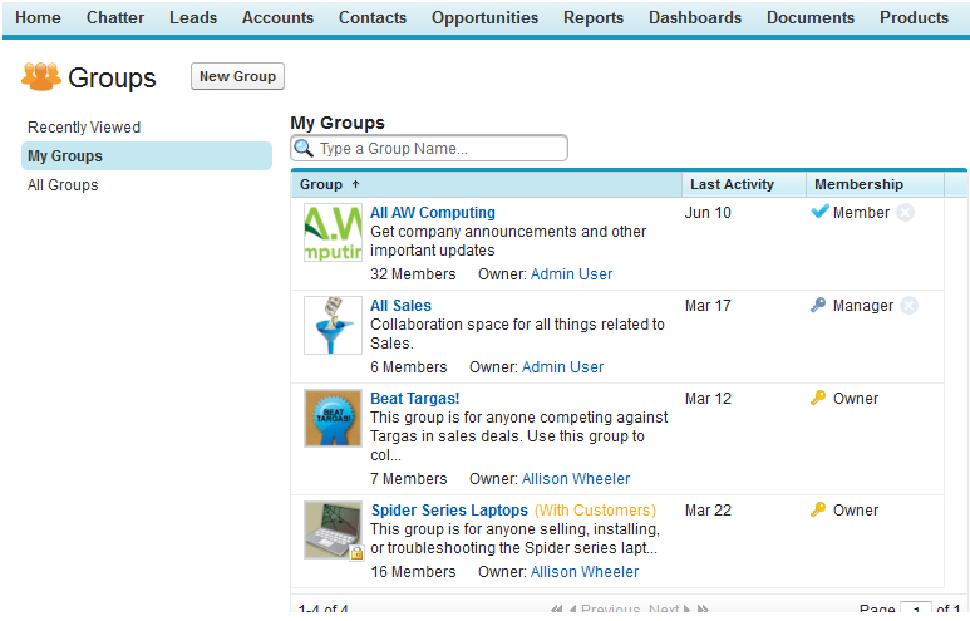 Fig 1: Chatter Groups facilitate instant access to Subject Matter Experts (SMEs).
2. Record-Level Collaboration
Unlike consumer social networks, Chatter allows users to follow Records (documents, tasks, or bug reports). When a document is updated, everyone following it is notified, ensuring a "Single Source of Truth."
Experiments & Real-World Impact
At salesforce.com, the documentation team—one of the company's most active users—reported several key qualitative and quantitative shifts:
- Onboarding Speed: New writers can access years of historical discussion immediately upon joining a group.
- Cross-Functional Visibility: Writers documenting cross-functional features can post questions on other teams' walls, bypassing the need to find a specific contact person.
- Executive Transparency: CEO Marc Benioff noted that the company "reorganized itself in days" through the visibility provided by the social feed.
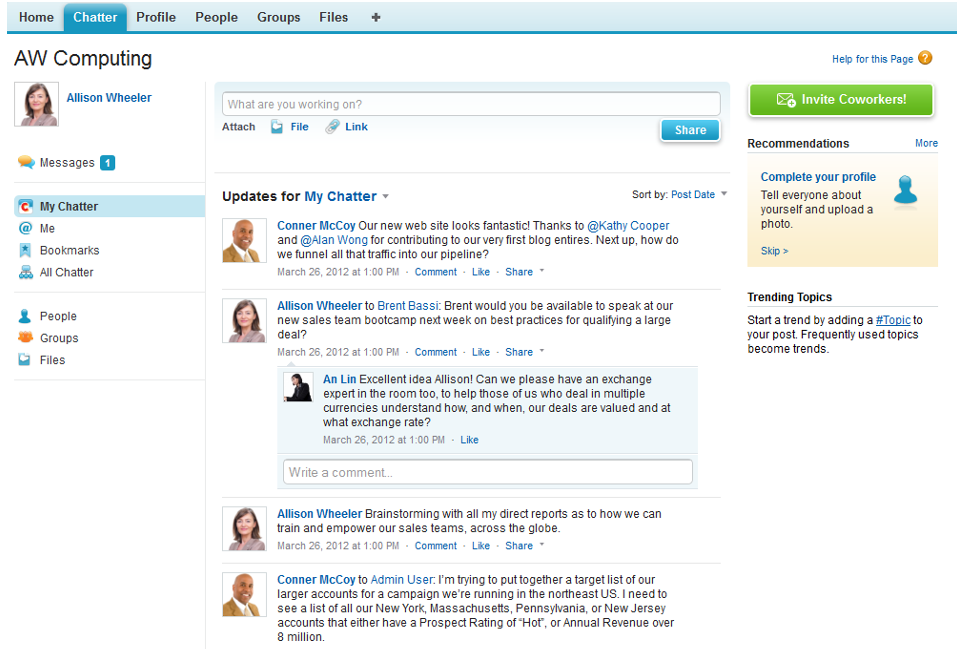 Fig 2: The Main Feed aggregates updates from people, groups, and files, providing a real-time pulse of the organization.
Critical Analysis: Making Social Work
The author warns that technology alone isn't a silver bullet. Successful ESN implementation requires:
- Top-Down Adoption: Executives must use the platform for high-level strategy to drive traffic.
- Cultural Alignment: Using the tool for "fun" (volunteer events, affinities) builds the habit of use.
- IT/HR Integration: Moving support and benefits questions to public groups reduces repetitive tickets and creates an evergreen FAQ.
Limitations
While the paper strongly advocates for ESNs, it touches lightly on the "Noise" problem—how users manage the sheer volume of updates. While filters and notification settings exist, the cognitive load of a real-time feed remains a challenge for modern enterprises.
Conclusion
The transition from email to a real-time social network is more than a UI upgrade; it is a fundamental shift in organizational logic. By putting people at the center and making information "follow-able," companies can achieve the agility required for today's fast-paced software release cycles.