
Benevolence: The Secret Weapon for Long-Term User Retention in Social Networks
Benevolence trust: a key determinant of user continuance use of online social networks
This study investigates the determinants of user continuance in Online Social Networks (OSNs) by extending the Unified Theory of Acceptance and Use of Technology (UTAUT) model. The researchers propose an integrated framework adding satisfaction, credibility trust, and benevolence trust, validated through a survey of 676 OSN users.
TL;DR
Why do users stay on a social network long after the "cool factor" has faded? While traditional models focus on ease of use and usefulness, this study reveals that Benevolence Trust—the belief that the platform actually cares about your well-being—is the single most powerful predictor of continued use, far outweighing simple satisfaction or technical performance.
The "Continuance" Crisis in OSNs
The digital landscape is littered with the corpses of once-popular social networks. OSN managers often try to "buy" loyalty with a constant stream of new features—videos, games, and apps. However, these often have short life cycles. The researchers identified a critical gap: we understand why people adopt technology, but we are less clear on why they stay when things get risky or the novelty wears off.
The authors argue that the missing piece is a deeper form of trust that transcends the "rational calculation" of whether a site works well.
Methodology: Extending UTAUT to the Human Heart
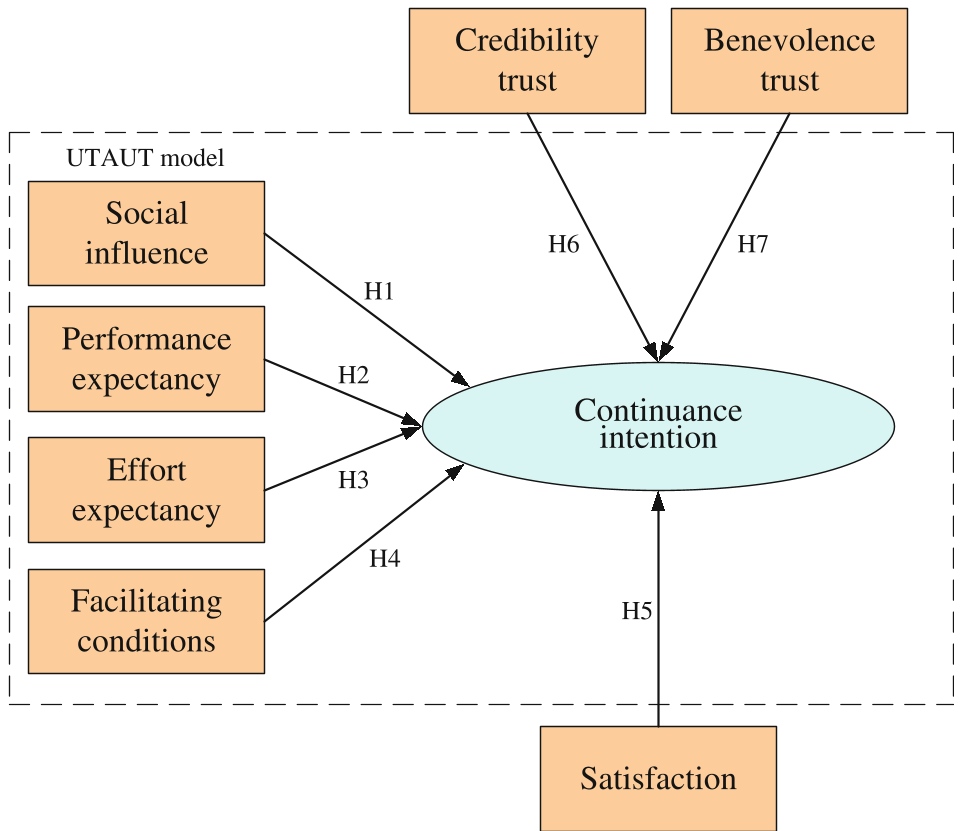
The study utilizes the Unified Theory of Acceptance and Use of Technology (UTAUT) but finds it insufficient on its own. They integrated:
- UTAUT Pillars: Social Influence, Performance Expectancy, Effort Expectancy, and Facilitating Conditions.
- Satisfaction: The emotional outcome of a user's experience.
- Credibility Trust: The belief that the platform is capable and honest.
- Benevolence Trust: The belief that the platform acts in the user's best interest, even at its own expense.
Key Results: Benevolence Outperforms Everything
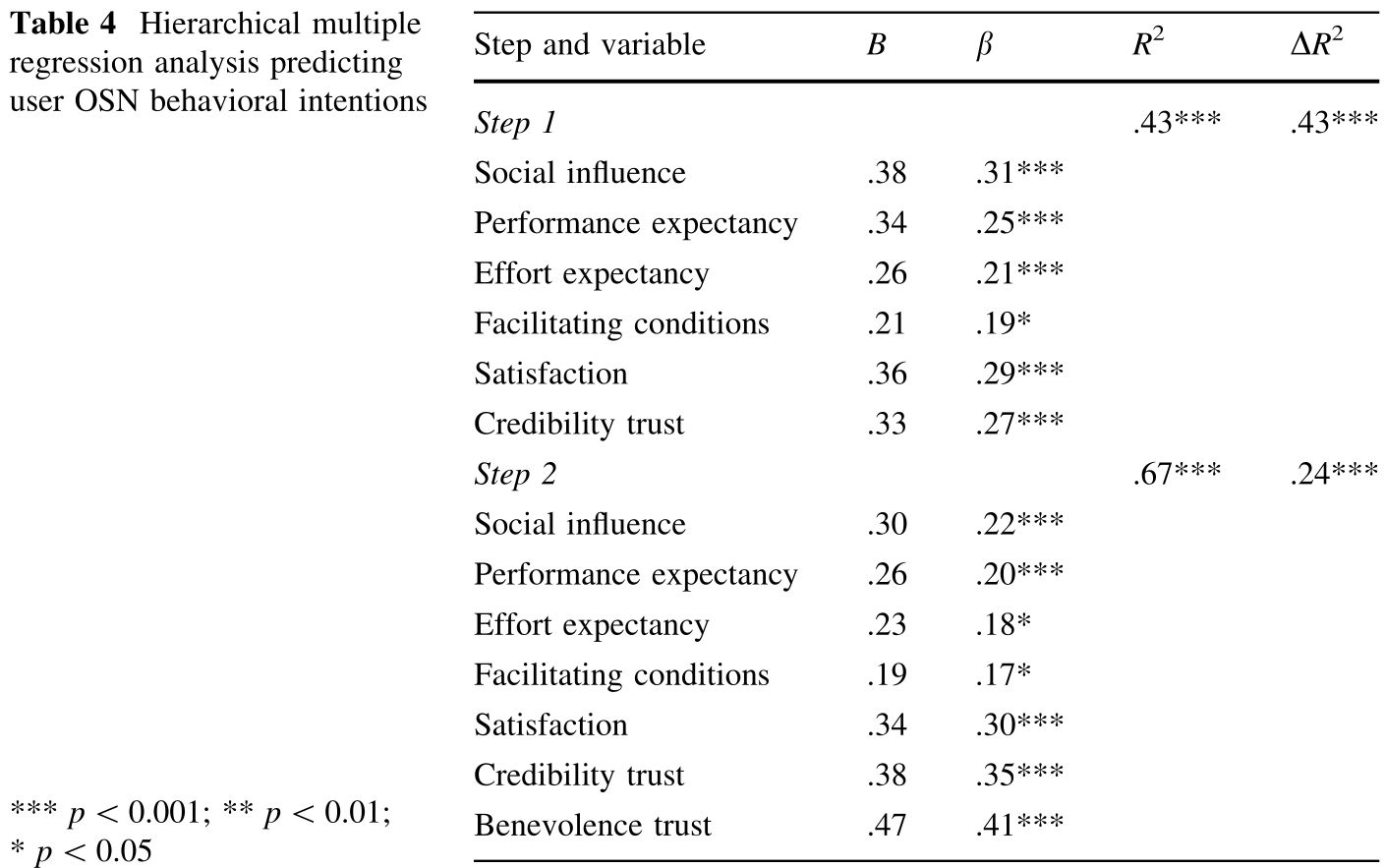
Using hierarchical regression on data from 676 Facebook users, the study found a striking pattern. In the first step (standard factors), Social Influence and Satisfaction were strong. But when Benevolence Trust was added, it took the lead.
| Predictor | Beta () | Significance |
|---|---|---|
| Benevolence Trust | 0.41 | p < .001 |
| Credibility Trust | 0.35 | p < .001 |
| Satisfaction | 0.30 | p < .001 |
| Social Influence | 0.22 | p < .001 |
The jump in from .43 to .67 indicates that benevolence isn't just a "nice to have"—it explains an additional 24% of why people stay.
Strategic Insights for Managers
The study provides a roadmap for OSN managers to move beyond "feature wars" and build a "Benevolent Village":
- Proactive Protection: Instead of just reacting to data breaches, platforms should act as "well-intentioned friends," warning users before they perform actions that might compromise their privacy.
- Altruistic Data Use: Use the massive pools of social data for charitable purposes and public welfare rather than purely commercial exploitation.
- The Power of Sincerity: When a platform demonstrates it is willing to sacrifice "egocentric profit motives" for user welfare, it creates an "Inductive Bias" towards loyalty that competitors cannot easily disrupt.
Critical Perspective & Conclusion
This paper shifts the focus from Utility (can I use it?) to Humanity (does it care about me?). The primary limitation is its focus on Facebook and Taiwanese users, which may reflect specific cultural values regarding trust. However, the core insight remains universal: in an era of digital skepticism and privacy concerns, benevolence is the only sustainable competitive advantage.
Takeaway: Future social platforms won't win by being the most "useful"; they will win by being the most "trusted friend."