
[UC Berkeley] BFCL: The New Standard for Evaluating LLM Agents and Tool Use
The berkeley function calling leaderboard (bfcl): From tool use to agentic evaluation of large language models
The Berkeley Function Calling Leaderboard (BFCL) is a comprehensive evaluation framework for Large Language Models (LLMs) focusing on tool use and agentic capabilities. It introduces a dataset of 5,551 pairs across multiple languages (Python, Java, JS, SQL) and sets a new state-of-the-art evaluation standard using a specialized Abstract Syntax Tree (AST) matching method.
TL;DR
The Berkeley Function Calling Leaderboard (BFCL) is a rigorous benchmark designed to push LLMs beyond simple "one-shot" API calls into the realm of true agentic behavior. It introduces a massive dataset spanning REST, SQL, Python, Java, and JS, using a novel AST-based evaluation to solve the scalability issues of live execution. The results are a wake-up call: even the best models fail miserably at long-term memory and complex state management.
The "Tool Use" Problem
The transition from a Chatbot to an AI Agent requires the model to interact with the world via functions. However, evaluating this is a nightmare. Previously, researchers had to choose between:
- Execution-based evaluation: Expensive, hard to scale, and requires complex sandboxing.
- LLM-as-a-judge: Subjective, biased toward the evaluator's own training data, and inconsistent.
BFCL identifies that the real "pain point" isn't just picking the right tool, but managing the state over multiple turns and handling parallelism.
Methodology: AST Matching & Multi-Turn State Checks
The paper's "secret sauce" is the Abstract Syntax Tree (AST) Substring Matching. Instead of running the code, BFCL parses the model's output into an AST and verifies the logic. This allows for a deterministic score that accounts for variations in how a model writes parameters (e.g., keyword vs. positional) without actually needing to execute a Python or Java environment.
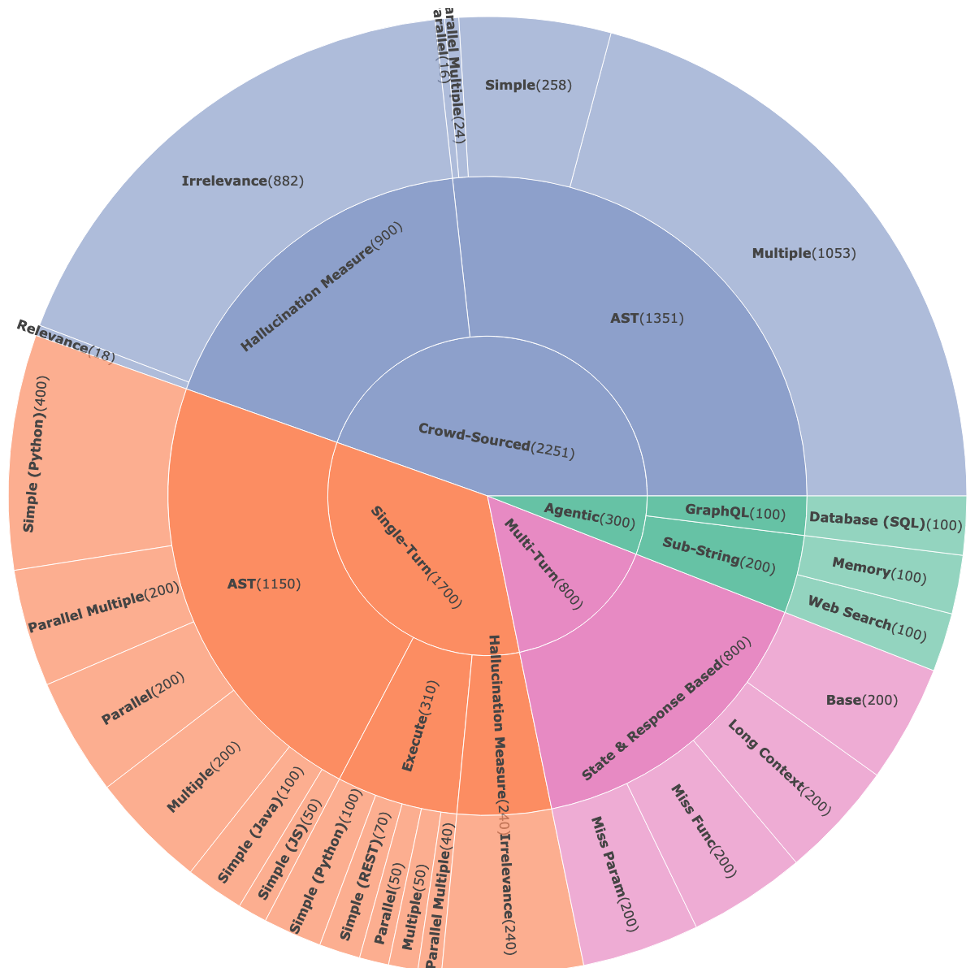 Figure 1: The diverse categories of BFCL, bridging the gap between single-turn simplicity and agentic complexity.
For multi-turn tasks, BFCL uses a State-Based Evaluation. It doesn't just care what the model says; it cares if the final state of the "virtual world" (e.g., a file system or database) matches the ground truth after the model has finished its actions.
Key Results: The Memory Wall
The evaluation results show a striking disparity. While models like GPT-4o and Claude 3.5 Sonnet have nearly mastered simple tool selection, their "Agentic" performance is lacking.
- Parallelism Regression: Interestingly, newer flagship models sometimes perform worse at parallel calls than their predecessors. The authors hypothesize that post-training for accuracy often makes models more cautious, favoring step-by-step execution over efficient parallel bursts.
- The 12% Accuracy Floor: In the "Memory" category—where models must track facts across many turns and update snapshots—accuracy plummeted. Even the top-ranked
o1model struggled, highlighting that long-term coherence is still an unsolved problem.
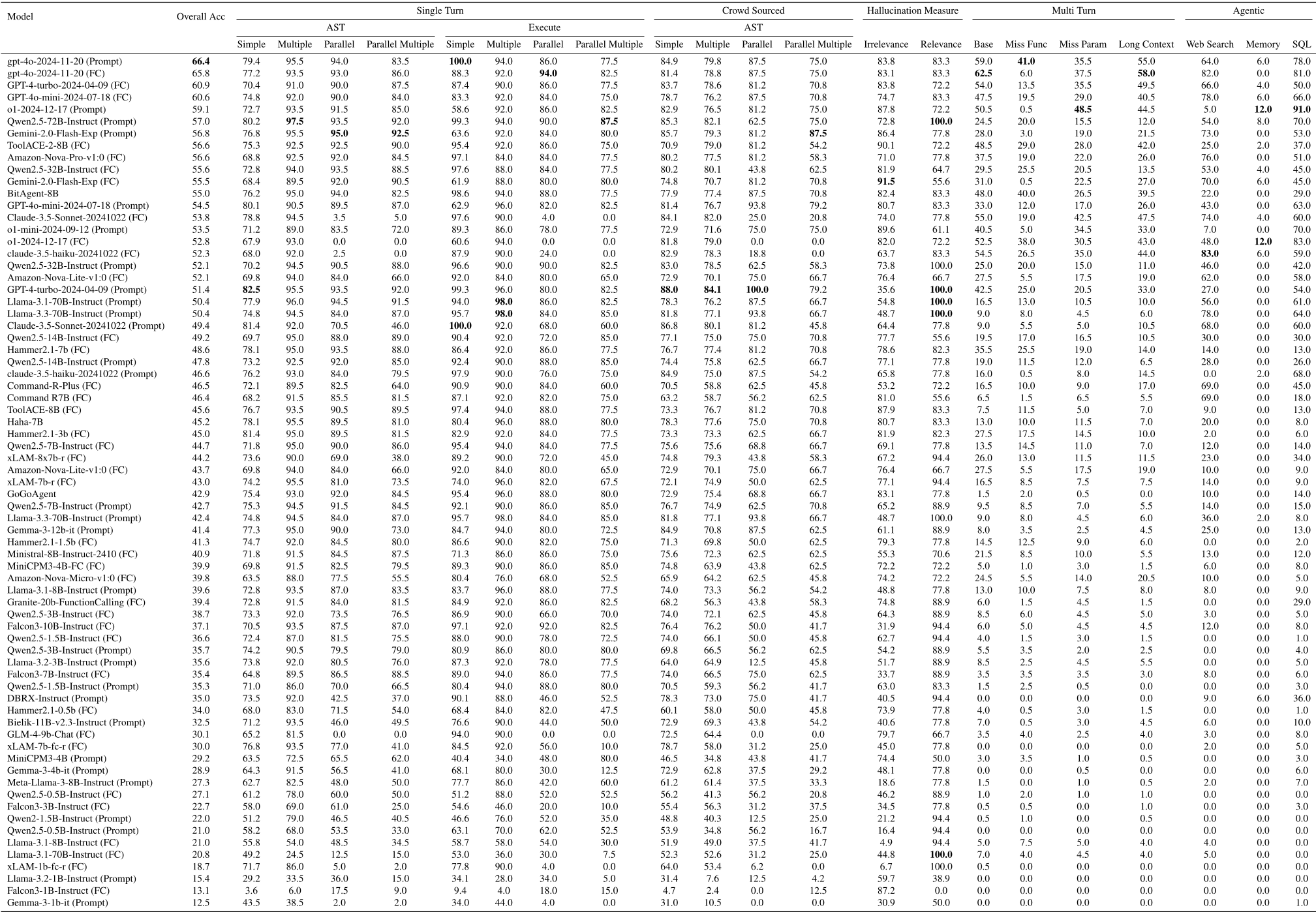 Table 1: Comprehensive performance across Single-turn, Crowd-sourced, and Agentic tasks.
Deep Insight: Detecting Contamination
One of the most brilliant parts of the BFCL study is its "stress test" for data contamination. By comparing a model's performance on the static single-turn set versus a newer, crowd-sourced live set, the authors could see which models actually "understood" function calling and which had just memorized the test set. Models like Salesforce xLAM-7B showed significant degradation on fresh data, a clear red flag for overfitting.
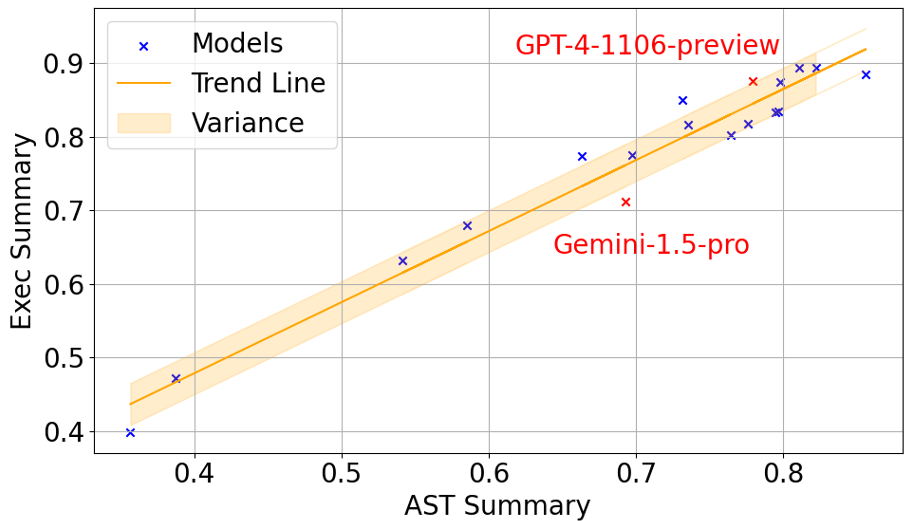 Figure 3: Proof that AST-based matching (offline) is a reliable proxy for real execution (online).
Conclusion & Future Outlook
BFCL moves the goalposts for AI research. It’s no longer enough to be a "good talker." To rank on this leaderboard, a model must be an "effective doer." The benchmark reveals that the next frontier isn't just bigger context windows, but reliable state management and precise tool execution across long trajectories.
Takeaway: If you are building agentic apps, don't trust a model's "reasoning" scores; look at its BFCL AST performance, specifically in the multi-turn and memory categories.