
Between Myths and Metaphors: Rethinking LLMs for Reproductive Health in Conservative Contexts
Between Myths and Metaphors: Rethinking LLMs for SRH in Conservative Contexts
This study investigates the interpretive challenges of LLMs in the context of Sexual and Reproductive Health (SRH) in Pakistan. The authors propose a "Domain-Approach" framework to categorize indirect communication and evaluate top models like GPT-4o and Claude, finding that while they achieve high surface-level accuracy, they struggle with specialized semantic drift and local myths.
TL;DR
In many conservative cultures, "the area down there" or "meeting the husband" are the only ways women can discuss sexual health. This paper reveals that even our most advanced LLMs (like GPT-4o) are linguistically "brittle" when faced with these cultural nuances. By studying clinical interactions in Pakistan, the authors demonstrate that LLMs often miss the mark by ignoring local myths and the "semantic drift" of common words, necessitating a radical shift in how we design AI for global health equity.
The Problem: When "Normal" Doesn't Mean "Healthy"
In the West, if a patient asks, "Is the baby normal?", they are likely asking about the infant's health. In an OB/GYN clinic in Pakistan, "normal" is a specific colloquialism for Spontaneous Vaginal Delivery. If an AI doesn't know this localized semantic drift, it will fail to provide the correct medical guidance.
The authors identify a massive disconnect: while over 90% of maternal deaths occur in low-resource countries, LLMs are trained on formal, Western medical texts. In reality, SRH communication in conservative contexts is a minefield of taboos, metaphors, and non-verbal gestures.
Methodology: The Domain-Approach Framework
The researchers developed a systematic way to categorize how women speak about sensitive health issues along two axes:
- Referential Domains: What is being discussed (Symptom, Procedure, Condition, Process, Anatomical).
- Communicative Approaches: How it is expressed.
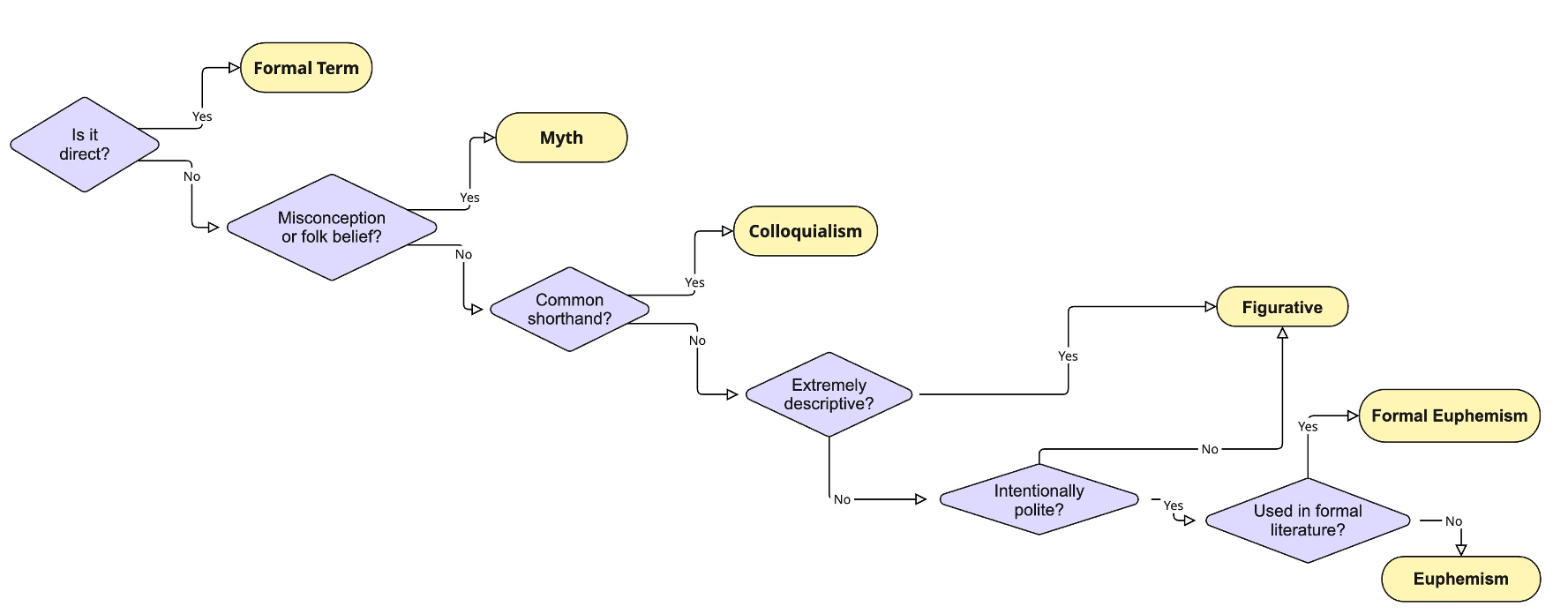
The study highlighted five key approaches:
- Euphemisms: Navigating taboos (e.g., "[Meeting husband]" for sex).
- Colloquialisms: Informal shorthand (e.g., "[Big operation]" for C-section).
- Figurative Language: Metaphors used due to low health literacy (e.g., "[Bones dissolving]" for vaginal discharge).
- Myths: Folk beliefs like Athra (the "curse" of miscarriages).
- Gestures: Directing the doctor via "it hurts here" because the words feel inappropriate.
Experimental Results: The Illusion of Accuracy
The technical evaluation of five LLMs (Gemma, Llama, GPT-OSS, GPT-4o, and Claude) using Roman Urdu prompts revealed a startling "Linguistic Instability."
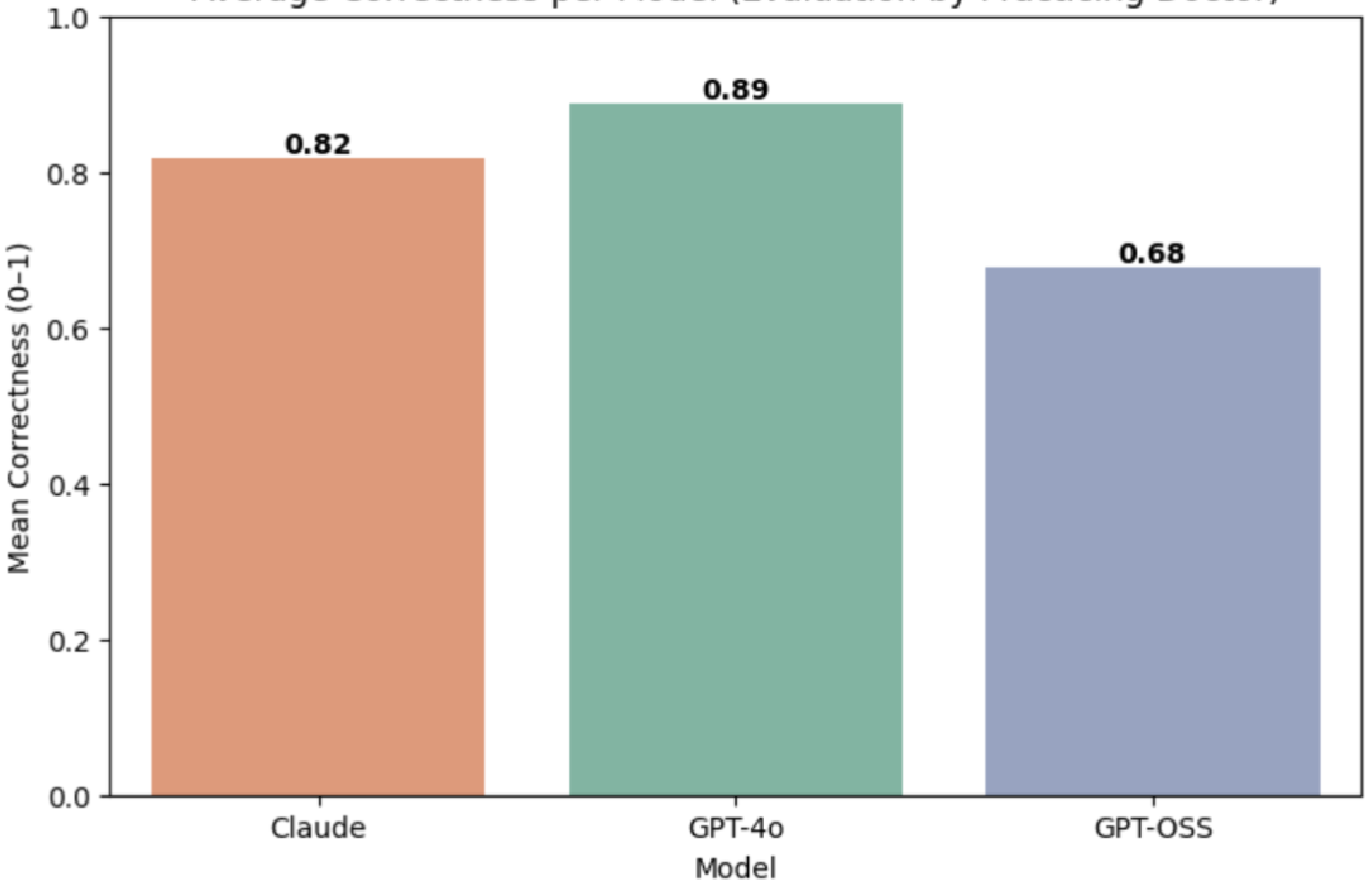
While GPT-4o and Claude scored high (0.81+), the researchers argue these scores are inflated. The models suffer from:
- Polysemy Blindness: If a patient says "[Urine area]," models almost always diagnose a UTI, missing the fact that in Pakistan, this is a standard euphemism for the vagina.
- Script Shifting: Models often hallucinated or switched into Hindi/Hinglish (using Devanagari scripts), which is inaccessible to the target population using Roman Urdu.
- Tone Deafness: Models provided "medical lectures" that were too technical for patients who don’t even recognize formal anatomical terms like Mahbul (vagina).
Deep Insight: Designing for "Default Miscommunication"
The paper’s most profound takeaway is that we cannot treat cultural nuance as a "translation error." Instead, AI architects must:
- Assume Miscommunication: Systems should be built to ask for clarification as a baseline, rather than assuming a single "correct" mapping.
- Synchronous Terminology: AI must maintain three parallel layers of language: Formal Medical, Clinical Colloquial, and Folk Metaphor.
- Privacy-Conscious Multimodality: Since patients prefer gestures ("it hurts here") but fear camera privacy, AI should use 3D body diagrams for "marking" rather than relying on verbal descriptions or video.
Conclusion
This work challenges the HCI community to move beyond "Global North" standards. Effective AI for maternal health isn't about making the community adapt to the model; it's about building models that can inhabit the complex, metaphorical, and often "silent" world of the patient.
Reference: Humayun, A., Zubair, B., & Mustafa, M. (2026). Between Myths and Metaphors: Rethinking LLMs for SRH in Conservative Contexts. CHI 2026.