
Beyond the Border: Why Culture, Not Country, Dictates Who We Trust on Microblogs
Beyond the Culture Effect on Credibility Perception on Microblogs
This study investigates the influence of culture and country on the credibility perception of Twitter (microblog) users. Through a large-scale crowdsourcing experiment involving 948 participants from the USA and eight Arabic countries, the researchers analyzed how profile features factor into trust across 30,336 individual judgments.
TL;DR
Does your physical location or your cultural upbringing determine who you believe on social media? A comprehensive study titled "Beyond the Culture Effect on Credibility Perception on Microblogs" suggests that while we often categorize users by country, it is actually Culture that serves as the true "software of the mind" for trust. By analyzing over 30,000 judgments, researchers found that readers from eight different Arabic countries share nearly identical credibility traits—traits that differ significantly from American readers.
The Credibility Crisis: Why Current Research Falls Short
In an era of rapid misinformation, social media has become a primary news source. However, prior work has often fallen into the trap of "Nationalism over Culture." Most studies compared the USA directly with China, assuming that the differences found were solely due to being in a different country.
The authors of this paper argue that we must distinguish between the two. The central problem is: If two people live in different countries but share the same language, history, and social values (e.g., Egypt and Saudi Arabia), will they judge a tweet differently?
Methodology: The Anatomy of a Tweet
To test this, the researchers focused on five "peripheral cues"—the metadata you see before you even read the full text of a tweet:
- Gender: Male vs. Female.
- Profile Image: A real person’s photo vs. a generic/anonymous avatar.
- Username: A topical name (e.g., @PoliticsNews) vs. an internet-style name (e.g., @Healthy24).
- Location: Posts coming from large metropolises (Cairo/Seattle) vs. small towns.
- Network Overlap: Whether you share mutual friends with the author.
Using a Latin Square design, they generated 128 plausible but false tweets across two topics: Politics and Health.
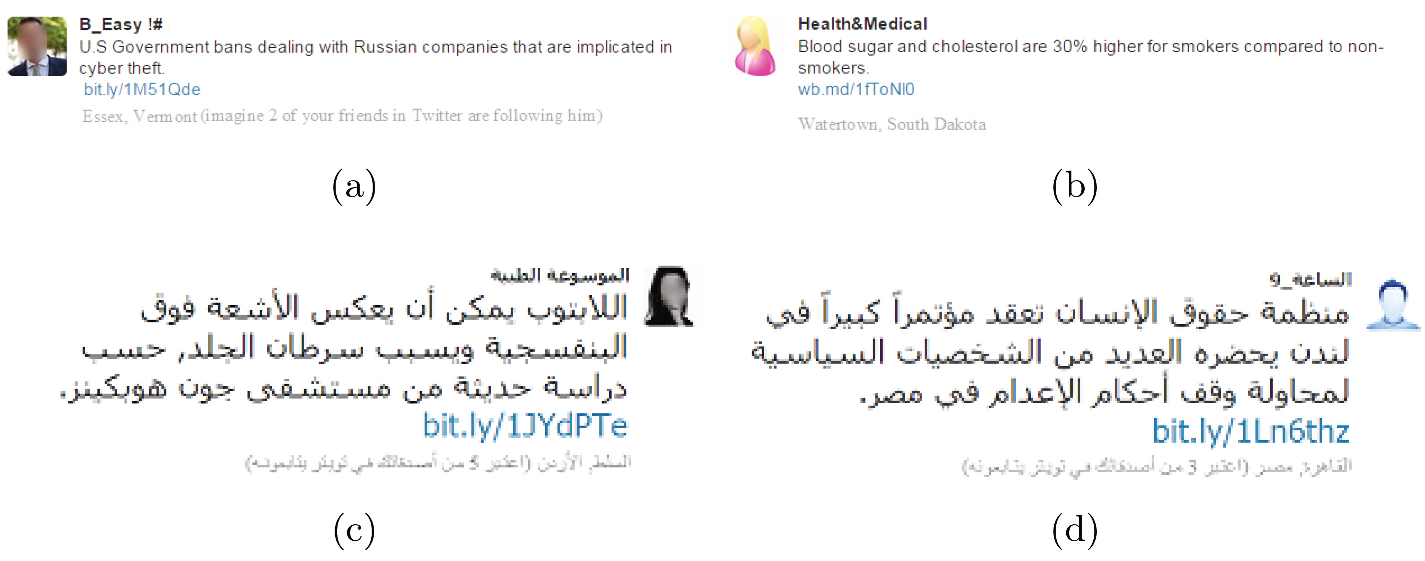 Fig 1: Example of tweet presentation variations showing different profile cues.
Key Findings: The "Culture" Signature
The results from the ANOVA analysis were striking:
- The Culture Dominance: There was a significant difference between Arabic and American readers. However, there was no significant difference between readers from the eight different Arabic countries (Saudi Arabia, Egypt, UAE, etc.). This proves that credibility perception is a cultural phenomenon, not a national one.
- Gender Bias: Across all cultures, male-authored tweets were perceived as more credible. However, this was topic-dependent: Americans were more accepting of female authors in health topics than Arabic readers.
- The Power of a Face: Real photos significantly boosted credibility in Arabic cultures. American readers were more "tolerant" of anonymous avatars, though they still preferred real photos.
- Network Overlap: Seeing mutual friends (Network Overlap) was a massive trust booster for health-related tweets, particularly for Arabic readers.
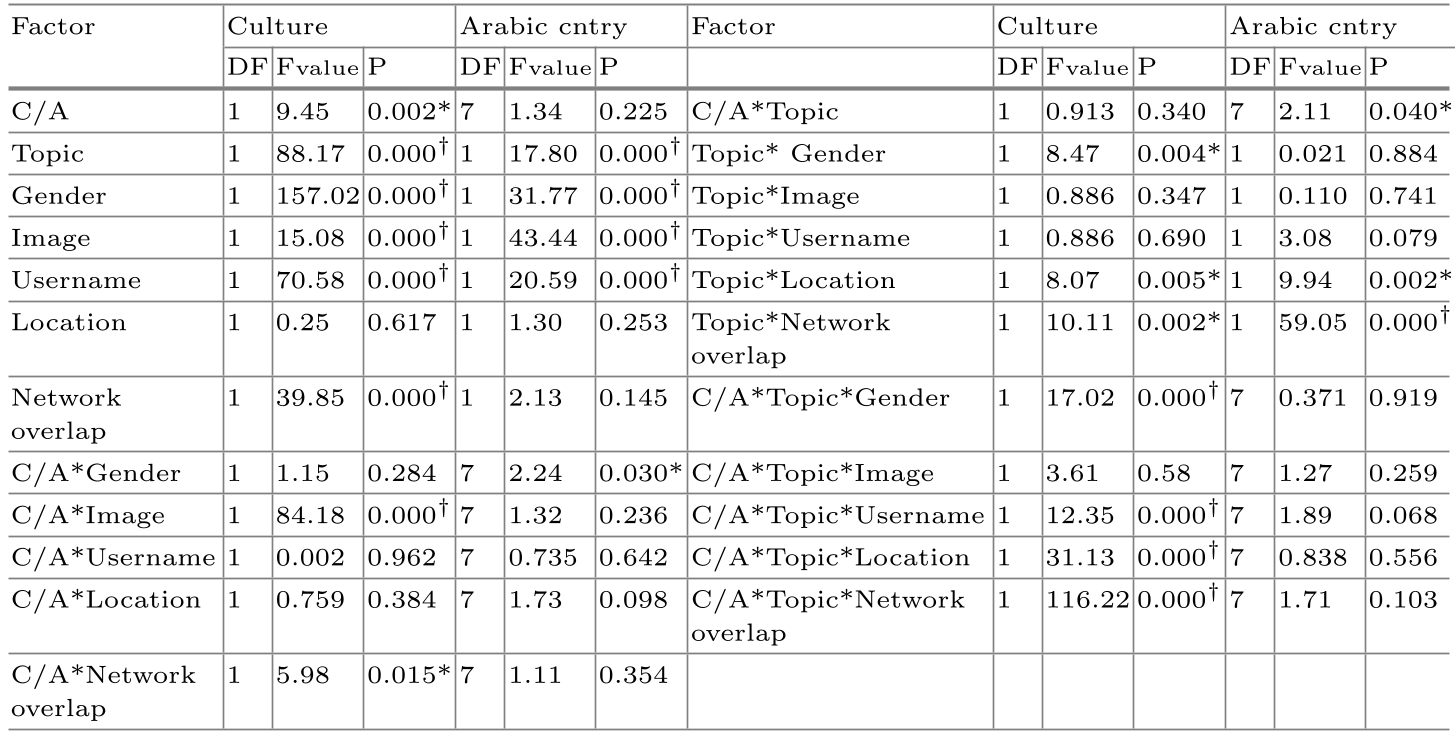 Table 1: Statistical significance (p-values) showing culture's impact vs. country's negligible effect.
Deep Insight: Topic Sensitivity
The study reveals that trust isn't static; it shifts based on the subject. Location (Large vs. Small city) had zero effect on health tweets but was a critical credibility signal for Politics. If a tweet about a local political event came from a large city, it was instantly viewed as more "official" or "informed."
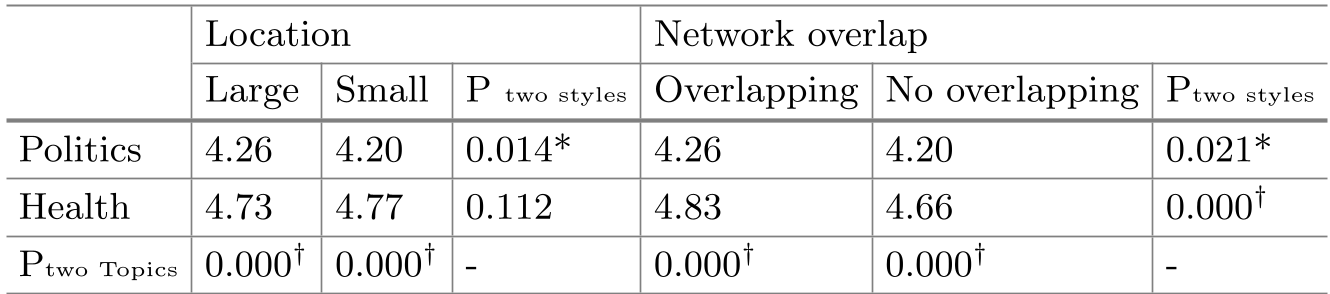 Table 2: Influence of topic on the effectiveness of Location and Network Overlap cues.
Critical Analysis & Conclusion
This research challenges the "one-size-fits-all" approach to social media UI design.
- Takeaway for Platforms: If Facebook or X (formerly Twitter) wants to implement "Trust Icons" or "Verified Labels," they shouldn't just look at the user's IP address. They need to understand the cultural context of the reader.
- Limitation: The study used "false but plausible" tweets. While this controls for prior knowledge, it may not perfectly capture the visceral emotional reaction people have to real-world breaking news.
- Future Outlook: As we move toward AI-centric social feeds, integrating "Cultural Inductive Biases" into recommendation algorithms could help filter misinformation more effectively by understanding how different demographics process "truth."
In summary: trust is a mirror of culture. To solve the credibility crisis on social media, we must look beyond geography and understand the shared values of the people behind the screens.