
Beyond Engagement: Decoding Learner Confusion with EEG and Deep Learning
Beyond engagement: an EEG-based methodology for assessing user’s confusion in an educational game
This paper introduces an EEG-based methodology to assess user confusion during game-based learning tasks using an 8-channel OpenBCI device. By employing a cross-task and cross-subject deep learning framework, the authors achieved a high classification accuracy of 91.04% in distinguishing confused states from non-confused states in real-world educational game scenarios.
TL;DR
While "engagement" is the holy grail of educational games, confusion is often the engine of deep learning. This research presents a breakthrough EEG-based methodology that uses a cross-task deep learning model to detect confusion in real-time. By training on standardized IQ tests (Raven's Matrices) and applying it to complex gameplay (Sokoban), researchers achieved an impressive 91.04% accuracy, paving the way for games that "know" when you are productively struggling.
Context: Why Confusion Matters
In the world of Game-Based Learning (GBL), we often fear player frustration. However, pedagogical theory suggests that cognitive disequilibrium—the state of confusion when new information clashes with existing mental models—is where deep comprehension happens.
The challenge? It’s nearly impossible to label a player's internal state accurately during a 30-minute gameplay session without interrupting them. Current SOTA methods often rely on self-reports (distracting) or facial recognition (affected by lighting and head movement). This paper looks directly at the source: the brain.
The Problem with "Ground Truth"
Collecting labeled EEG data for machine learning is a nightmare in "wild" tasks like gaming. If you ask a student "Are you confused?" every 5 seconds, they won't be able to play. If you only ask at the end, the data is fuzzy.
The authors solved this by using a Cross-Task/Cross-Subject approach:
- Source Task: Raven’s Progressive Matrices (Standardized, easy to label).
- Target Task: Sokoban Game (Complex, hard to label).
Methodology: The End-to-End Pipeline
The researchers used a portable OpenBCI headset (8 channels) to record raw EEG. Instead of manually calculating Power Spectral Density or Wavelet transforms—which may miss subtle "confusion" signatures—they employed an end-to-end Deep Learning (CNN) approach.
Architectural Insight
The model uses five layers (four convolutional, one fully connected) to automatically extract spatial and temporal features from normalized raw EEG data.
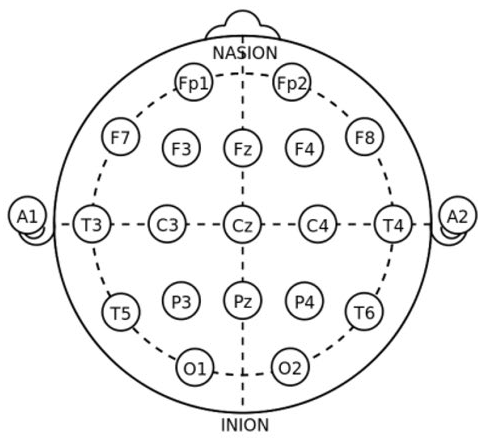 Fig 1: The core methodology: Leveraging standardized cognitive tests to train a classifier for real-world gameplay.
The Experiment
- Task A (Raven’s): 23 subjects solved logic puzzles. Confusion was defined by the inherent difficulty of the Raven's levels.
- Task B (Sokoban): A smaller group played a warehouse-management puzzle game.
- The Secret Sauce: Z-score normalization was applied to handle the massive variance between different people's brainwaves.
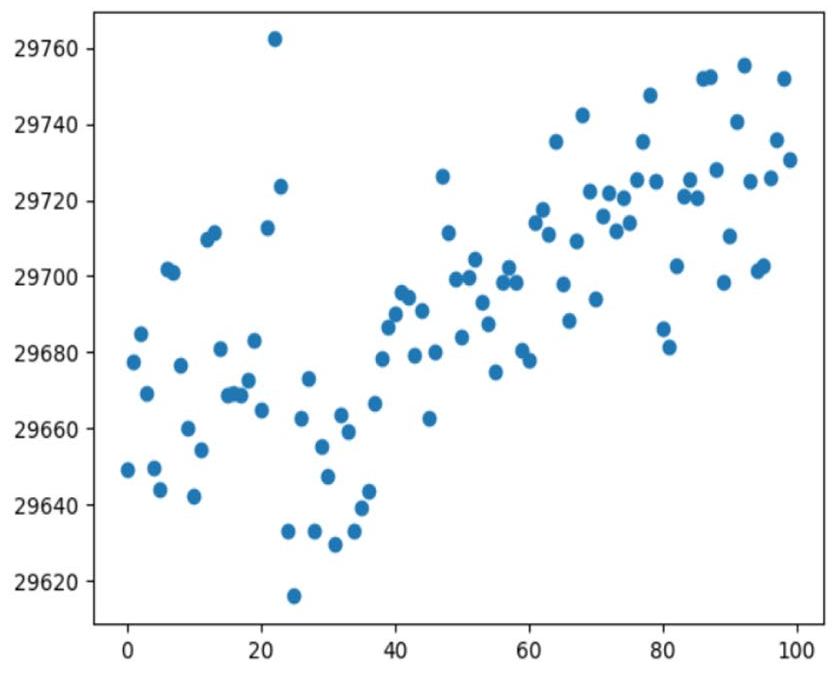 Fig 2: Z-score standardization effectively clustered raw EEG data around a common mean, reducing individual physiological differences.
Results & Performance
The highlights of the experimental results include:
- Controlled Accuracy: 96.37% on the standardized Raven's test.
- Transfer Accuracy: 91.04% when the model trained on Raven's was asked to predict confusion in Sokoban gameplay.
This high transfer accuracy proves that the "logic reasoning confusion" signature is consistent across different types of visual-spatial puzzles.
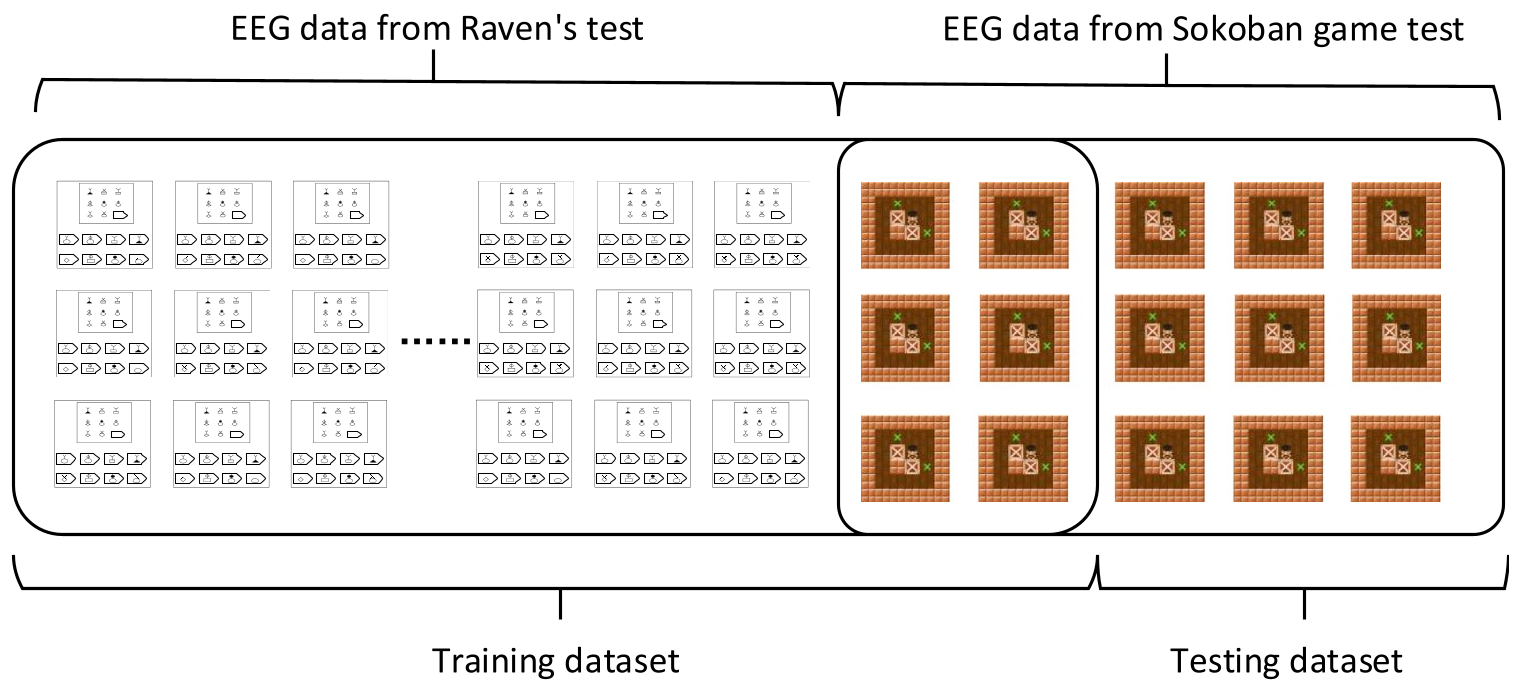 Fig 3: The data allocation strategy for cross-subject and cross-task validation.
Critical Insight & Future Outlook
The genius of this work lies in Task Variation Robustness. It treats the standardized IQ test as a "clean" signal generator to teach the AI what confusion looks like, then applies that knowledge to the "noisy" environment of a video game.
Limitations:
- The study used a binary "Confused vs. Not" label. Real learning involves nuances—there is a fine line between "productive confusion" and "hopeless frustration."
- 8-channel headsets are still cumbersome for casual home learners.
Conclusion: This research moves us closer to Adaptive Intelligent Tutoring Systems (ITS). Imagine a game that detects you are stuck, analyzes your EEG, and offers a hint only when your confusion reaches a "frustration threshold." That is the future of personalized education.