
Beyond the Numbers: Leveraging Bias-Conscious AI to Bridge the STEM Gap
Leveraging Bias Conscious Artificial Intelligence to Increase STEM Graduates Among Underrepresented Populations
This research presents a "Bias Conscious" AI framework designed to improve STEM graduation rates among underrepresented African American populations. By utilizing synthetic data generation and machine learning classification (including Decision Trees and Gradient Boosted Trees), the study identifies non-traditional success factors such as confidence and faculty interaction quality that are often masked in aggregate datasets.
TL;DR
Despite years of investment, the representation of African Americans in STEM careers remains stagnantly low. This research by Josette Riep and Annu Prabhakar introduces a Bias-Conscious AI approach to shift the focus from general "failure reasons" to population-specific success drivers. By analyzing synthetic versions of longitudinal national data, the study reveals that for underrepresented students, psychological factors like confidence and the quality of faculty interaction are more critical than traditional GPA-centric metrics.
The "Invisible" Baseline: Why Aggregate Data Fails
Most predictive models in education suffer from a "majority bias." When a dataset is 80% representative of the dominant group, the machine learning model optimizes for that group's characteristics. In STEM education, this means the specific barriers faced by African American students—who hit major roadblocks in their 3rd and 4th years—are often treated as "noise" or outliers.
The authors argue that we need to stop looking at why students fail generally and start looking at how success mechanisms differ specifically across racial demographics.
Methodology: Synthetic Data and Bias-Conscious Modeling
To overcome the privacy hurdles of the National Center for Educational Statistics (NCES) data, the team employed a sophisticated methodology centered on synthetic data generation.
1. The Pipeline
The research followed a rigorous four-phase approach:
- Data Scrubbing: Cleaning 6 years of NCES longitudinal data (2011-2017).
- Synthetic Generation: Using a SYNC-based approach (similar to Cornell’s methodology) to create statistically accurate but private individual-level records.
- Multi-Model Analysis: Comparing Decision Trees, Logistic Regression, and Gradient Boosted Trees.
2. Model Architecture and Logic
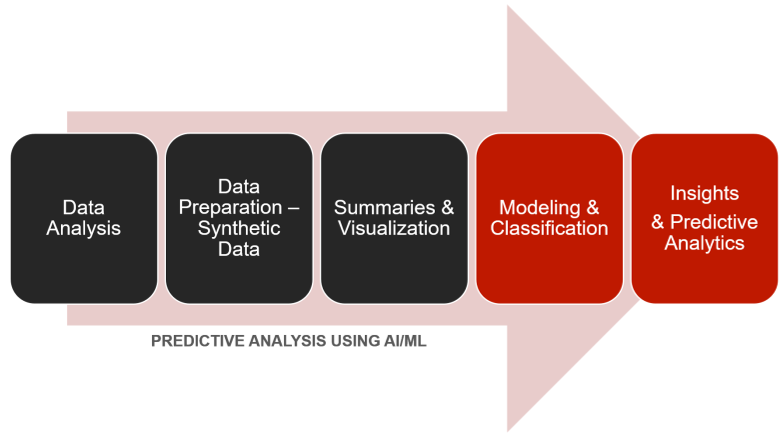 Figure 1: The 4-Phase Research Workflow from Data Preparation to Model Selection.
Key Insights: The Anatomy of Success
The study’s findings challenge the traditional "academic-only" view of student retention:
1. The Confidence Factor
While high school GPA is a universal baseline, confidence emerged as a "dominant factor" for African American students. The AI identified that internal self-perception often outweighed external academic metrics in predicting whether a student would persevere through the final years of a STEM degree.
2. The Faculty Interaction Gap
The model highlighted a stark contrast in resilience:
- Underrepresented Students: Poor faculty interactions were almost always a precursor to dropping out.
- Dominant Group Students: White students who reported negative faculty interactions were still statistically more likely to graduate.
This suggests that faculty interactions act as a "catalyst" for minority students, where a single negative relationship can have a catastrophic impact on the "Confidence Factor" mentioned above.
3. The Paradox of Advising
One of the most surprising findings was that first-year academic advising was often seen as a detractor to success for both groups. This suggests that current advising models might be too prescriptive, misaligned with STEM rigor, or perhaps focus too heavily on "weeding out" students rather than supporting them.
Experimental Evidence
The following table illustrates the "mass exodus" and decline in growth for different demographics, justifying the urgent need for this AI-driven intervention.
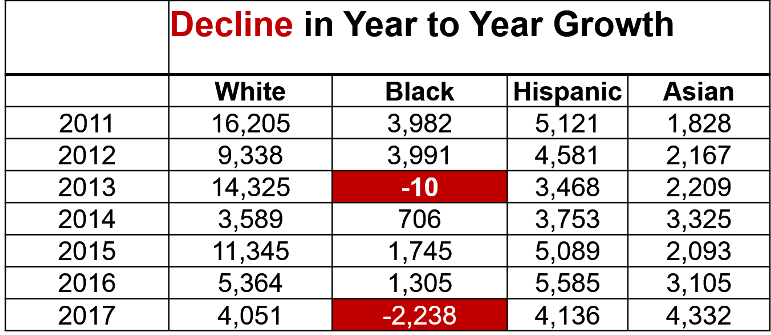 Figure 2: Longitudinal decline in STEM growth across racial groups (2011-2017).
Critical Analysis & Future Outlook
Takeaway
The value of this work lies in its Inductive Bias adjustment. By training models specifically on minority cohorts, the authors proved that "one-size-fits-all" AI in education actually perpetuates inequality by ignoring the unique socio-technical barriers of underrepresented groups.
Limitations
The study currently relies on synthetic data. While statistically accurate, the quality of insights is ultimately bound by the limitations of the original aggregated NCES data. Real-world validation in a live Learning Management System (LMS) is the necessary next step.
Future Work
The ultimate goal is to move from analysis to action. Integrating these classification models into student portals can allow for Predictive Intervention—alerting faculty when a student's "confidence" metrics or "interaction frequency" suggests they are at risk, long before their grades begin to slip.