
Mapping the Nexus: A Bibliometric Deep Dive into Social Innovation and Complexity
Bibliometric Analysis of Social Innovation and Complexity (Databases Scopus and Dialnet 2007–2017)
This paper presents a comprehensive bibliometric analysis of the intersection between Social Innovation and Complexity within the Scopus and Dialnet databases from 2007 to 2017. Using VOSviewer, the authors map the intellectual landscape, identifying 2016 as the peak year for publications and recognizing the USA and UK as the dominant research hubs.
TL;DR
This study provides a quantitative look at how the academic world links Social Innovation with Complexity Theory. By analyzing over 1,000 papers from 2007 to 2017, the authors track the rise of this interdisciplinary field, identifying key influencers, geographical strongholds, and the explosive growth seen in 2016.
Problem & Motivation: The Definitional Dilemma
Social innovation is a bit of a "chameleon" term. Depending on who you ask—an economist, a technologist, or a social worker—it means something different. The European Commission defines it as initiatives that change the "basic routines, resources, or beliefs" of a social system.
The authors' core intuition was that to solve modern social problems (which are inherently "complex"), we need more than just a list of definitions; we need a map of how these ideas interact. Prior to this work, there wasn't a clear visual or quantitative assessment of who was talking to whom in the convergence of social systems and complexity science.
Methodology: High-Dimensional Mapping
To tackle this complexity, the authors used Bibliometrics—the quantitative study of books, articles, and other publications. They performed a rigorous search on Scopus and Dialnet using a boolean strategy:
TITLE-ABS-KEY (social AND innovation) AND TITLE-ABS-KEY (complexity)
Visualizing the Network
One of the most significant aspects of this work is the use of VOSviewer. This tool allows researchers to see the "social network" of science.
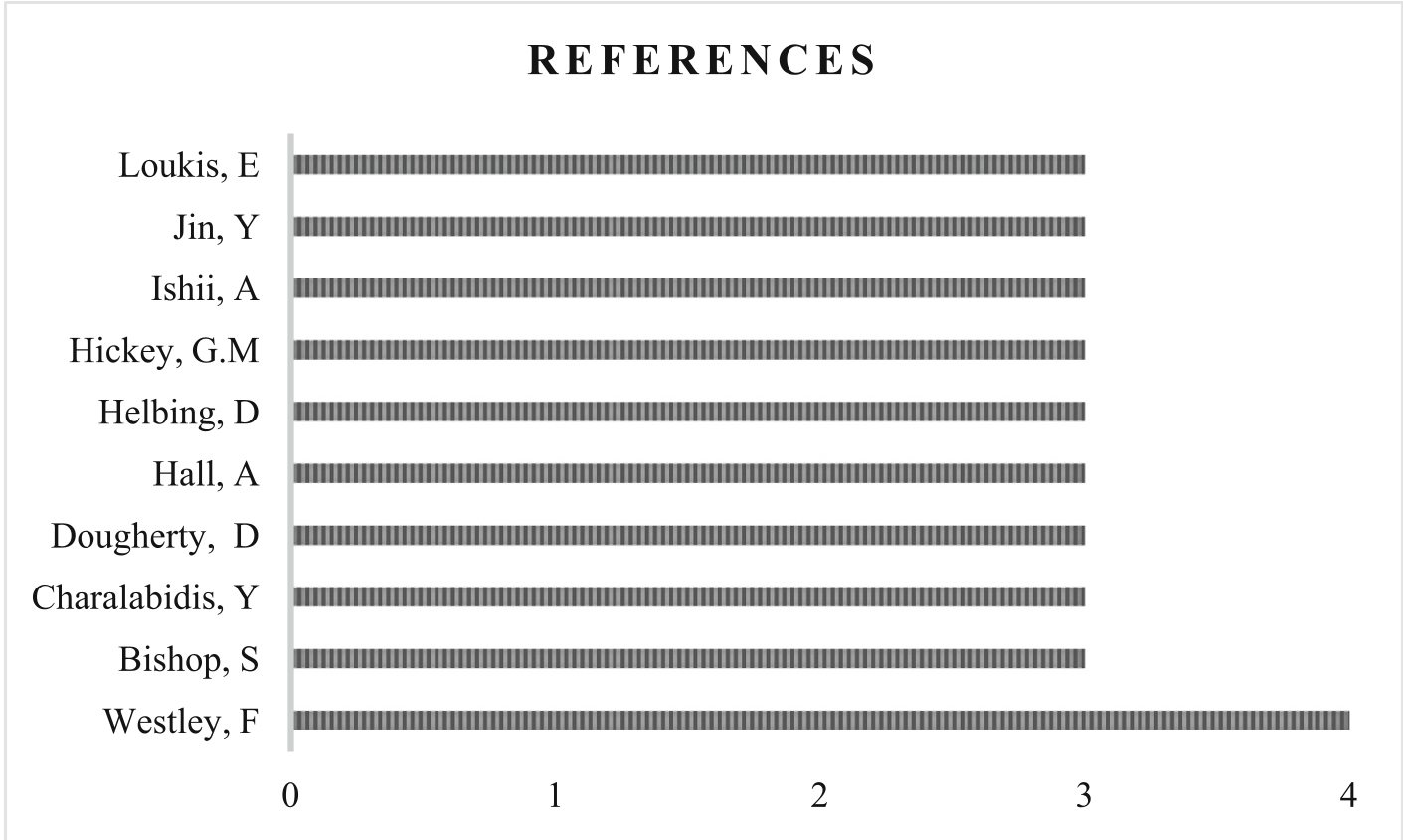 Figure 1: Network visualization of authors in the field. Warm tones (Red) indicate higher relevance and citation counts.
Experiments & Key Findings
1. The Peak of Interest
The data shows a clear upward trend leading to 2016, which serves as a milestone year for publications in this field. This indicates that "Complexity" has moved from a niche theoretical framework to a core component of social innovation strategy.
2. Global Distribution
The "Global North" dominates the discourse. The USA and UK are at the forefront, while Latin American participation (including Colombia, where the authors are based) shows a noticeable gap that needs to be filled for a truly global perspective on social change.
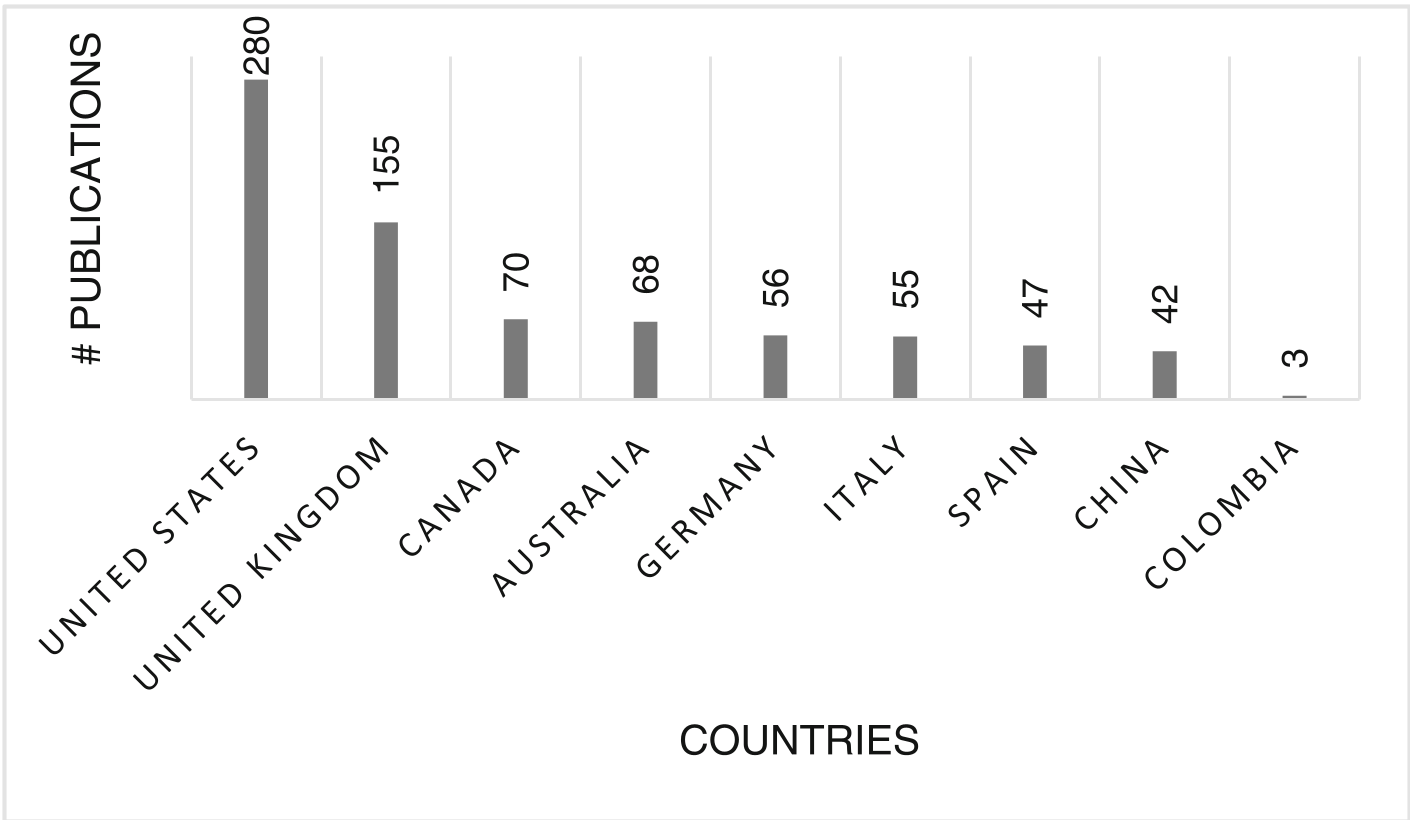 Figure 2: Dominance of USA and UK in research output within the Scopus database.
3. Critical Journals
The study highlights that journals such as Ecology and Society and the Journal of Cleaner Production (both Q1) are the primary vehicles for this research. This suggests that the "Complexity-Social Innovation" nexus is deeply tied to sustainability and environmental management.
Critical Analysis & Future Outlook
Key Takeaways
- Complexity as a Bridge: Social innovation isn't just about "new ideas"; it's about shifting social systems. The inclusion of "complexity" as a search term signifies a move toward more systemic, high-impact research.
- Network Intelligence: Authors like Bousquet and Hajjam act as "structural holes" (bridges) that connect disparate sub-fields.
Limitations & Future Work
The study has a geographical and linguistic bias, as it excluded several languages (Russian, Chinese, Portuguese) and focused on Scopus/Dialnet. For future research, expanding to include the Global South and more recent data (longitudinal studies beyond 2017) is essential to see how Social Innovation handled the global complexity of the COVID-19 pandemic.
Conclusion: This paper serves as a vital historical baseline for anyone looking to understand the intellectual origins of modern systemic change.