
Mining the Digital Footprints of Tourists: A Big Data Approach for Smart Governance
Research experience of big data analytics: the tools for government: a case using social network in mining preferences of tourists
This research presents a big data analytics pipeline using Sina Weibo data to mine tourist preferences in Macao and Hong Kong. The authors combine Latent Dirichlet Allocation (LDA) for topic modeling with the Apriori algorithm to discover association rules, providing actionable insights for government policy-making.
TL;DR
This research develops a data mining framework to transform millions of Sina Weibo posts into policy insights for the tourism sectors of Macao and Hong Kong. By combining LDA (Latent Dirichlet Allocation) for topic modeling and the Apriori algorithm for association rules, the authors successfully mapped tourist navigation patterns and preferences within these high-density urban hubs.
Background: The Social Network as a Gold Mine
In the digital age, tourists aren't just visitors; they are data broadcasters. Every check-in at the Ruins of St. Paul or review of a Cantonese restaurant on Sina Weibo contributes to a massive, unstructured dataset. For governments in Macao and Hong Kong, the challenge is no longer about collecting data—as nearly 90% of local Weibo activity originates from tourists—but about extracting signal from noise.
The Technical Challenge: Context-Aware Mining
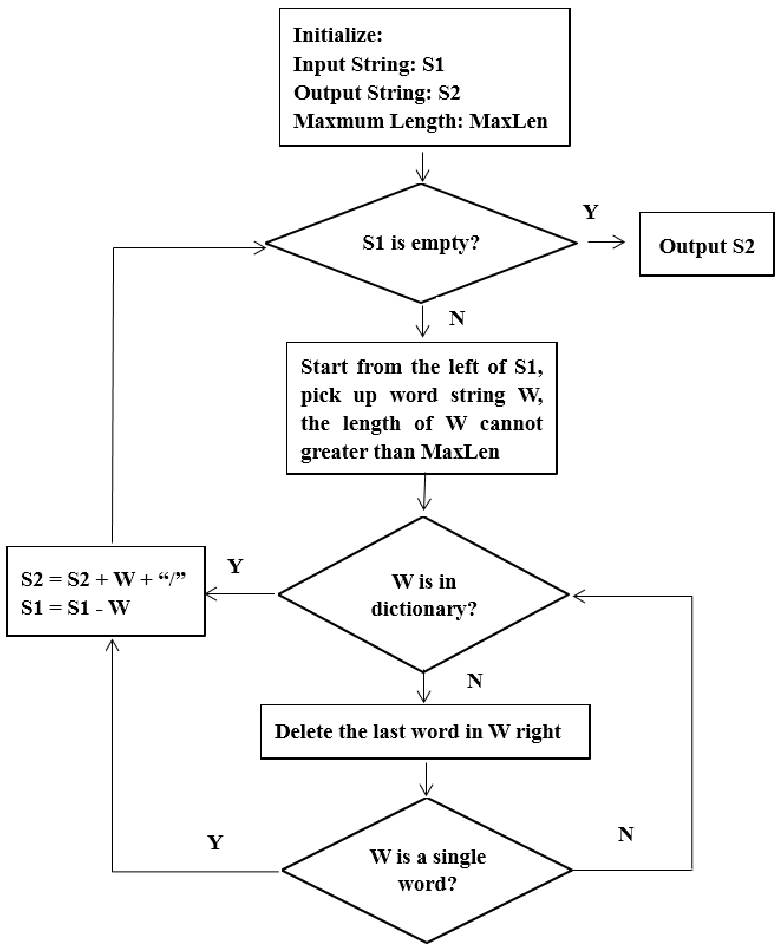
Mining Chinese social media is notoriously difficult due to the lack of spaces between words. Standard segmentation tools often fail on localized proper nouns (e.g., specific casino names or historic alleys).
The authors solved this by:
- Building Localized Dictionaries: Integrating city-specific word banks from Sogou Pinyin to ensure geographic names like "Ruin of St. Paul" weren't broken into meaningless characters.
- Robust Pre-processing: Using a Java-based pipeline (ANSJ + MySQL) to process data collected every two minutes, handling the sheer volume of "Big Data."
 Figure: The JDBC-driven data processing architecture used to bridge the database and the segmentation engine.
Methodology: From Words to Rules
The core of the paper lies in a two-step transformation:
1. Topic Modeling (LDA)
Using the Latent Dirichlet Allocation model, the research categorized millions of words into coherent topics (e.g., "Dining," "Shopping," "Locations"). This allowed the authors to isolate "Places" as a specific dimension of tourist interest.
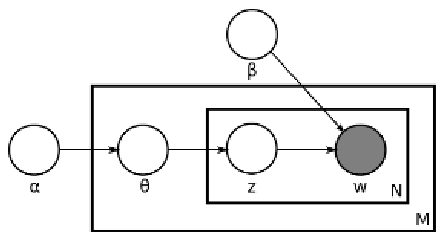 The LDA formula used to calculate topic probabilities within the corpus.
2. Association Rule Mining (Apriori)
Once the topics were defined, the Apriori algorithm was applied via the Weka data mining suite. This identified "if-then" relationships between locations. For example:
- Rule: {Lisboa, Ruins of St. Paul} {Venetian}
- Confidence: 71%
- Insight: Tourists visiting the historic center are highly likely to migrate to the Cotai Strip later, suggesting a clear need for direct shuttle services between these hubs.
Key Results & Insights
The study highlights distinct "Preference Maps" for both cities:
- Macao: Centered on the Ruins of St. Paul, Venetian, and Ferry Terminals. The data proved that the Ferry Terminal remains the primary gateway, suggesting it as the optimal location for tourism information centers.
- Hong Kong: Trends revolved around Ocean Park, Tsim Sha Tsui, and The Peak.
 Statistic showing that the vast majority of Weibo users in these regions are indeed the target demographic: tourists.
Critical Analysis & Future Outlook
While this 2014 study laid the groundwork for Social Media GIS, it relies heavily on keyword frequency. Modern iterations of this work would likely incorporate Deep Learning (BERT/LLMs) for better semantic understanding and Sentiment Analysis to distinguish between a "mentioned" place and a "recommended" place.
Furthermore, while the research identifies where people go, it doesn't solve the temporal aspect—the sequence of the visit is implied but not strictly modeled as a time-series.
Conclusion
This paper serves as a vital case study for Electronic Governance (E-Gov). It proves that by applying standard data mining techniques—LDA and Apriori—to social media, the government can gain a "bird's eye view" of tourist behavior that was previously invisible under traditional administrative methods.