
i-EKBase: Bridging the Gap Between Big Data and Generational Farming Wisdom
Big Data Architecture for Environmental Analytics
This paper proposes the i-EKBase architecture, a big data framework for sustainable precision agriculture that integrates heterogeneous environmental data (sensors, satellites, climate models) with unstructured human domain knowledge. By combining Semantic Web technology (Ontologies) with Computational Intelligence (Machine Learning), the system achieves superior accuracy in environmental tasks, including a 94% success rate in wildfire prediction.
TL;DR
Agriculture and environmental monitoring are drowning in data but starving for actionable knowledge. The i-EKBase architecture, developed by researchers at CSIRO, introduces a novel framework that bridges the gap. By fusing high-resolution satellite imagery and sensor networks with the "unstructured" wisdom of experienced farmers using Semantic Web Technology and Machine Learning, the system achieves over 90% accuracy in critical tasks like water management and wildfire prediction.
The "Lost in Translation" Problem in Agricultural Tech
The primary challenge in environmental analytics isn't just a lack of data; it's the volatility of knowledge. A farmer can look at the sky or the color of the soil and "feel" a decision—this is undocumented, generational expertise.
Existing Decision Support Systems (DSS) often ignore this contextual layer, relying solely on sensors that might have gaps or silos. When these systems ignore human intuition and fail to integrate heterogeneous sources (like NASA LANDSAT vs. local soil sensors), they become unreliable, leading to poor resource management.
Methodology: The i-EKBase Architecture
The researchers proposed a multi-layered approach to unify "Small Data" (human experience) with "Big Data" (satellite/sensor archives).
1. Semantic Feature Extraction
Instead of passing raw data directly to a model, the system uses a Domain-Guided Extraction process. This makes the Machine Learning "Black Box" explainable to biophysical experts.
- Meta-feature Base: Generated via text mining of metadata.
- Semantic Feature Base: Extracted from raw observations using neural networks, but guided by domain-defined thresholds.
2. Capturing Farmer Wisdom
The framework uses Linked Open Data (LOD) to represent domain knowledge. It employs an autonomous hybrid clustering technique (combining PCA, SOM, and Fuzzy C Means) to match real-world class labels—the decisions stored in a farmer's mind—into formal rules.
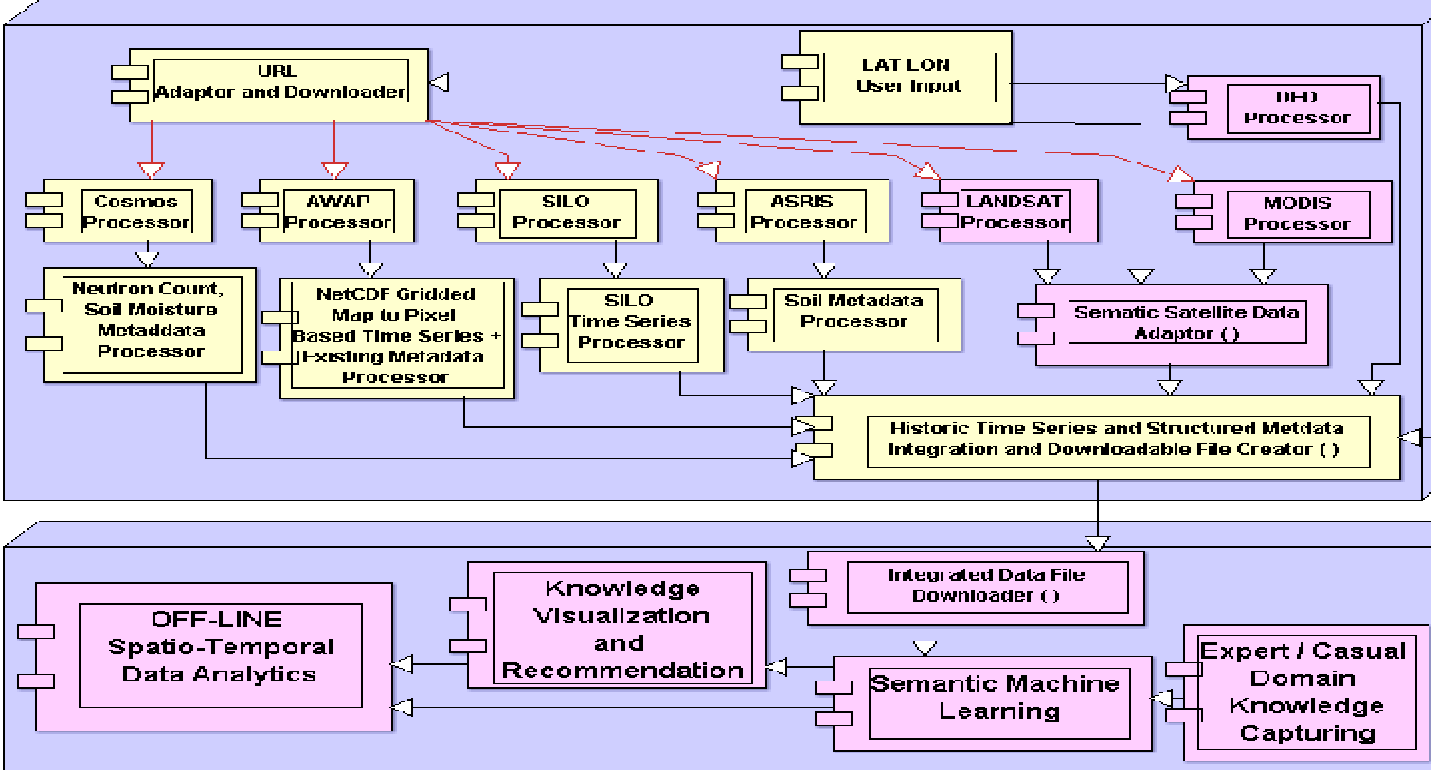 Fig 1. The UML diagram showcasing the integration of metadata and observation data into a unified feature space.
Real-World Impact: Water and Fire
To prove the architecture's effectiveness, the authors deployed it in two high-stakes Australian case studies:
- Water Resource Management: Traditional models often ignore variables like solar radiation or humidity. By using a data-driven approach in Tasmania, the i-EKBase achieved 91.3% accuracy in water balance estimation.
- Wildfire Prediction: By integrating historical NASA-MODIS fire archives with weather variables from Australia's BOM, the system reached an overall prediction accuracy of 94%, with a precision of 96%.
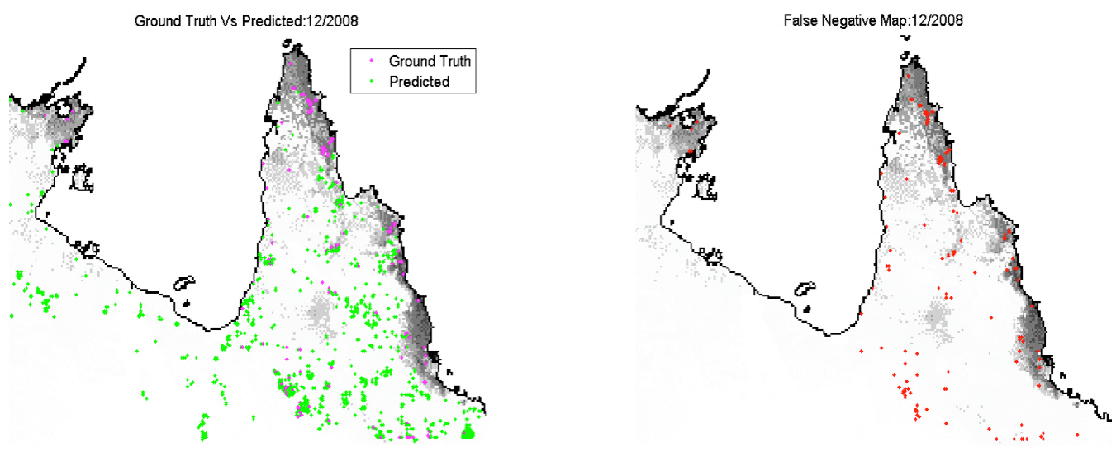 Fig 2. Continental-scale bush-fire hot-spot estimation based on the proposed analytical architecture.
Critical Insight: Why This Matters for the Future
The brilliance of i-EKBase lies in its Ontology Enrichment Adaptor. It doesn't just use rules; it discovers new ones. As the "Semantic Structure Learner" processes data, it identifies new associations that are fed back into the domain ontology.
Key Takeaways:
- Inductive Bias: Incorporating human-defined thresholds acts as a powerful inductive bias that speeds up learning and improves model robustness.
- Data Harmonization: The system effectively deals with "missing segments" in time-series data by using cross-correlation techniques across similar sensor pools.
Conclusion & Limitations
While the architecture is robust, its reliance on manually defined "Rule Constructors" (Fuzzy, Probabilistic) can be labor-intensive to set up for new domains. However, i-EKBase stands as a landmark for Knowledge-Informed Machine Learning, proving that the most powerful environmental AI is one that listens to both the satellite and the farmer.
Future Outlook
As we move into 2026, the next evolution of this work likely involves Graph Neural Networks (GNNs) and Generative AI to further automate the translation of unstructured human stories into the RDF triples that drive these semantic engines.