
Big Data Framework for Smart Grids: Balancing the Energy Equation in Academic Buildings
Big-Data Architecture for Electrical Consumption Forecasting in Educational Institutions Buildings
The paper proposes a specialized Big Data architecture based on the Lambda Architecture pattern for forecasting electrical consumption in educational buildings. Utilizing the Apache Spark ecosystem, Kafka, and HBase, the system aims to achieve a precise balance between energy supply and demand for smart grids in Moroccan institutional settings.
TL;DR
To address the instability of renewable energy integration in schools, this paper introduces a Lambda Architecture-driven Big Data system. By combining Apache Spark for analytics, Kafka for streaming, and HBase for storage, the authors provide a scalable framework to forecast energy consumption by correlating academic schedules, weather patterns, and equipment usage.
The Energy "Storage" Crisis
The National School of Applied Sciences of El Jadida (NSASE) in Morocco aimed to cover 40% of its energy via solar panels. However, they hit a regulatory and physical wall:
- Storage is Expensive: Traditional batteries are costly and inefficient for large-scale institutional use.
- Grid Constraints: Current Moroccan regulations often prevent "selling back" or injecting surplus local energy into the national grid.
The challenge? Production must equal consumption in real-time. To achieve this, you don't just need a better battery; you need a better forecast.
Methodology: The Power of Lambda
The authors argue that traditional relational databases fail under the weight of "Smart Grid" data. Instead, they leverage the Lambda Architecture, which bifurcates data flow into two paths to solve the CAP theorem trade-offs.
1. The Batch Layer (The Librarian)
This layer handles "Cold Data"—historical records stretching back years. It processes structured data like course schedules and equipment wattage. By using Spark SQL, the system extracts patterns (e.g., "How many lab hours are scheduled this month?") to build a baseline for consumption.
2. The Speed Layer (The Sentinel)
This layer deals with "Hot Data"—real-time streams from weather APIs and smart meters. Using Apache Kafka, the system ingests rapid updates on irradiance and temperature, allowing the model to adjust forecasts if a sudden heatwave or storm occurs.
3. The Serving Layer (The Interface)
Finally, the HBase storage system consolidates these views. Unlike traditional DBs, HBase's column-oriented structure allows for the high-velocity "writes" required by hundreds of sensors.
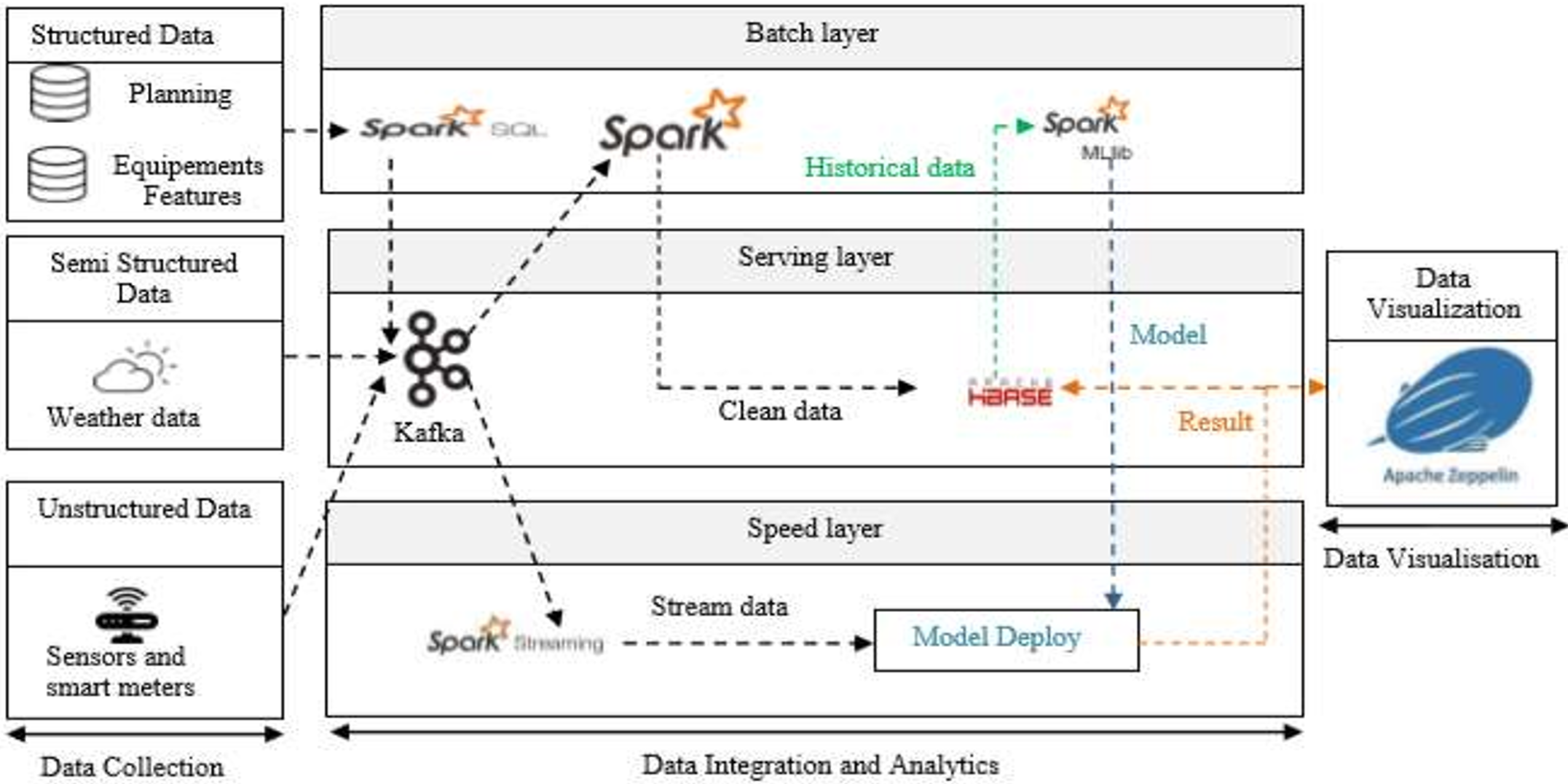 Figure 1: The integration of Spark, Kafka, and HBase within the Lambda framework.
Data Fusion: Beyond Simple Metering
What makes this methodology robust is its recognition that energy isn't just a number—it’s a result of human behavior. The system ingests three distinct data types:
- Occupancy Behavior: Timetables and holiday schedules.
- Equipment Features: Wattage and location of servers, routers, and lab equipment.
- Meteorological Data: Real-time irradiance and temperature.
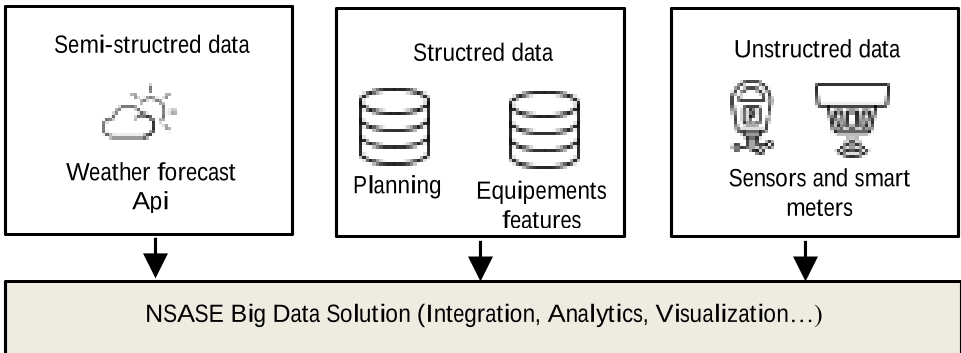 Figure 2: The diverse data input categories required for high-accuracy forecasting.
Experimental Setup & Insights
The system was deployed on a distributed 3-node cluster. Using Scala, the authors demonstrated that Spark could effectively join high-volume historical planning data with real-time Kafka topics.
| Topic Name | Retention | Partitions | Replication Factor |
|---|---|---|---|
| Electrical Data | 2 days | 2 | 3 |
By setting a replication factor of 3, the system ensures Fault Tolerance—a critical requirement for utility-grade smart grids where data loss could lead to power surges or shortages.
Critical Analysis & Future Outlook
Takeaway: The move from monolithic data storage to a distributed Big Data architecture is no longer optional for Smart Grids. This paper successfully demonstrates a blueprint for institutions to become "Energy Independent" through software.
Limitations: While the architecture is sound, the paper focuses heavily on the plumbing (data engineering) rather than the brain (specific ML algorithms). The authors acknowledge that future work is needed to compare specific Spark MLlib algorithms (like Random Forests or Gradient Boosted Trees) to find the most accurate forecaster.
Future Outlook: As we see the rise of IoT, extending this architecture to the Edge (processing data at the sensor level before it hits the Lambda batch layer) will be the next frontier in reducing energy management latency.