
Big Data in Healthcare: A Systematic Roadmap for Handling the Medical Data Explosion
Big data handling mechanisms in the healthcare applications: A comprehensive and systematic literature review
This paper presents a comprehensive Systematic Literature Review (SLR) of big data handling mechanisms in healthcare, identifying 29 key studies from an initial pool of 205. It categorizes these state-of-the-art mechanisms into five distinct domains: machine learning, cloud-based, heuristic-based, agent-based, and hybrid mechanisms, primarily utilizing the MapReduce and Hadoop frameworks.
TL;DR
With healthcare data growing at an exponential rate, traditional local databases are collapsing under the weight of "Big Data." This systematic review (SLR) analyzes how technologies like MapReduce, Hadoop, and various AI paradigms (Agent-based, Machine Learning, Cloud) are being leveraged to transform raw medical records into actionable clinical insights. It provides a crucial taxonomy for choosing the right computational mechanism for tasks ranging from drug discovery to real-time patient monitoring.
The "V" Challenges: Why Healthcare Data is Hard
Healthcare data is not just "large"—it is complex. It involves high Velocity (streaming sensors), Variety (images, genomic sequences, unstructured notes), and Veracity (clinical accuracy). The authors argue that the bottleneck isn't just storage, but the inability of legacy systems to process these datasets in an "economical and timely way."
The Processing Engine: MapReduce and Hadoop
At the heart of modern handling mechanisms lies the MapReduce paradigm.
- Map function: Decomposes healthcare tasks (like scanning millions of protein sequences) into key/value pairs.
- Reduce function: Aggregates the results into a final output (identifying a specific protein bond).
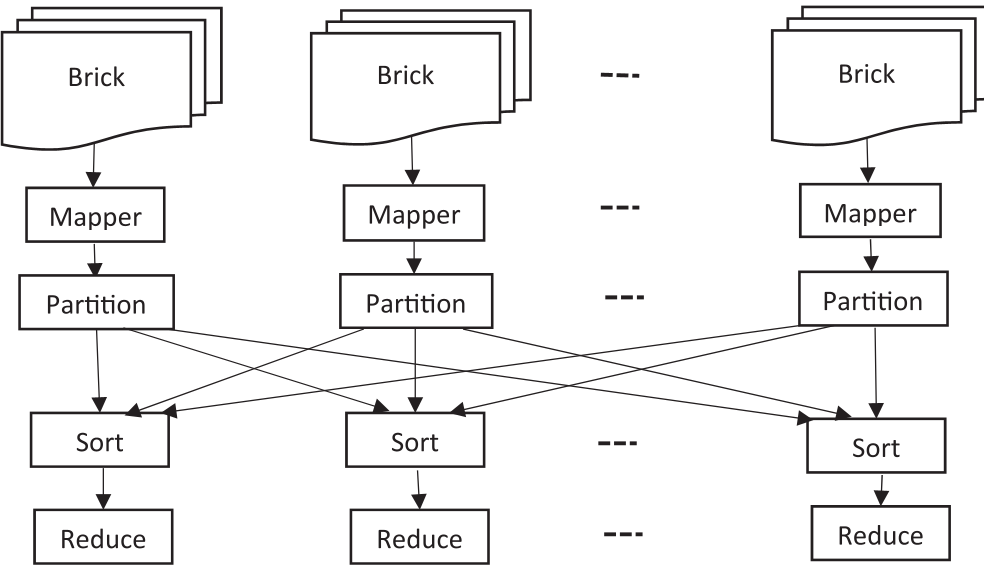 Fig 1: The standard MapReduce workflow utilized in healthcare distributed clusters.
Methodology: The Five Pillars of Big Data Handling
The paper categorizes the landscape into five specialized mechanisms:
1. Machine Learning (Analytical Depth)
Models like Parallel SVMs and Decision Tree Forests are used for high-dimensional data such as gene expressions.
- Insight: Parallelizing these models using Hadoop reduces training time significantly, though they often require frequent retraining as new drugs or diseases emerge.
2. Agent-Based Mechanisms (Autonomy)
These systems use "Intelligent Agents" that can act autonomously.
- Application: Real-time monitoring of vital signs where "agents" on wearable nodes communicate directly with centralized analytics to detect emergencies without human intervention.
3. Cloud-Based Mechanisms (Scalability)
The paper highlights the shift from SQL to NoSQL (e.g., HBase, MongoDB).
- Advantage: These allow for "pay-as-you-go" scalability and high availability, though the authors warn of "Accumulated Network Latency" in medical imaging.
4. Heuristic & Meta-Heuristic (Optimization)
Used for NP-hard problems in bioinformatics, such as protein ligand binding geometries where finding an exact solution is computationally impossible.
5. Hybrid Mechanisms (The Best of All Worlds)
These combine mechanisms (e.g., using Cloud for storage and Machine Learning for inference) to mitigate the weaknesses of individual approaches.
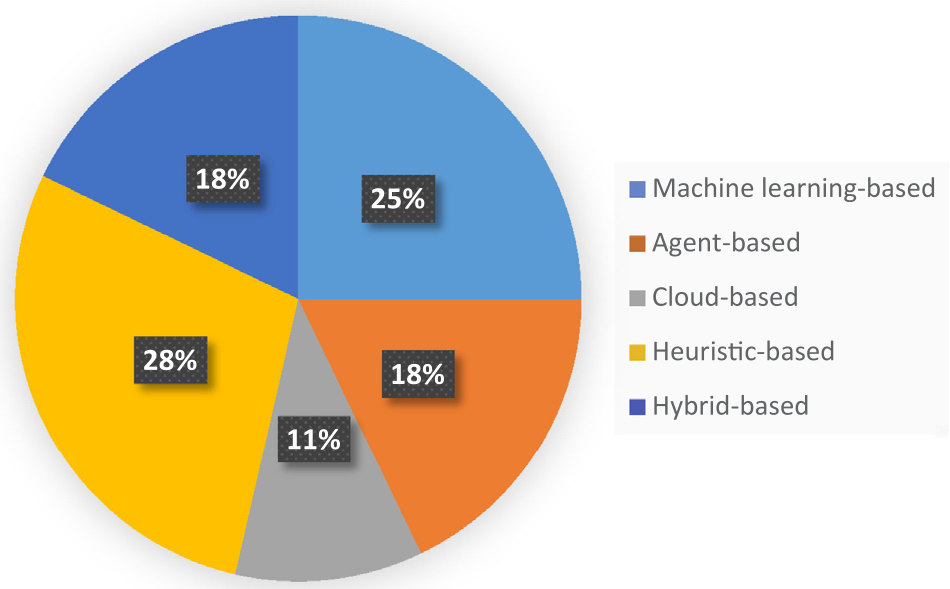 Fig 2: Distribution of research focus across the five handling mechanisms.
Critical Findings & SOTA Comparison
The SLR found a massive spike in research output leading into 2016, with Elsevier and IEEE dominating the literature.
| Mechanism | Key Strengths | Critical Weakness |
|---|---|---|
| Machine Learning | Accuracy, High performance | High execution time/Complexity |
| Agent-Based | Real-time, Security | Storage limitations on edge |
| Cloud-Based | Flexibility, Availability | Privacy concerns, Latency |
| Heuristic | Parallelism, Efficiency | Pandemic Absence/Complexity |
Deep Insight: The Open Frontiers
Despite the progress, the authors point out several glaring gaps:
- Privacy vs. Utility: Most platforms prioritize processing speed but fail to implement advanced encryption that doesn't slow down clinical workflows.
- Lack of Automation: Many "Big Data" systems still require manual data labeling or initial "web spidering," making them semi-manual rather than fully autonomous.
- Real-world Evaluation: Many proposed mechanisms are tested in simulations rather than messy, real-world hospital environments.
Conclusion: Toward "Home-Diagnosis"
The paper concludes that the future of healthcare lies in Cloud-based self-caring services. By integrating history-symptom lattices with distributed search clusters, we can move from reactive hospital treatment to proactive "Home-diagnosis." However, until security and real-time access are perfected, big data in healthcare remains a powerful tool that still requires a cautious human hand.