
Intelligent Design in Healthcare: Leveraging Big Data and Spark for Real-Time Diagnostics
Big data approach in healthcare used for intelligent design — Software as a service
The paper introduces a SaaS-based healthcare platform that leverages Big Data analytics, Apache Spark, and IBM Watson to provide intelligent symptom detection and personalized medical recommendations. By processing vast amounts of clinical and patient-cleansed data, the system achieves a 75% accuracy rate in automated medical suggestions.
Executive Summary
TL;DR: This paper presents a cloud-based Software-as-a-Service (SaaS) platform designed to bridge the gap between patients and medical professionals using Big Data analytics. By integrating Apache Spark for high-speed distributed computing and IBM Watson for intelligent analysis, the system transforms raw healthcare data into actionable medical recommendations with a verified accuracy of 75%.
Background: Positioned in the intersection of Service Computing and Bioinformatics, this work moves beyond traditional static electronic health records toward a dynamic, self-learning ecosystem capable of spotting disease patterns faster than traditional medical portals.
Problem & Motivation: The 5V Challenge
The healthcare industry is currently drowning in data—expected to reach 25,000 petabytes—yet remains "information poor." The authors identify several critical bottlenecks:
- The Expertise Gap: Traditional hospital IT staff are proficient in SQL but lack the Ph.D.-level expertise required for complex Big Data environments.
- The Prohibitive Cost: Proprietary relational databases and Storage Area Networks (SAN) are too expensive for the scale of data being generated.
- Accessibility: Over half the world's population lacks timely medical diagnosis, often due to the "barrier of space and time."
The core insight of the San Jose State University team is that healthcare data is most valuable when kept "raw" (the Sushi Principle) and processed using in-memory distributed frameworks that can handle unstructured data without the overhead of immediate semantic binding.
Methodology: A Three-Tier SaaS Architecture
The system is built on a robust three-tier architecture that separates presentation, logic, and data storage to ensure multi-tenancy and scalability.
1. Data Handling and Cleansing
Raw data is harvested from sources like the US Federal Health site. The team uses Beautiful Soup for initial scraping and cleansing. Crucially, they address "Data Profiling" to ensure accuracy before feeding the data into the Spark ecosystem.
2. High-Speed Processing with Apache Spark
Unlike the traditional MapReduce model which writes to disk, Apache Spark is utilized for its in-memory computing capabilities. This is vital for healthcare where latency in symptom detection can be life-threatening.
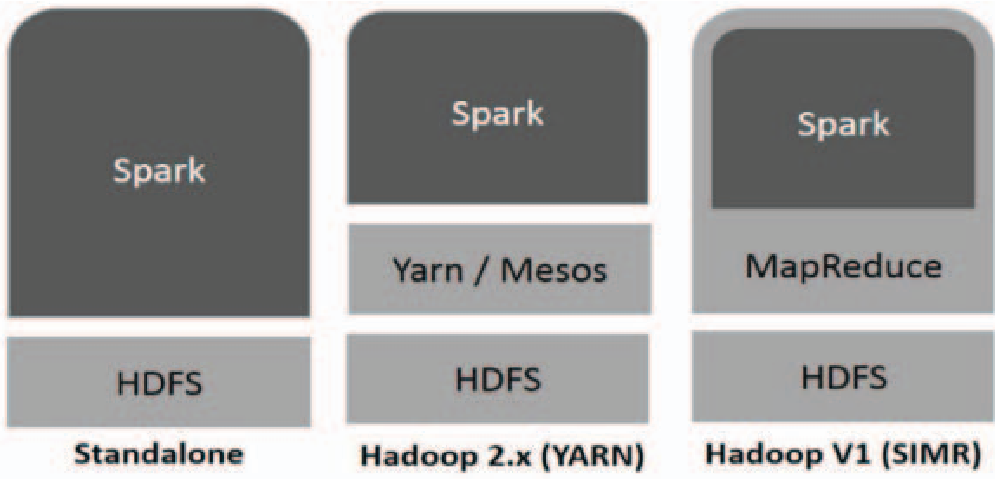 Fig 1: The multi-layered system architecture showing the interaction between the Web UI, Spark, and IBM Watson.
3. Middleware and Security
The application utilizes Node.js and AngularJS for a responsive frontend. Security is handled at three levels:
- Database Level: Using HIPAA-compliant "Data De-Identification" models.
- Application Level: Implementing multi-tenant security wrappers.
- Data Entry Level: Encrypting data at the moment of generation.
Experiments & Results: Outperforming the Gold Standard
The researchers compared their platform against the Mayo Clinic, widely considered the benchmark for consumer-facing medical info.
- Higher Granularity: The Spark-driven model identified significantly more symptoms per disease (e.g., HIV/AIDS and ZIKA) by training on diverse, unstructured data sources that traditional sites often ignore.
- Predictive Accuracy: The system achieved a 75% accuracy rate in preliminary recommendations, which are then routed to human doctors for final validation, ensuring a "human-in-the-loop" safety mechanism.
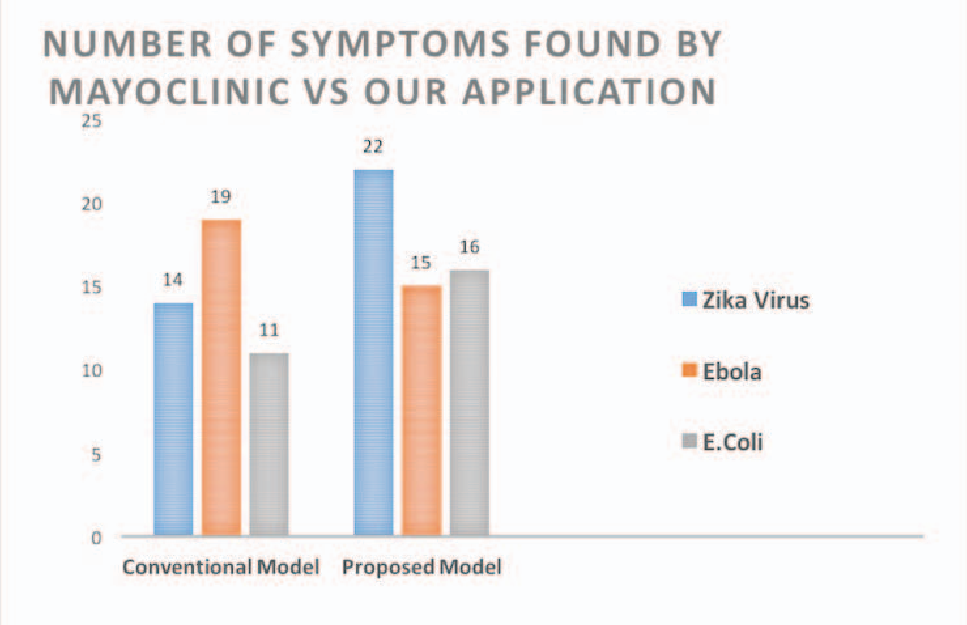 Fig 2: Analysis showing that the proposed model identifies a higher volume of symptoms compared to existing healthcare benchmarks.
Critical Analysis & Conclusion
Takeaway
The paper successfully demonstrates that distributed computing is not just a tool for tech giants but a necessity for modern healthcare. By utilizing commodity hardware and open-source frameworks like Hadoop and Spark, the authors offer a roadmap for "Economical Medical Help" that can scale to underserved populations.
Limitations
While the 75% accuracy is promising, the system still relies heavily on the quality of raw data scraped from the web. The "Sushi Principle" (raw data) is powerful but carries risks of "Veracity" if the source data contains misinformation.
Future Prospect
The integration of IBM Watson suggests a future where AI-driven "one-click" clinics become the norm. The next logical step for this research would be integrating real-time telemetry from wearable IoT devices directly into the Spark Streaming API for preventative healthcare monitoring.