
Big Data in Healthcare: Transforming an "Avalanche" into Insight
Big Data in Healthcare: Are we getting useful insights from this avalanche of data?
This paper explores the utility of Big Data analytics in healthcare by implementing a neural network-based classification model. Using the Keras framework, the authors classify individual tendencies toward drug consumption based on personality traits and biodata, achieving a mean accuracy of 76.87% on a specific drug dataset.
TL;DR
While the healthcare industry is drowning in data, we are often "insight-poor." This paper demonstrates a practical application of Big Data analytics using a simple yet effective Neural Network to predict substance abuse risks based on personality traits. Despite a small sample size, the model achieved nearly 77% accuracy, proving that the richness of attributes is just as critical as the volume of data.
Executive Summary
In the era of Zettabytes, the healthcare sector faces a paradox: an abundance of data (the "avalanche") but a scarcity of actionable insights. This research, published in ICSIE '19, serves as a proof-of-concept for healthcare stakeholders—especially in developing regions—showing that modern machine learning frameworks like Keras can decode the complex, non-linear relationships between a patient’s personality and their health risks.
The "4 Vs" of Healthcare Data
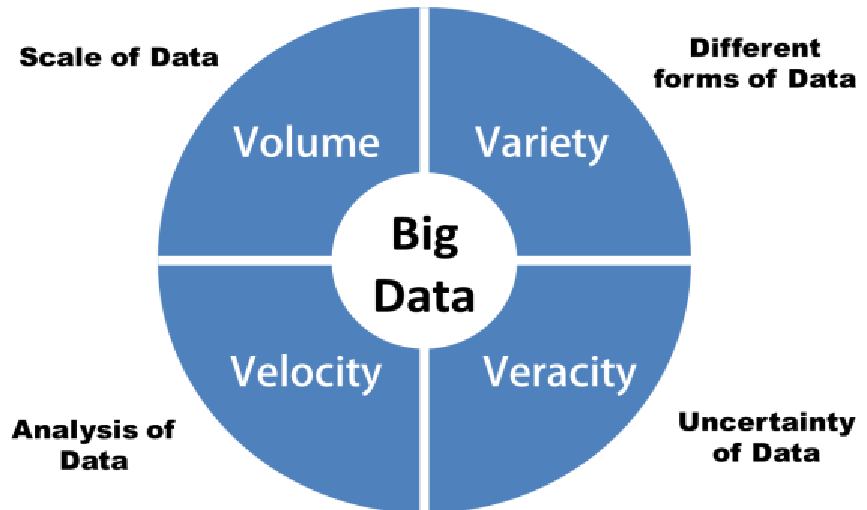
To understand why this problem is difficult, the authors revisit the fundamental characteristics of Big Data, often referred to as the Four Vs:
- Volume: Growing from exabytes to zettabytes, dominated by unstructured data (80%).
- Variety: A chaotic mix of structured EMRs and unstructured doctor’s notes, X-rays, and MRI scans.
- Velocity: The need for real-time monitoring (e.g., ICU bedside monitors) to reduce mortality.
- Veracity: The critical challenge of data "trust"—cleaning the "noise" or "garbage" to ensure clinical accuracy.
Methodology: Personality as a Predictor
The core of this study is the extension of the "Five Factor Model" (NEO-FFI-R) research. The authors didn't just look at medical history; they looked at the human element.
The Architecture
Using the Keras Deep Learning framework, the team built a classifier designed to predict "Volatile Substance Abuse."
- Input Layer: 30 nodes (comprising personality measures like impulsivity, sensation seeking, and biodata like age/education).
- Hidden Layer: A single dense layer with 8 nodes to manage computational efficiency (minimizing cognitive load).
- Output Layer: 7 nodes representing classification categories.
Experimental Results & Performance
The model was rigorously tested using 5-fold cross-validation. A notable finding was the model's ability to maintain stability with a small standard deviation, suggesting that the features selected (personality traits) are robust indicators of the target behavior.
| Validation Set | Mean Accuracy | Standard Deviation |
|---|---|---|
| 0.15 Set | 76.87% | 0.0097 |
| 0.05 Set | 75.86% | 0.0123 |
The authors observed that the model generalized better on the validation set (77.53%) compared to the training set in certain configurations, indicating that even with sub-2000 samples, the multivariate nature of the data allows for deep relationship discovery.
Critical Insights & Future Outlook
The primary takeaway from this research is that "Big Data" doesn't always require "Big Samples." In clinical settings where data might be sparse but features are "wide" (multivariate), simple Neural Networks can outperform traditional statistical methods.
Limitations
- Sample Size: While effective, 1,885 samples is small for true "Big Data" depth.
- Focus: The study is limited to drug consumption; expanding this to chronic disease prediction (like diabetes or cardiovascular risk) would be the true test of this architecture.
Conclusion
The study concludes that the "Avalanche of Data" is only useful when paired with tools that reduce the "frequency of user actions" and "cognitive load." By integrating psychological metrics (Personality Measures) into standard medical records, healthcare providers can move from reactive treatment to proactive risk management.
Keep exploring: How will the integration of Wearable Sensors change the 'Velocity' of this data in the next decade?