
Google's Marketing Engine: How Big Data Integration Drives a Global Advertising Ecology
Research on Marketing System Construction of Internet Platform Based on Big Data Technology
This paper explores the construction of a big-data-driven marketing system using Google as a primary case study. It details how the integration of large-scale data processing (e.g., BigQuery, MapReduce) and a comprehensive user labeling system enables a robust marketing ecology including Google Ads and Google Marketing Platform (GMP).
TL;DR
This research dissects Google's marketing architecture to reveal how big data moves from raw collection to actionable profit. By leveraging distributed computing (BigQuery) and a refined user labeling system, Google has built a synergistic ecosystem—comprising Google Ads, Ad Manager, and Google Marketing Platform (GMP)—that bridges the gap between massive data scale and precision targeting.
Background Positioning
In the landscape of digital economics, this paper serves as an architectural case study. It moves beyond the "what" of big data to explain the "how" of its commercialization within the world's most successful advertising platform.
Problem & Motivation: The "Data Silo" Challenge
Most platforms struggle with "Data Silos"—where search intent, device behavior, and third-party purchase data are disconnected. For an Internet platform, the pain point is clear: How do you transform petabytes of unstructured noise into a high-conversion marketing signal?
The authors argue that the bottleneck isn't just data volume; it is the lack of a cohesive "ecology" that allows data to flow seamlessly between analysis tools and advertisement delivery systems.
Methodology: The Technical Backbone of Marketing
Google’s success is built upon a two-tier technical foundation:
1. Robust Infrastructure (The Engine)
The paper traces the evolution from the "old troika" (GFS, MapReduce, BigTable) to the modern era of BigQuery and Caffeine.
- BigQuery Integration: Processing 5TB in 15 seconds allows for real-time marketing adjustments.
- Machine Learning: The "Google Brain" team continuously optimizes the algorithms that predict user intent.
2. The Multi-Source Labeling System
Google aggregates data from four distinct streams:
- Own Business: Android (2B+ devices), YouTube, and Search history.
- Acquisitions: Wearable data from Fitbit and content data from YouTube.
- Third-party: Footprints tracked via Google Analytics on external sites.
- User Surveys: Direct feedback for satisfaction optimization.
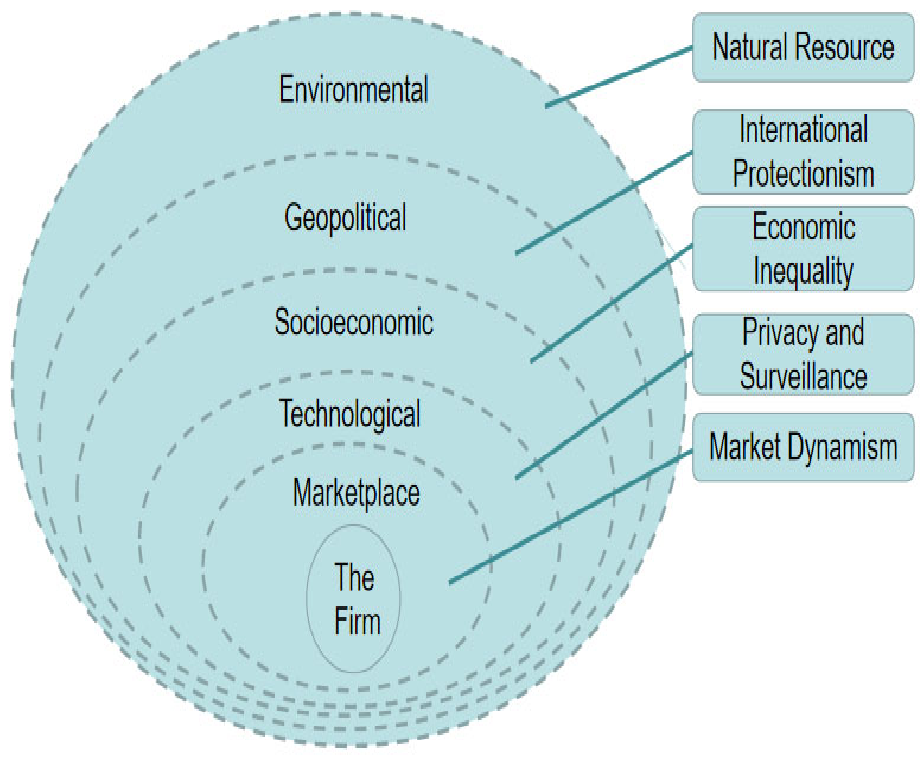 Fig 1. The holistic structure showing the interplay between data sources and marketing output.
Experiments & Results: Synergy in the Ecology
The paper emphasizes the 2019 reorganization of Google’s data products, which created a tiered service model:
- Google Ads: Designed for search and display targeting without third-party data—ideal for SMBs (Small-to-Medium Businesses).
- Google Marketing Platform (GMP): Specifically built for enterprise-level clients, allowing the integration of CRM systems and third-party DMP platforms.
Key Performance Indicators:
- Reach: The display network now covers 90% of global internet users.
- Integration: By connecting Google Ads with GMP’s analysis components, advertisers can achieve a "full-cycle" marketing solution from insight to conversion.
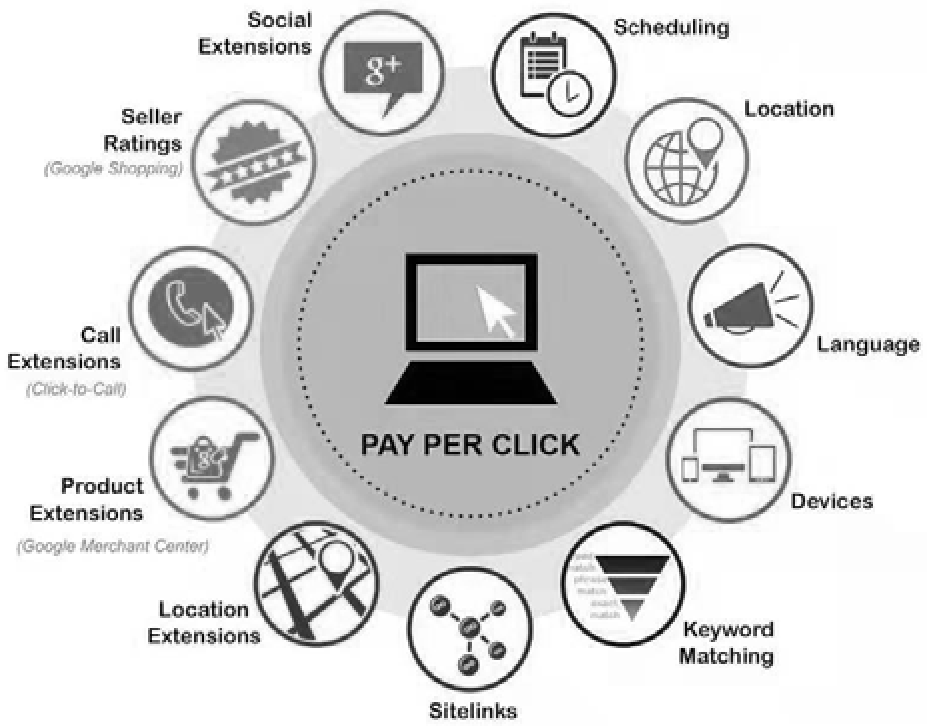 Fig 2. The GMP framework integrating advertising tools (Search Ads 360, Display & Video 360) with analysis tools (Analytics, Data Studio).
Critical Analysis & Conclusion
The core takeaway is that technology is the foundation, but ecology is the product. Google's dominance isn't just because it has the most data; it's because it has built a "shared data" environment where tools like TagManager and BigQuery speak the same language as the advertising delivery platforms.
Limitations & Future Outlook
While the paper focuses on the technical and ecological success, it touches less on the increasing regulatory pressures (like GDPR/CCPA) that challenge the very data-gathering methods (third-party tracking) that Google relies on. The next frontier for such platforms will likely be Privacy-Preserving Computation—maintaining this marketing efficiency while moving away from individual tracking toward cohort-based modeling.
Final Thought
For any platform aiming to monetize data, the lesson is clear: Stop building isolated tools. Build a unified labeling system and a seamless data warehouse that serves the entire advertiser lifecycle.