
Bridging the Gap: How Big Data and Machine Learning are Redefining Marketing Pedagogy
Innovation of Practical Teaching Mode of Marketing Major-Market Research and Forecast under the Background of Big Data
This paper proposes an innovative practical teaching mode for Marketing majors by integrating Big Data analytics and Machine Learning. Using a tourism website as a case study, it employs a Logistic Regression model to predict user behavior and retention, achieving a prediction accuracy of approximately 70.8%.
TL;DR
In an era where data is the new oil, marketing education is undergoing a seismic shift. This paper introduces a sophisticated practical teaching framework that moves beyond traditional case studies. By leveraging Logistic Regression and Big Data, students analyzed over 46 million user records from tourism websites to predict churn and retention with 70.8% accuracy, effectively bridging the gap between classroom theory and industry-grade data science.
The Motivation: Why Marketing Needs "Hard" Science
The modern marketing landscape is no longer just about creative slogans; it is about managing massive datasets to understand user intent. The authors identify a critical pain point in higher education: students often lack the quantitative "innovation consciousness" required to handle problems like low user loyalty and conversion in competitive sectors like online tourism. The insight here is simple yet powerful—by using machine learning as a pedagogical tool, students learn to let the data dictate the marketing strategy.
Methodology: From Raw Data to Behavioral Insight
The core of this work lies in transforming massive behavioral logs into a predictive model. The workflow follows a structured supervised learning pipeline:
- Data Acquisition: Utilizing 46,518,478 records from a tourism website (2017–2019).
- Feature Engineering: Reducing 45 complex characteristic indexes to 16 primary components using Principal Component Analysis (PCA) to avoid the "curse of dimensionality."
- Algorithmic Modeling: Applying the Logistic Regression formula to calculate the probability () of an event (user retention).
Where represents the linear combination of user features such as visit frequency, landing time, and price preference.
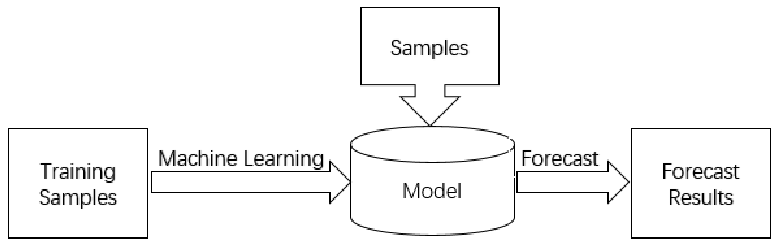 Figure 1: The Supervised Learning workflow adopted in the teaching model.
Experiments and Market Forecasting
The results provide a fascinating look at what actually drives user loyalty in the tourism industry:
- Positive Drivers: The variable
nums_visit(number of visits) showed a coefficient of 1.102, indicating that frequency is the primary predictor of a "retained" user. - Negative Drivers: Interestingly,
cost_cr(cost conversion metrics) showed a coefficient of -0.385, suggesting that certain cost structures significantly drive users away. - Model Performance: The system achieved a robust R-squared value of 0.708, proving the model's reliability for academic and practical use.
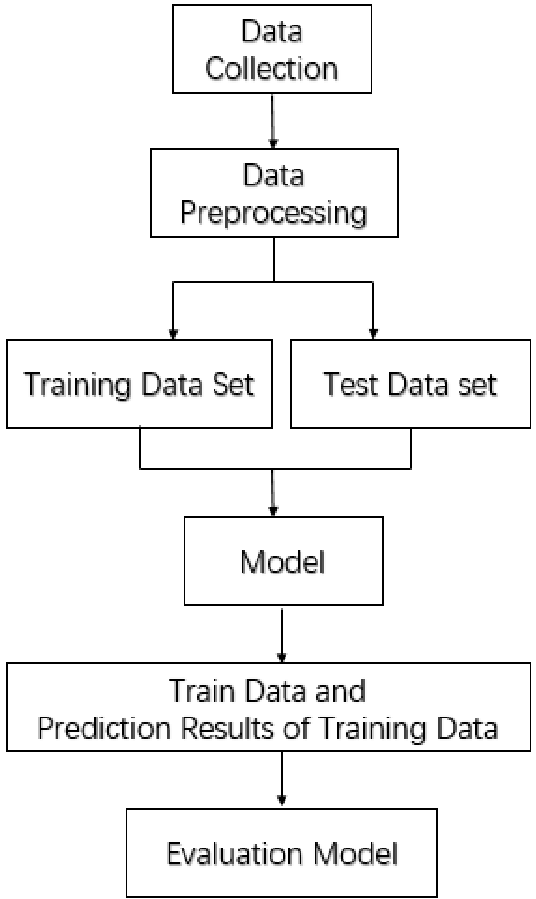 Figure 2: The step-by-step prediction process from data cleaning to outcome evaluation.
Critical Insight & Future Outlook
The true value of this paper isn't just the 70% accuracy—it's the methodological shift. By forcing students to interact with toolsets like Stata and concepts like "Significance Tests" (), the teaching mode evolves from qualitative guessing to quantitative forecasting.
However, there are limitations. While Logistic Regression offers high interpretability (crucial for students to understand why a prediction was made), it may struggle with the non-linear complexities that more modern architectures like Gradient Boosted Decision Trees (GBDT) or Neural Networks might capture. For future marketing professionals, this model serves as the essential "entry point" into a world where the best marketer is often the one with the best algorithm.
Takeaway: Data-driven marketing is no longer an elective; it is the foundation. This teaching mode ensures that the next generation of marketers can not only create a brand but also predict the very heartbeat of their consumer base.