
Predicting Virality: How Big Data Decodes Social Engagement in Modern Newsrooms
Application of Big Data Technology in News Analytics on Social Networks
This paper analyzes the technical framework and business application of NewsWhip, a big data platform specialized in news analytics. It details how the system utilizes web crawlers and social APIs to track digital objects and identifies the "rate of change in social activity" as the key metric for predicting viral content.
TL;DR
In the digital age, being "first" is as important as being "accurate." This paper explores NewsWhip, a leading big data platform that shifts the focus from simple engagement counts to Engagement Velocity. By monitoring millions of digital objects and calculating the acceleration of social interactions, newsrooms can now predict viral trends with nearly 80% accuracy.
The Problem: The Noise of the Digital Ocean
For modern publishers, the challenge isn't a lack of information—it's the sheer volume of it. Traditional web analytics platforms often look backward, showing what was popular yesterday. However, newsrooms need to know what will be popular in the next hour.
The primary pain point identified is the latency of insight. By the time a story has 100k likes, it’s already peaked. The opportunity for discovery has passed. Identifying a story when it has only 10 likes—but is gaining 50 more every minute—is where the value lies.
Methodology: The Anatomy of NewsWhip
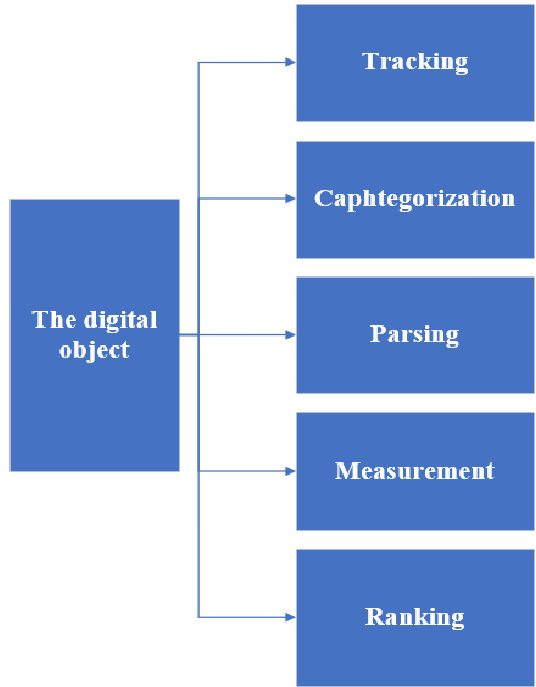
The paper breaks down the technical procedure of NewsWhip into a four-stage pipeline: Tracking, Categorization, Parsing, and Ranking.
1. Data Collection & Parsing
NewsWhip uses a dual-track collection system. First, it monitors the "Digital Object" (the source) via web crawlers and RSS feeds. Second, it pings the APIs of Major Social Networks (Facebook, Twitter, YouTube, etc.) to track metadata and engagement signals.
2. The Core Mechanic: Rate of Change
The "Secret Sauce" of the platform is not just counting likes, but measuring the acceleration of interactions.
- Dynamic Weighting: Not all interactions are equal. A "Share" indicates a stronger endorsement and higher dissemination potential than a "Like."
- Velocity Formula: The system calculates the difference in social scores over specific time intervals. A high rate of change triggers the "High Velocity" indicator in the dashboard.
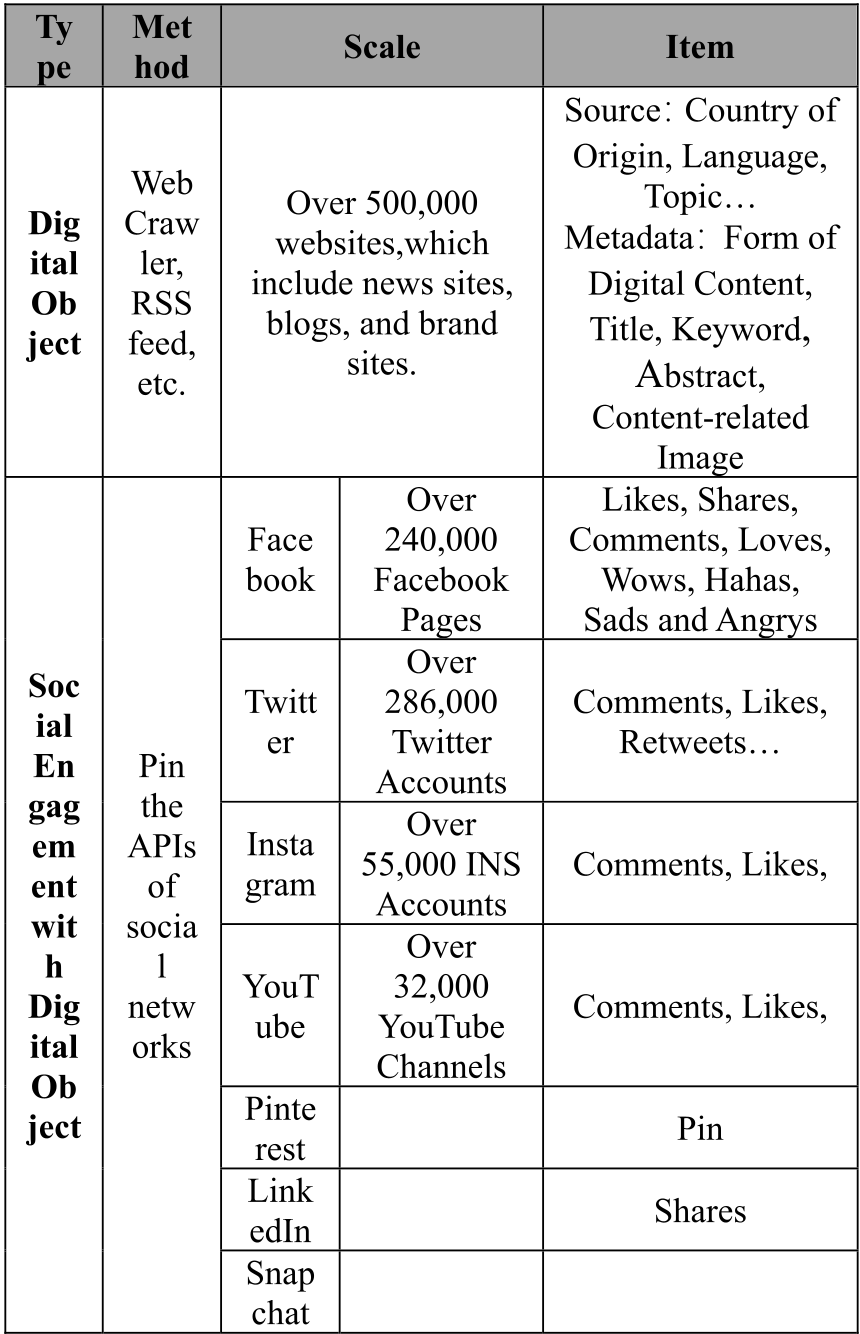 Table: The scale and diversity of data collected by NewsWhip.
Experiments & Real-World Impact
The platform's effectiveness is validated through its two flagship products: Spike (Real-time discovery) and Analytics (Historical insights).
- Predictive Accuracy: According to the Irish High-end Computing Center (cited in the paper), the algorithm successfully predicts 79% of major viral stories.
- Real-time Velocity: The "Highest Velocity" and "Predicted Interaction" indicators allow users to see how a story will perform 24 hours in advance.
- Custom Alerts: The system moves from a "Pull" to a "Push" model, sending alerts via Slack or Email within 2-3 minutes of a topic reaching a set engagement threshold.
 Visualizing Social Network Activity and Engagement Velocity.
Critical Insight: Why Velocity Matters
The fundamental contribution of this work is highlighting that the speed of dissemination is a more accurate proxy for "newsworthiness" than total volume. In a world of bot-inflated metrics, organic acceleration (sudden spikes in shares and comments) is harder to fake and highly indicative of human interest.
However, the paper also acknowledges a limitation: while NewsWhip attempts to monitor the "entire internet," it currently relies on sampling monitoring. This implies that while the "heavy hitters" are captured, niche or emerging cultural movements might still fall through the cracks if they don't originate from the 500k monitored sites.
Conclusion
This research underscores a tectonic shift in journalism: the transition from the "Editorial Intuition" model to the "Data-Driven Discovery" model. By leveraging big data to monitor the acceleration of social engagement, publishers can not only react to the news but anticipate the cultural zeitgeist before it fully forms.
Takeaway for the Industry: The future of content strategy isn't just about "what" you post, but "when" and "how fast" it moves. Investing in velocity-based analytics is no longer optional for high-stakes media environments.