
Intelligent MOOCs: Leveraging Big Data and Deep Learning for Personalized Higher Education
Improving of personal educational content using big data approach for mooc in higher education
This paper proposes a comprehensive Big Data and Machine Learning framework for Massive Open Online Courses (MOOCs). By integrating Apache Hadoop, Spark, and Deep Learning, the system automates the analysis of student demographics and behavioral logs to provide personalized educational content and strategic course planning.
TL;DR
Massive Open Online Courses (MOOCs) have revolutionized access to education, but their sheer scale makes manual optimization impossible. This paper introduces a scalable framework using Apache Hadoop, Spark, and GPU-accelerated Deep Learning to transform raw student data into personalized learning paths, achieving 80% satisfaction prediction accuracy and 30x faster processing speeds.
Background: The 5V Challenge in Modern Education
The evolution of MOOCs since 2008 has created a data explosion. Unlike traditional e-learning, MOOCs deal with "Massive" audiences, creating a high Volume of logs and a wide Variety of data types (video, text, interactive code, forums). The authors argue that traditional relational databases and CPU-bound processing are no longer sufficient to extract Value from this data in a timely (Velocity) manner.
Methodology: A Hybrid Big Data Architecture
The proposed method moves away from static analysis toward a dynamic, machine-learning-driven ecosystem.
1. The Technology Stack
- Data Layer: Uses MongoDB (NoSQL) to handle non-relational data like access logs and social media interactions.
- Processing Layer: Built on Hadoop and Spark, which is noted for being 100x faster than classic MapReduce for iterative machine learning tasks.
- Intelligence Layer: Employs a suite of algorithms:
- Random Forest: For classifying student trends.
- K-Means: For clustering learners based on behavior.
- Multi-layer Neural Networks: For deep learning tasks.
2. GPU Acceleration: The Secret to Scalability
The authors emphasize the transition from CPU to GPU. While a CPU may have 8 cores, a GPU has hundreds, allowing for massive parallelization of the matrix operations required for Deep Learning.
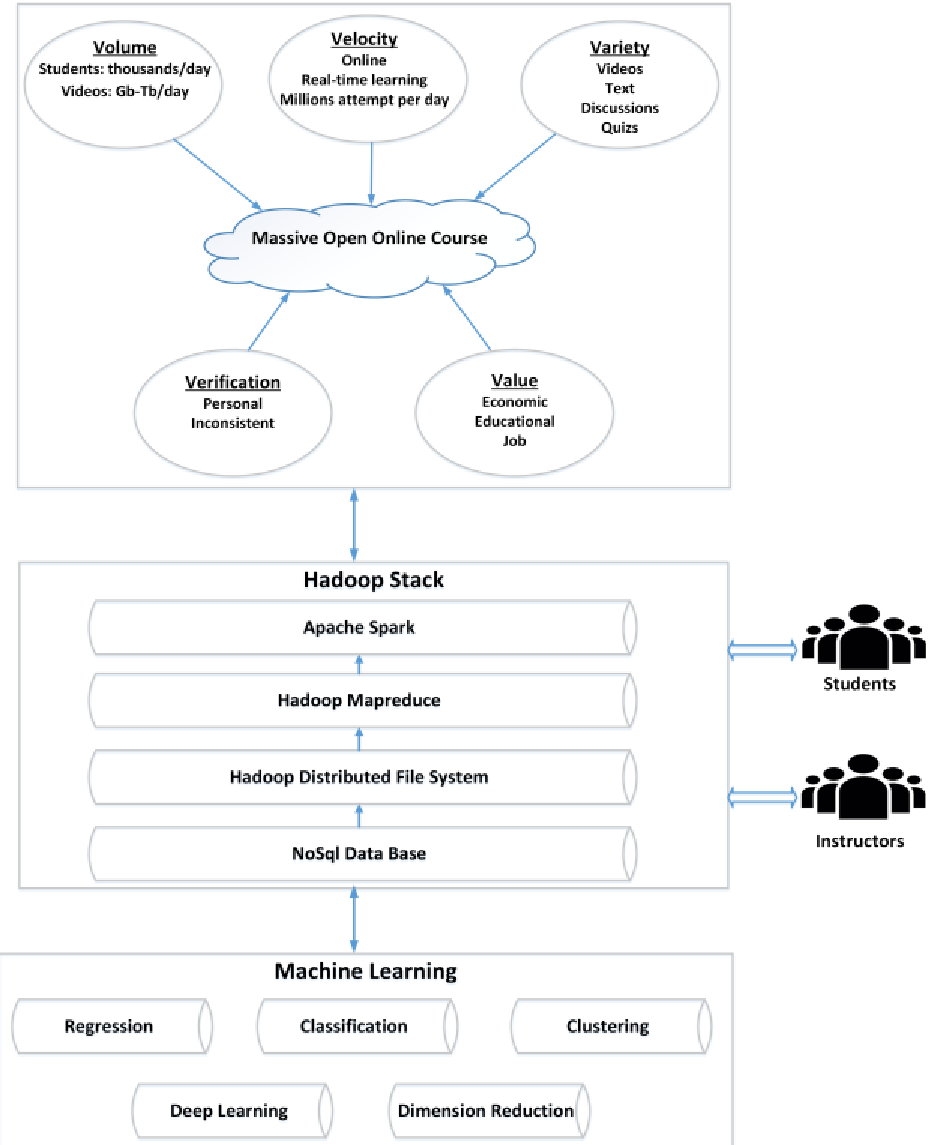 Figure 1: The proposed end-to-end architecture from raw data to strategic educational decisions.
Experimental Insights
The research validated the framework through two primary scenarios:
Scenario A: Satisfaction Prediction
Using a dataset where 75% was used for training and 25% for testing, the system achieved an 80% accuracy rate in determining whether a student would be satisfied with the course content based on their demographics and interaction history.
Scenario B: Deep Learning Performance
The study compared CPU vs. GPU performance for processing media-heavy content. The results were stark: the parallel nature of GPU programming allowed the system to handle high-dimensional eigenvalues (extracted via SVM) significantly faster than traditional architectures.
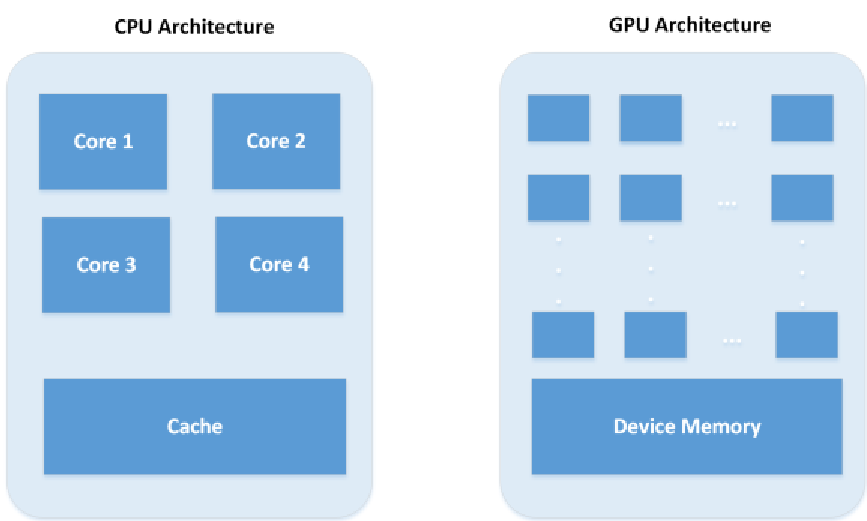 Figure 2: Significant performance gains (up to 30x) achieved through GPU acceleration.
Critical Analysis & Conclusion
The significance of this work lies in its holistic view of educational data. Rather than just looking at grades, it incorporates age, location, and real-time interaction logs to build a "Learning Network."
Takeaways for the Industry:
- Personalization is key: Moving from "one-size-fits-all" to "student-specific" activities reduces attrition.
- Infrastructure Matters: Big Data in education is not just a software problem; it requires specialized hardware (GPUs) and distributed frameworks (Spark) to be viable at scale.
Limitations: While the 80% accuracy is promising, the use of "randomly generated" virtual data for some parts of the testing suggests that real-world noise (e.g., bot traffic, varied internet speeds) might lower performance in a live production environment. Future work should focus on integrating Natural Language Processing (NLP) to better analyze the sentiment of student discussions in forums.