
Predicting Information Integrity: A Deep Learning Approach Informed by Banking Regulation
Big data quality prediction informed by banking regulation
The paper proposes a novel machine learning framework for Big Data Quality Prediction (DQP) specifically tailored for the banking industry's risk data. It combines unsupervised noise detection based on the BCBS 239 international standard with deep sequential learning using Attention-based LSTM networks, achieving a peak precision of 74% in data quality forecasting.
TL;DR
This research introduces a robust machine learning pipeline for predicting Big Data Quality (DQ), specifically within the high-stakes environment of banking risk management. By aligning data noise detection with the BCBS 239 regulatory standard and utilizing Attention-based LSTM networks, the authors move DQ assessment from a reactive manual check to a proactive, forward-looking predictive capability.
Problem & Motivation
In the world of finance, "Garbage In, Garbage Out" can lead to catastrophic regulatory failures and financial losses. However, the sheer volume and velocity of modern "Big Data" make manual data cleansing impossible.
The authors identify two critical gaps in existing research:
- Correlation Blindness: Most methods treat data attributes as independent, ignoring how one noise (e.g., a missing timestamp) might correlate with another (e.g., incorrect risk valuation).
- Temporal Neglect: Data quality issues are often recurrent or sequential. A noise that appears today often persists until rectified, yet many DQP models treat time steps as independent events.
Methodology: The Core
The paper’s architecture is split into a scientific "detection-weighting-prediction" pipeline.
1. Regulation-Informed Noise Detection
Instead of generic rules, the authors define 10 "Data Quality Ratings" (DQR) mapped to the BCBS 239 principles:
- Accuracy/Integrity: Interpretability, Conformity, Indispensability, Uniqueness, Believability, Validity, Consistency.
- Completeness: Completeness and Availability.
- Timeliness: Measuring the "lag" between now and the last update.
2. Impact Weighting via BGMM
To avoid the need for labor-intensive manual labeling, the authors use Bayesian Gaussian Mixture Models (BGMM) to estimate the impact of noises as probability density functions (PDFs). This allows the model to learn the "importance" of specific data errors in an unsupervised manner.
3. Deep Sequential Learning with Attention
The core predictive engine leverages Long Short-Term Memory (LSTM) networks. The integration of an Attention Mechanism is crucial: it allows the model to dynamically weight historical DQ states, focusing on the most relevant past errors to predict future quality drops.
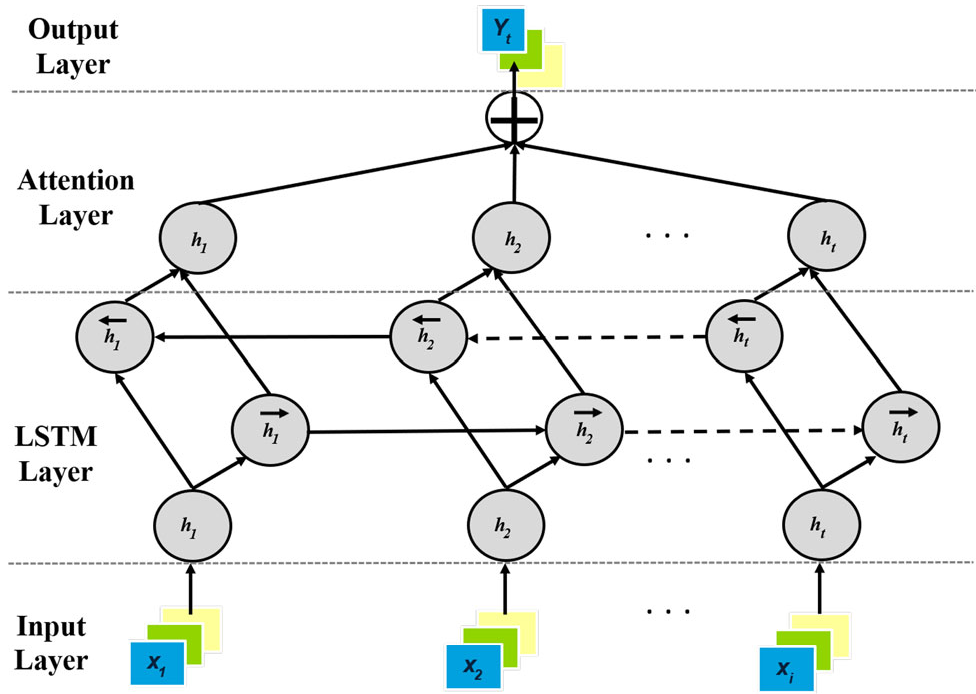 The model architecture displays the Feedforward, Backward, and Bidirectional LSTM variants used to capture temporal dependencies.
Experiments & Results
The model was tested on a massive synthetic dataset of 1 million banking records.
- Performance Benchmark: The Feedforward LSTM with Attention (FF+ATTN) emerged as the winner.
- Key Results:
- Precision: 74%
- Recall: 80%
- Best Domain: Liquidity Risk (LR) data achieved a staggering 86.05% validation accuracy.
- The Advantage of Attention: Integrating the attention mechanism consistently improved precision across all network types (FF, BD, and BL), proving that "selective focus" on critical DQ features is superior to uniform sequence processing.
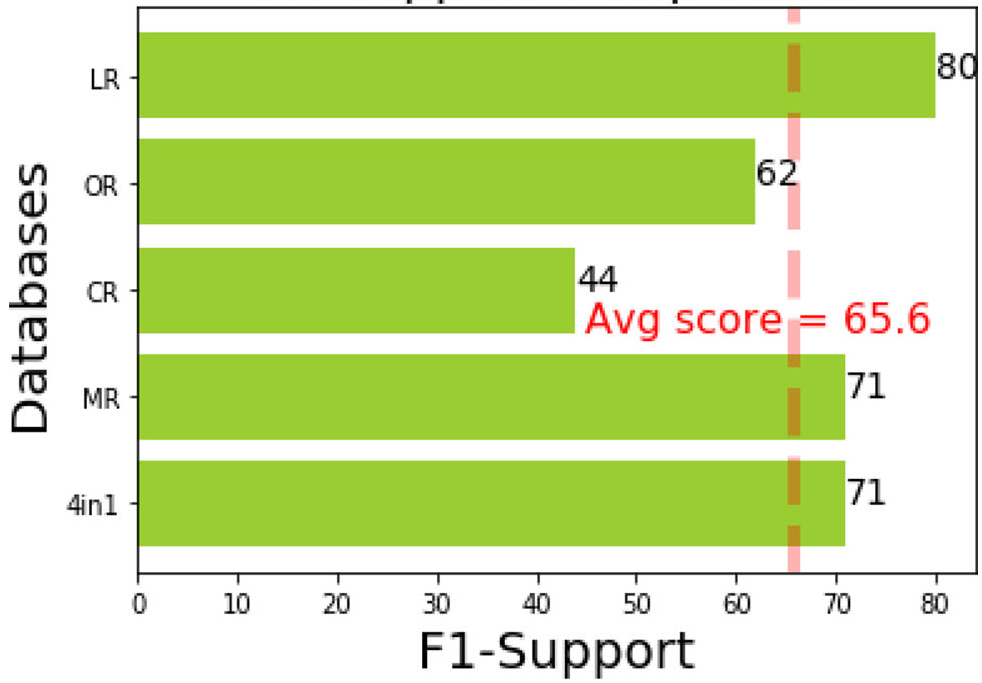 Comparison of Precision, Recall, and F1-support across different banking risk databases (Market Risk, Credit Risk, Operational Risk, and Liquidity Risk).
Critical Analysis & Conclusion
Takeaway
The paper successfully demonstrates that Regulatory Compliance can be transformed into Machine Learning Features. By using the BCBS 239 standard as a blueprint for noise detection, the authors created a model that is inherently relevant to industry needs.
Limitations
- Synthetic Data: While the dataset is large (1M records), it is simulated. Real-world banking data often contains "unknown unknowns" that synthetic generators might miss.
- Computational Cost: Deep LSTMs with large feature sets (132 features across 1M samples) require significant GPU resources, which might be a barrier for smaller financial institutions.
Future Outlook
The authors hint at moving from Prediction to Automatic Remediation. The "holy grail" of data management is a system that not only predicts when data quality will fail but automatically heals the records using its learned understanding of attribute correlations.