
Decoding the Digital Soul: Predicting Personality Through Image Selection
On identification of big-five personality traits through choice of images in a real-world setting
This paper presents an AI-based framework to predict human personality traits based on the "Big-Five" model (Openness, Conscientiousness, Extraversion, Agreeableness, and Neuroticism) using an individual's choice of images. By correlating image preferences with standard IPIP-NEO-120 test results, the authors demonstrate that machine learning classifiers—specifically SVM—can effectively automate personality assessment in real-world settings.
TL;DR
Can your choice of a book cover or a game environment reveal your deepest personality traits? This study explores an AI-driven approach to personality assessment using the Big-Five model. By replacing tedious 120-question surveys with simple image-selection tasks, the researchers achieved up to 83% accuracy in predicting traits like Agreeableness, proving that our visual preferences are a window into our psychological makeup.
Back to the "Why": The Problem with Honesty
Traditional personality tests like the IPIP-NEO-120 are the gold standard in psychology, but they suffer from two fatal flaws:
- Exhaustion: Nobody likes answering 100+ questions.
- The Hawthorne Effect: When humans know they are being tested (especially for a job), they "fake" their personality to match perceived expectations.
The authors of this paper propose a "stealth" assessment. By asking users to perform relatable tasks—like picking images for an autobiography—they tap into the user's subconscious preferences, making the results much harder to game.
Methodology: Mapping Pixels to Psychology
The core of the framework is the PER-250 dataset. The researchers didn't just pick random images; they categorized them based on psychological facets:
- Openness: Abstract art, creative drawings, and grayscale images.
- Extraversion: Bright colors, social gatherings, and many faces.
- Neuroticism: Black-and-white images conveying negative emotions like loneliness or anger.
The Workflow
The team developed a custom web application where 77 participants completed three tasks. The "Score" for each trait was calculated by subtracting chosen "Negative" images from "Positive" images. These scores were then validated against the IPIP-NEO-120 ground truth.
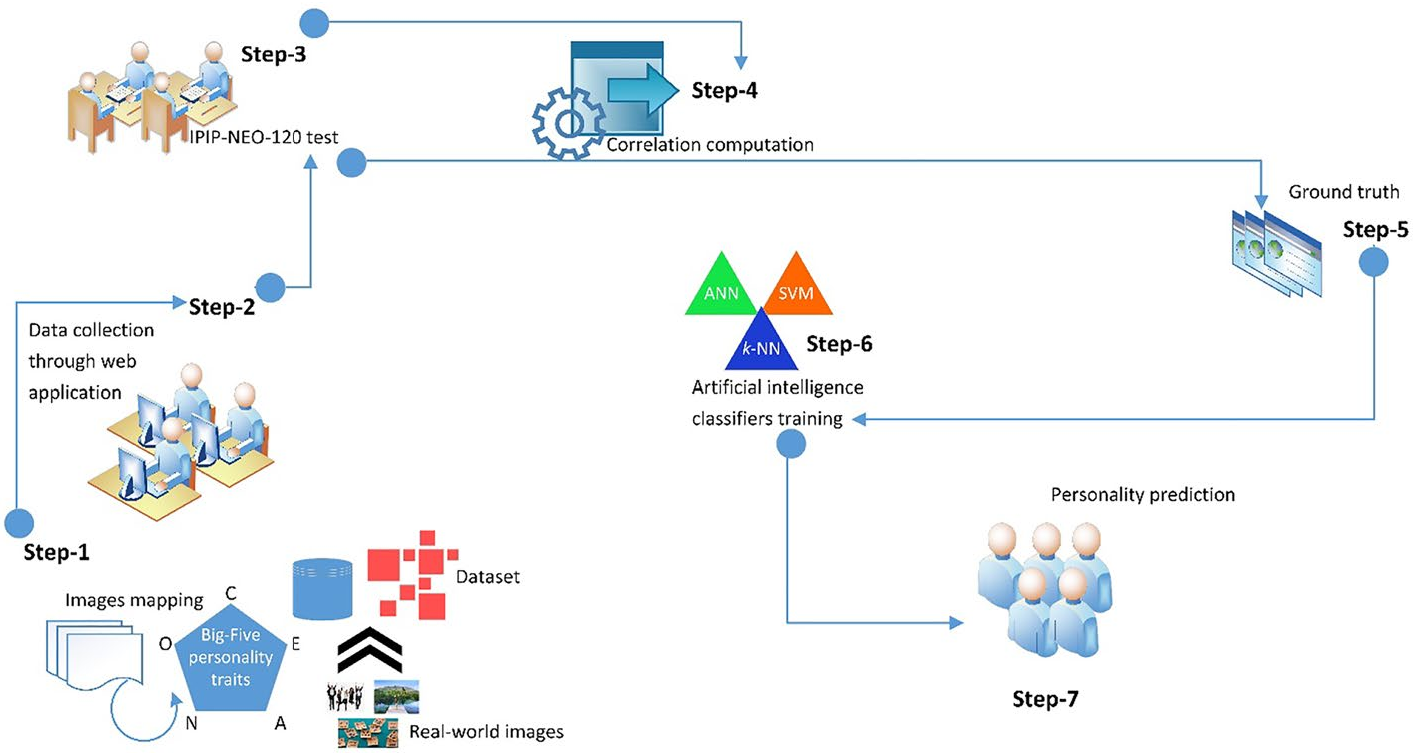 Figure 1: The AI-based framework for image-based personality prediction.
Battle of the Algorithms: Why SVM Won
The study compared three heavy hitters in machine learning: Support Vector Machines (SVM), k-Nearest Neighbors (k-NN), and Artificial Neural Networks (ANN).
Interestingly, SVM with a polynomial kernel outperformed the more "modern" ANN and CNN.
- The Logic: Neural Networks usually require massive datasets (Big Data) to converge. With a specialized dataset of 77 participants, the SVM’s ability to find the optimal "hyperplane" (a boundary that separates traits) proved more robust.
- The Result: SVM reached 83% accuracy for Agreeableness and a solid 70% for identifying the single most dominant trait in an individual.
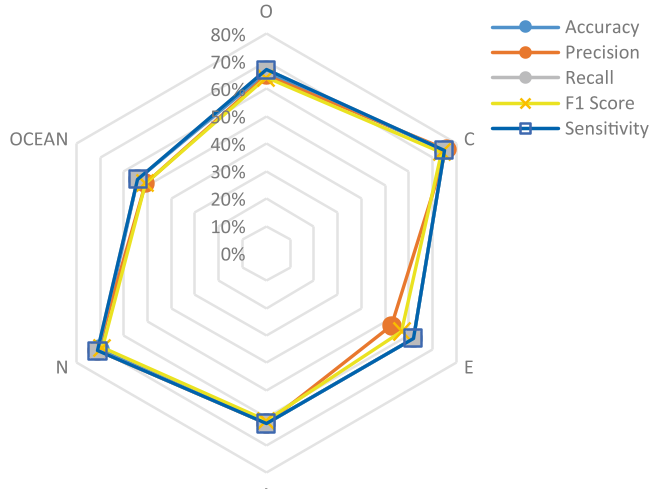 Figure 2: Comparison of the proposed SVM approach against traditional methods and CNNs.
Academic Insight: The Correlation of Color and Character
The study provides fascinating evidence on how traits manifest:
- Conscientious individuals preferred "focused" and "natural" images, reflecting their dependable nature.
- Neurotic individuals gravitated toward higher-contrast, desaturated imagery, signaling emotional instability.
- Agreeable people were drawn to "low-sharpness," bright, and lively social scenes.
Critical Analysis & Future Outlook
While the results are impressive, the study acknowledges a gender imbalance (84% male) and a narrow age bracket (18-25). Personality is not static; it evolves with age.
The Takeaway: This work paves the way for "Affective Computing" in the real world. Imagine an HR tool that assesses cultural fit through a 2-minute visual game, or a marketing engine that adjusts its website UI in real-time based on the images you click. The future of AI is not just about understanding what we say, but understanding how we see.
Conclusion
This paper successfully bridges the gap between high-level psychology and computational intelligence. By proving that 82% of visual choices correlate with established personality tests, the authors have turned "aesthetic preference" into a measurable, scientific metric.