
Engineering Virality: A Bilevel Game-Theoretic Approach to Product Adoption
Bilevel Game-Theoretic Optimization for Product Adoption Maximization Incorporating Social Network Effects
The paper proposes a bilevel game-theoretic framework for viral product design, integrating Influence Maximization (InfMax) from marketing with Product Portfolio Planning from engineering. By modeling the relationship as a Stackelberg game, it successfully optimizes simultaneously for product adoption and product line performance (shared surplus).
Executive Summary
TL;DR: Most companies treat "making a product" and "marketing a product" as two separate steps. This paper argues they should be optimized simultaneously. By using Stackelberg Game Theory, the authors develop a system that picks the best product features (like battery life or screen type) and the best "seed" customers (influencers) at the same time to maximize how many people eventually buy the product.
Background: This work sits at the intersection of Industrial Engineering and Computational Social Science. It moves beyond the traditional SOTA in Influence Maximization (which only looks at people) by incorporating the latent utility of the product itself.
Problem & Motivation: The Silo Between Marketing and Engineering
In the world of social networks, three effects drive success: word-of-mouth, imitation, and network externalities.
- Marketing Teams usually focus on Influence Maximization (InfMax)—finding the right "seeds" to start a viral cascade.
- Engineering Teams focus on Share-of-Choice (SoC)—designing features that satisfy individual preferences.
The problem is that these two objectives often conflict. A product with every viral feature might be too expensive to produce (engineering failure), while a perfectly designed product might have no features that encourage sharing (marketing failure). The authors propose that "virality" can be engineered into the product attributes themselves (e.g., the vanity mirror in early cars or Kindle's "Mayday" button).
Methodology: The Leader-Follower Framework
The researchers model this as a Bilevel Optimization problem:
- Upper Level (Leader - Marketing): Maximizes the total number of adopters () by choosing the seed set () and product configurations ().
- Lower Level (Follower - Engineering): Maximizes the "Shared Surplus" ()—a ratio of customer satisfaction to manufacturing cost—given the leader's choices.
Architecture & Solution Strategy
Solving this is computationally "hard" (NP-hard). The authors use a Coordinate-wise Optimization strategy:
- Fix the product features and find the best seeds using the CELF++ algorithm.
- Fix the seeds and find the best features using a Hybrid Taguchi-Genetic Algorithm (HTGA).
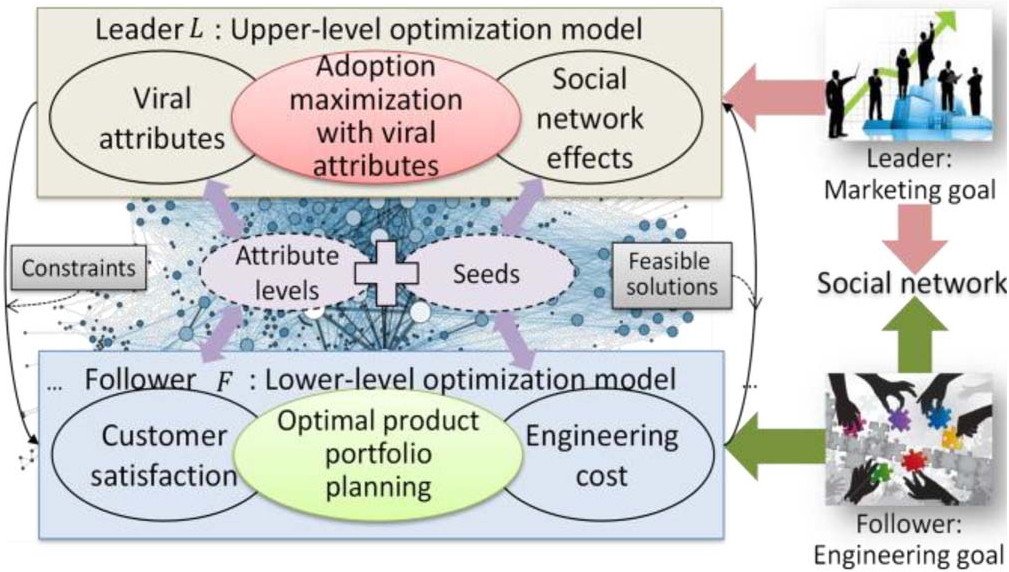 Figure 1: The interaction between social network effects (marketing) and product portfolio planning (engineering).
The Taguchi Method is the "secret sauce" here. Instead of checking every possible combination of features (which could be in the millions), it uses "Orthogonal Arrays" to sample the feature space statistically, making the search for the optimal design incredibly efficient.
Experiments: The Kindle Fire Case Study
The authors validated their model using real-world data from Amazon.com, crawling 50 weeks of reviews and comments for the Kindle Fire HD.
Key Findings:
- Efficiency: The HTGA reached convergence much faster than traditional Genetic Algorithms, saving 56% in computation time.
- The "Viral" Feature Set: The model identified specific attributes—like 32GB storage and "glare non-sensitive" screens—that consistently drove adoption regardless of who the initial seeds were.
- Synergy: As shown in the performance graphs, when you combine "Seed Selection" with "Viral Product Design," the resulting adoption spread grows at a much higher rate than using either method alone.
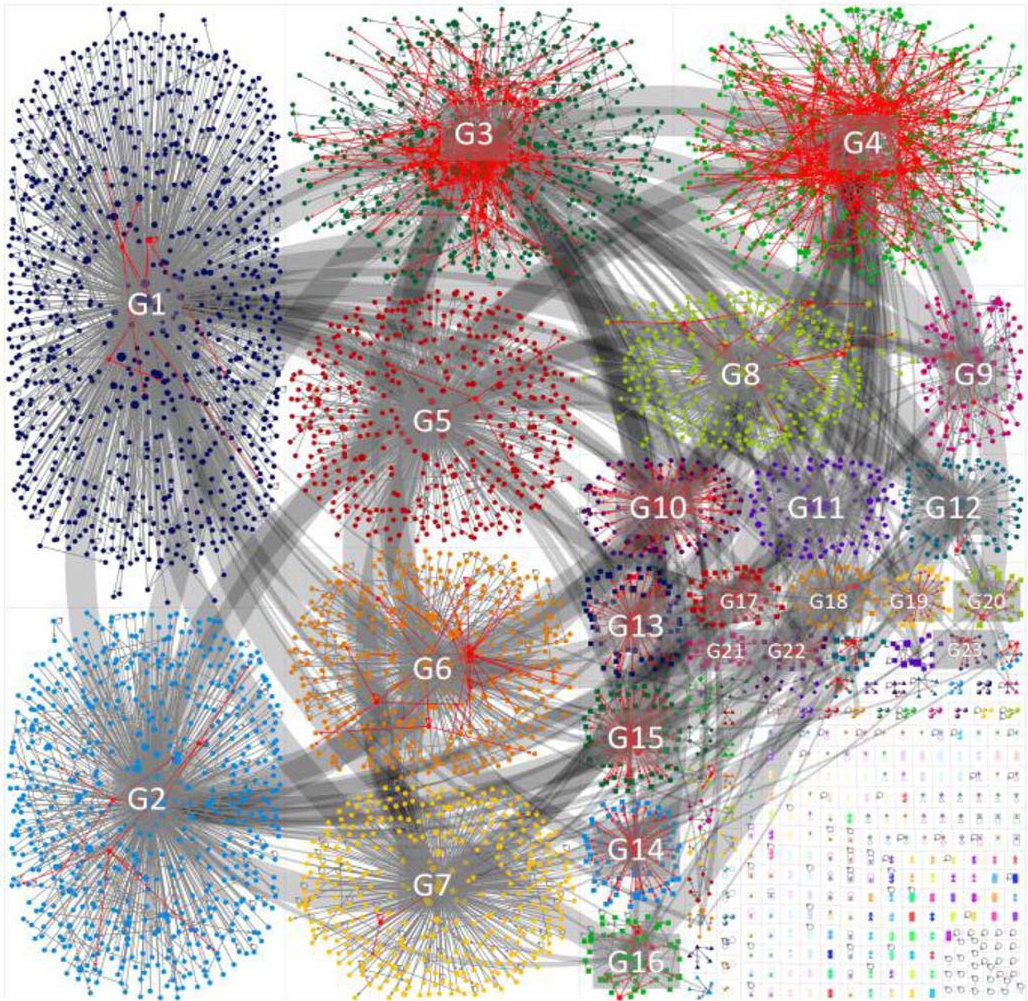 Figure 2: The performance gap—combining viral attributes with social influence leads to a massive adoption margin (green curves).
Critical Insight & Conclusion
Takeaway
The most significant contribution of this work is the formalization of AdpMaxVA (Adoption Maximization with Viral Attributes). It proves that virality is not just about who starts the conversation, but what the conversation is about. By engineering products to be "contagious," companies can achieve higher adoption rates with smaller marketing budgets.
Limitations & Future Work
The model currently assumes a static social network. In reality, social networks are dynamic—links form and break as products are adopted. Future research could integrate Dynamic Network Analysis or explore how Negative Opinions (viral dissatisfaction) might counteract these designs in a competitive Stackelberg environment.