
Decoding the Growth of Social Networks: Parameter Recovery in the Cold Start User-Item Model
Modeling Bimodal Social Networks Subject to Recommendation
The paper introduces a parameter estimation methodology for the Cold Start User-Item Model (CSUIM), a 7-parameter bipartite graph growth model designed to simulate social networks subject to recommendations. By leveraging linear regression on node degree distributions and modularity, the author successfully recovers model parameters that allow synthetic graphs to replicate the structural metrics of real-world datasets like StackExchange.
TL;DR
How do you replicate a complex social network like StackExchange using just seven numbers? This paper tackles the "Cold Start" problem in social network analysis by providing a rigorous mathematical framework to estimate parameters for the Cold Start User-Item Model (CSUIM). By utilizing node degree distributions and graph modularity, the author enables the generation of synthetic bipartite graphs that are structurally indistinguishable from real-world interaction data.
Problem & Motivation: The "Cold Start" Simulation Gap
In Social Network Analysis (SNA), being able to grow a synthetic graph that mimics reality is a superpower. It allows researchers to:
- Test algorithms without risking data privacy.
- Perform "what-if" analysis (e.g., "What if our recommendation algorithm becomes 20% more aggressive?").
- Address the Cold Start problem—the challenge of recommending items to new users (or vice versa) without prior history.
Traditional models are either too simple (missing clustering properties) or too complex (Exponential Random Graph Models are computationally "heavy," failing beyond 50 nodes). The CSUIM is flexible, but until now, we didn't know how to "reverse engineer" its parameters from real data.
Methodology: The 7-Parameter Blueprint
The CSUIM operates on a bipartite graph (Users and Items ) through a specific growth process involving preferential attachment (PA) and a unique Bouncing Mechanism.
1. The Bouncing Mechanism (The "Recommendation" Intuition)
This is the model's secret sauce. When a user is about to connect to an item via PA, there is a probability that they "bounce" through a neighbor to find a different item—effectively simulating a recommendation.
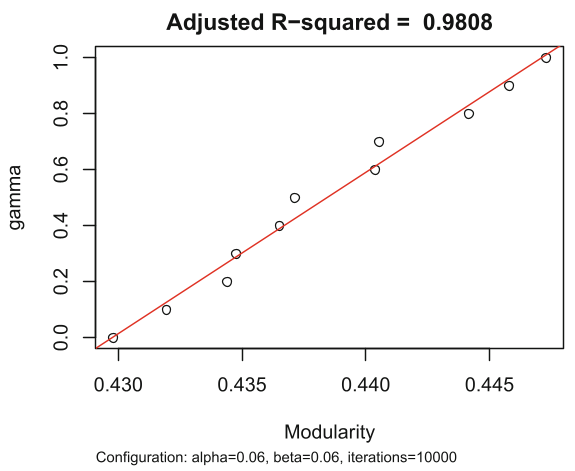 Fig 1: The dashed line shows a new edge formed via the bouncing mechanism, simulating a recommendation step.
2. Parameter Estimation via Regression
The author discovers two critical linear relationships:
- and (Attachment Probabilities): These control the "rich-get-richer" effect. By plotting the log-probability of node degrees against the log of the degree, the author uses linear regression on the slope to find these values.
- (Bouncing/Recommendation): This is correlated with Newman’s Optimal Modularity. High leads to higher modularity because recommendations create tighter, non-random clusters.
Experiments & Results: Real-World Recovery
The author tested the algorithm on several StackExchange datasets (e.g., Bicycles, IT Security, Drupal).
SOTA Comparison: Real vs. Model
The results show impressive fidelity. In the "theoreticalcomputerscience" dataset, the relative error for Modularity was a mere 0.61%, and Average Path Length error was 0.12%.
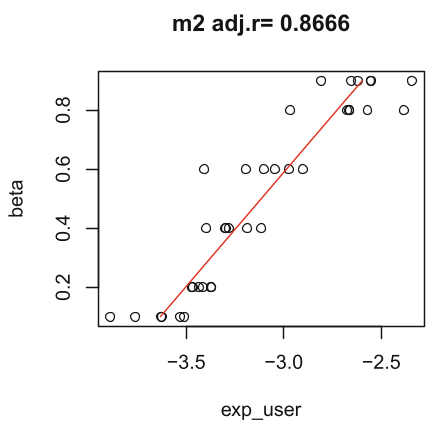 Fig 2: 3D plots demonstrating that the user-side and item-side exponents are independent, allowing for separate parameter estimation.
Key Takeaways from StackExchange Data:
- Preferential Attachment is Real: Most datasets showed high and values, confirming that popular topics and active users dominate network growth.
- Robustness: The model maintains accuracy even as the number of iterations increases, with R-squared values for parameter prediction reaching up to 0.97.
Critical Analysis & Conclusion
The CSUIM represents a significant step forward in making bipartite graph generators practical. By providing the "missing manual" for parameter estimation, the author allows the community to use CSUIM for data augmentation in recommendation system research.
Limitations:
- Disconnected Graphs: The model currently struggles with generating multiple disconnected components, which is common in very new or highly niche networks.
- Integer Constraints: Parameters like and (edges added per step) still rely partially on brute-force search rather than pure analytical derivation.
Future Outlook: This research paves the way for "digital twins" of social networks. We can now take a snapshot of a community, extract its CSUIM DNA, and simulate how it might evolve over the next five years under different platform policies.