Unlocking the Sulfur Cycle: The Molecular Evolution of Lithotrophic Sulfur Oxidation
Biochemistry and molecular biology of lithotrophic sulfur oxidation by taxonomically and ecologically diverse bacteria and archaea
This review provides a comprehensive synthesis of the biochemistry and molecular biology of lithotrophic sulfur oxidation across diverse Bacteria and Archaea. It highlights the central role of the Sox multienzyme system in Alphaproteobacteria and the specialized reverse-acting Dsr (dissimilatory sulfite reductase) pathway in sulfur-storing phototrophs and chemotrophs.
TL;DR
Lithotrophic sulfur oxidation—the ability of microbes to "eat" inorganic sulfur for energy—is a cornerstone of global biogeochemistry. This deep dive explores how taxonomically diverse Bacteria and Archaea have evolved distinct molecular "circuitries" (the Sox, S4I, and Dsr pathways) to navigate various oxidation states of sulfur, providing a blueprint for the earliest metabolic strategies on Earth.
Motivation: The Chaos of Diversity
For over a century, since Winogradsky first observed sulfur droplets in Beggiatoa, microbiologists have struggled with a central paradox: why do some microbes turn sulfur directly into sulfate, while others pause to store it as internal or external globules? The difficulty lies in the chemistry of sulfur itself, which exists in oxidation states from -2 to +6. Previous research was often siloed by habitat (e.g., deep-sea vs. terrestrial) or metabolism (phototrophic vs. chemotrophic). This review bridges those gaps.
Methodology: The Three Pillars of Sulfur Metabolism
1. The Kelly-Friedrich (Sox) Pathway
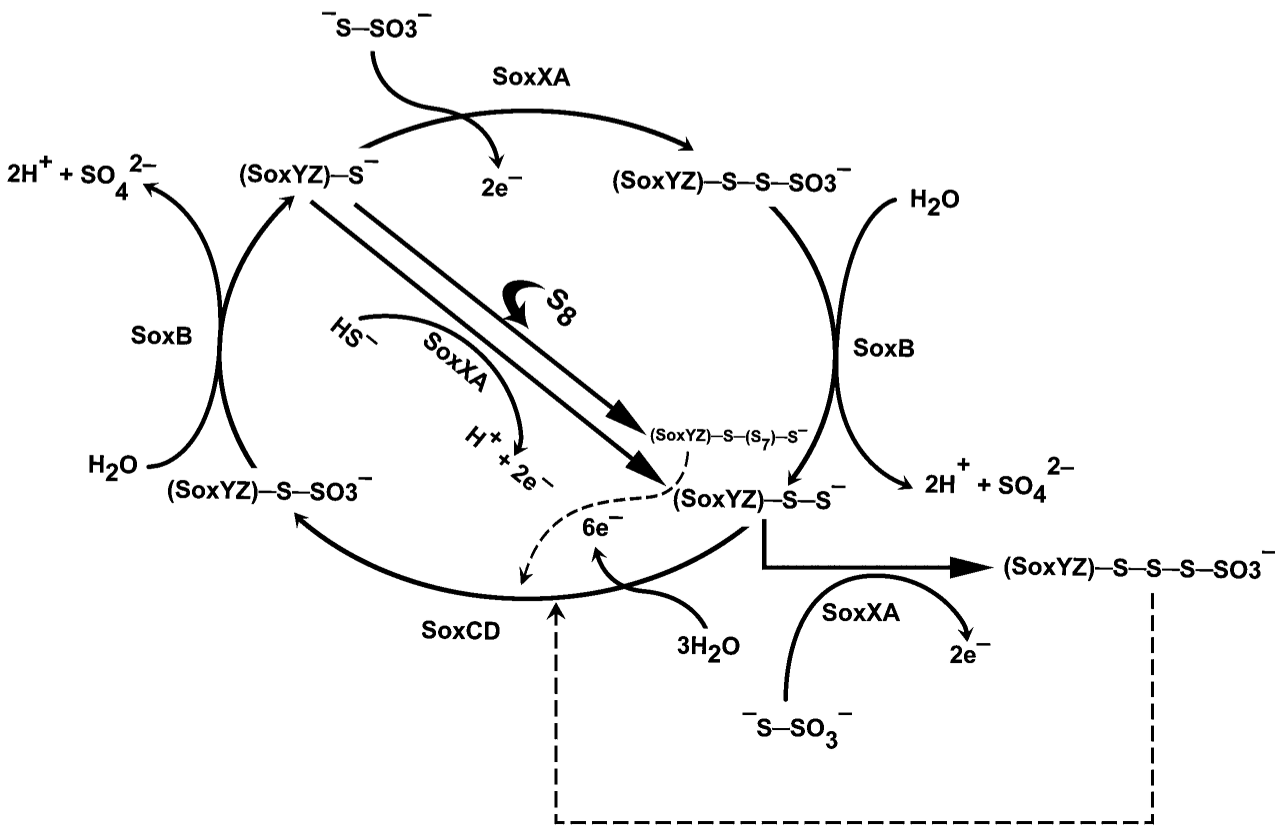
In Alphaproteobacteria like Paracoccus, sulfur oxidation is a high-efficiency "direct flight." The Sox multienzyme complex (SoxXAYZB-CD) binds thiosulfate covalently to a swinging arm on the SoxYZ protein.
- Insight: Both sulfur atoms are converted to sulfate without any free intermediates.
- Key Component: The SoxCD complex acts as a sulfur dehydrogenase, stripping six electrons in one go.
2. The Branched Pathway: When SoxCD is Missing
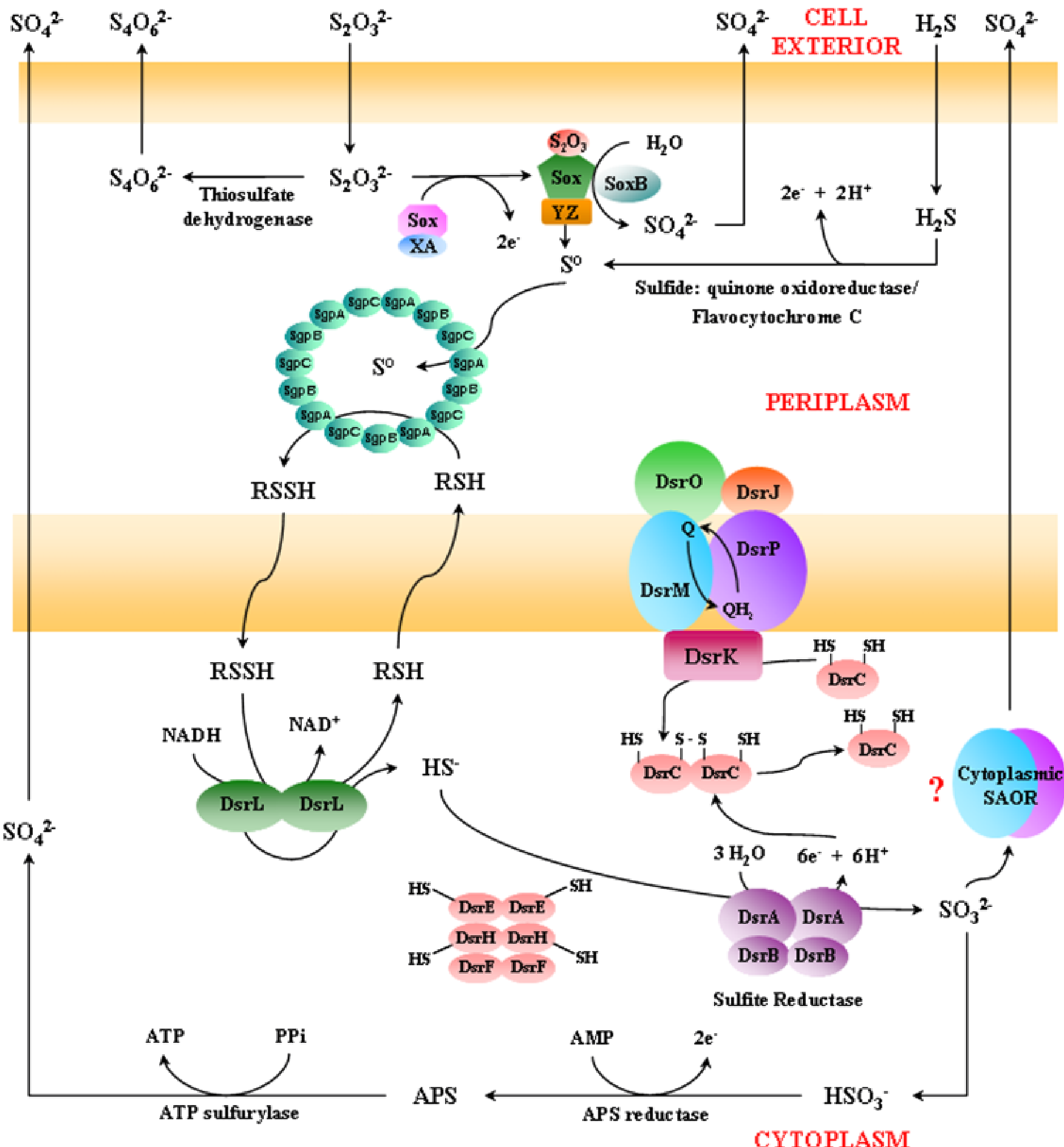
In many phototrophs (Purple and Green Sulfur Bacteria), a critical "deletion" occurs: they lack SoxCD.
- Physical Intuition: Without SoxCD to oxidize the sulfane sulfur, the process "stalls," and the sulfur is siphoned off into storage globules.
- The Reverse Dsr System: To later retrieve this energy, these microbes use a reverse-acting Dissimilatory Sulfite Reductase (Dsr) system to oxidize the stored sulfur to sulfite in the cytoplasm.
3. Archaea: The Convergent Outsiders
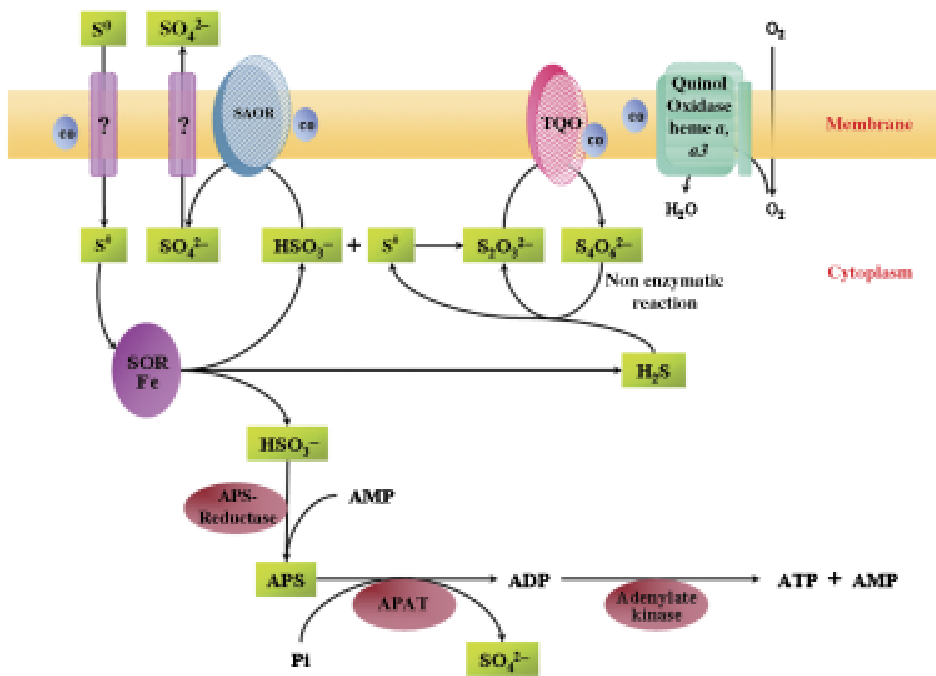
Archaeal systems (like Sulfolobus) utilize entirely different machinery. Instead of the Sox complex, they employ Sulfur Oxygenase Reductase (SOR), a self-compartmentalizing 24-mer sphere that performs disproportionation (simultaneously oxidizing and reducing sulfur).
Critical Analysis & Results
The review highlights that the ubiquity of sox genes is largely due to horizontal gene transfer (HGT), not common ancestry.
- Quantifiable Differences: While Alphaproteobacteria achieve high-speed direct oxidation, sulfur-storing phototrophs benefit from a "reserve battery" (sulfur globules) that allows them to thrive in fluctuating light/sulfide environments.
- Experimental Evidence: Detailed tables in the paper compare neutrophilic, acidophilic, and hyperthermophilic strains, showing how pH drastically alters the stability of intermediates like tetrathionate (S4I pathway).
Takeaways & Future Horizons
This work repositioned sulfur lithotrophy from a niche metabolism to a fundamental evolutionary milestone.
- Origin of Life: Evidence suggests sulfur oxidation may have originated in deep-sea vents, predating photosynthesis.
- Biotechnology: Understanding these pathways is crucial for bioleaching (extracting metals) and sulfur removal in industrial waste.
Limitations: We still don't fully understand how "filamentous" sulfur is extruded by certain Epsilonproteobacteria, or the exact redox potential of the DsrJ cytochromes. Future research into these "black boxes" of the deep sea will likely yield the next breakthrough in metabolic engineering.