
WatchPlant: Turning Urban Greenery into a Distributed Bio-Intelligent Surveillance Net
6981_Biohybrid systems for environmental intelligence on living plants WatchPlant project.
The WatchPlant project introduces a novel biohybrid system that transforms living plants into "environmental intelligence" sensors. By integrating minimally invasive microneedles for phloem sap analysis, AI-driven data processing, and self-powering mechanisms (BFCs and solar), the project establishes a decentralized monitoring network for urban pollution.
TL;DR
The WatchPlant project is an ambitious leap into "Environmental Intelligence," where living plants are converted into biohybrid organisms. By tapping into the plant's vascular system (phloem) via specialized microneedles, researchers are creating self-powered, AI-driven sensor nodes that monitor urban pollution with the sensitivity of biological life. It is not just a sensor on a tree; the tree becomes the sensor.
The Evolution of Environmental Monitoring: Why Plants?
Current urban pollution monitoring is bottlenecked by the "Sparse Station Problem." Fixed stations are bulky and expensive, leading to data gaps in micro-climates.
The WatchPlant Insight: Plants are nature's ultimate "well-being" sensors. They actively respond to air quality, ozone, and particulate matter (PM) through physiological changes. However, prior work focused on external attachments or xylem (water transport). WatchPlant targets the phloem sap—the plant's information highway—which contains complex signaling molecules and biomarkers that provide an early-warning system for environmental stress.
Technical Architecture: The Biohybrid Node
The project merges three distinct fields: Microfluidics, Bioelectrochemistry, and Distributed AI.
1. Phloem Access and Sap Sensing
To solve the problem of the plant's natural defense (coagulation), the team developed a minimally-invasive microneedle device.
- Mechanism: Penetrates the sieve tubes (tens of micrometers in diameter).
- Anti-clogging: Simultaneously delivers an anti-coagulating agent to allow continuous sampling.
- Dual Use: The sap is used for electrochemical biomarker detection and as a fuel source.
2. Energy Harvesting: The Sap-Powered Computer
One of the most radical aspects is the use of an Enzymatic Biofuel Cell (BFC).
- How it works: It harvests chemical energy directly from the sugars in the phloem sap.
- Hybrid Power: To overcome the low power density (0.4–1.5 mW/cm2), the system combines BFCs with solar cells, creating a truly autonomous, "green" electronic device.
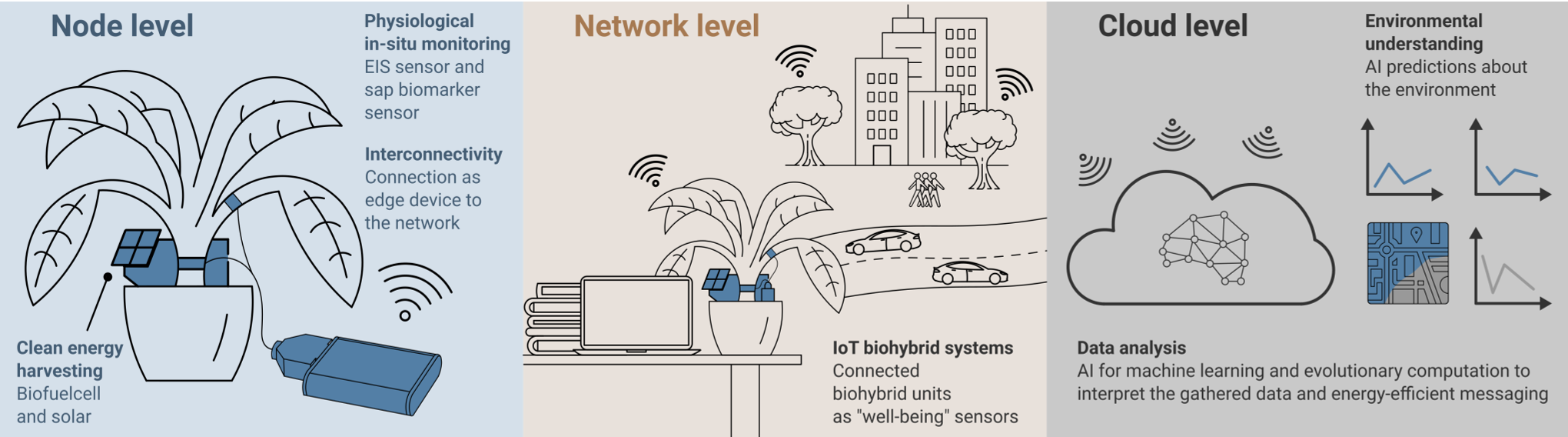 Figure 1: The three levels of WatchPlant: Node-level harvesting, Network-level communication, and Cloud-level citizen access.
Methodology: AI at the Edge
Since energy is scarce, the system cannot afford constant wireless transmission. WatchPlant utilizes Distributed AI to achieve efficiency:
- Predictive Modeling: Using Machine Learning (ML), both the sender (plant node) and receiver (sink) run a model of the plant's expected physiological signals. Data is only transmitted when the actual measurement deviates from the prediction.
- Graph-Theoretic Resilience: The network treats connectivity as a convex optimization problem, balancing the energy cost of communication links against the need for a robust, "unbreakable" mesh network.
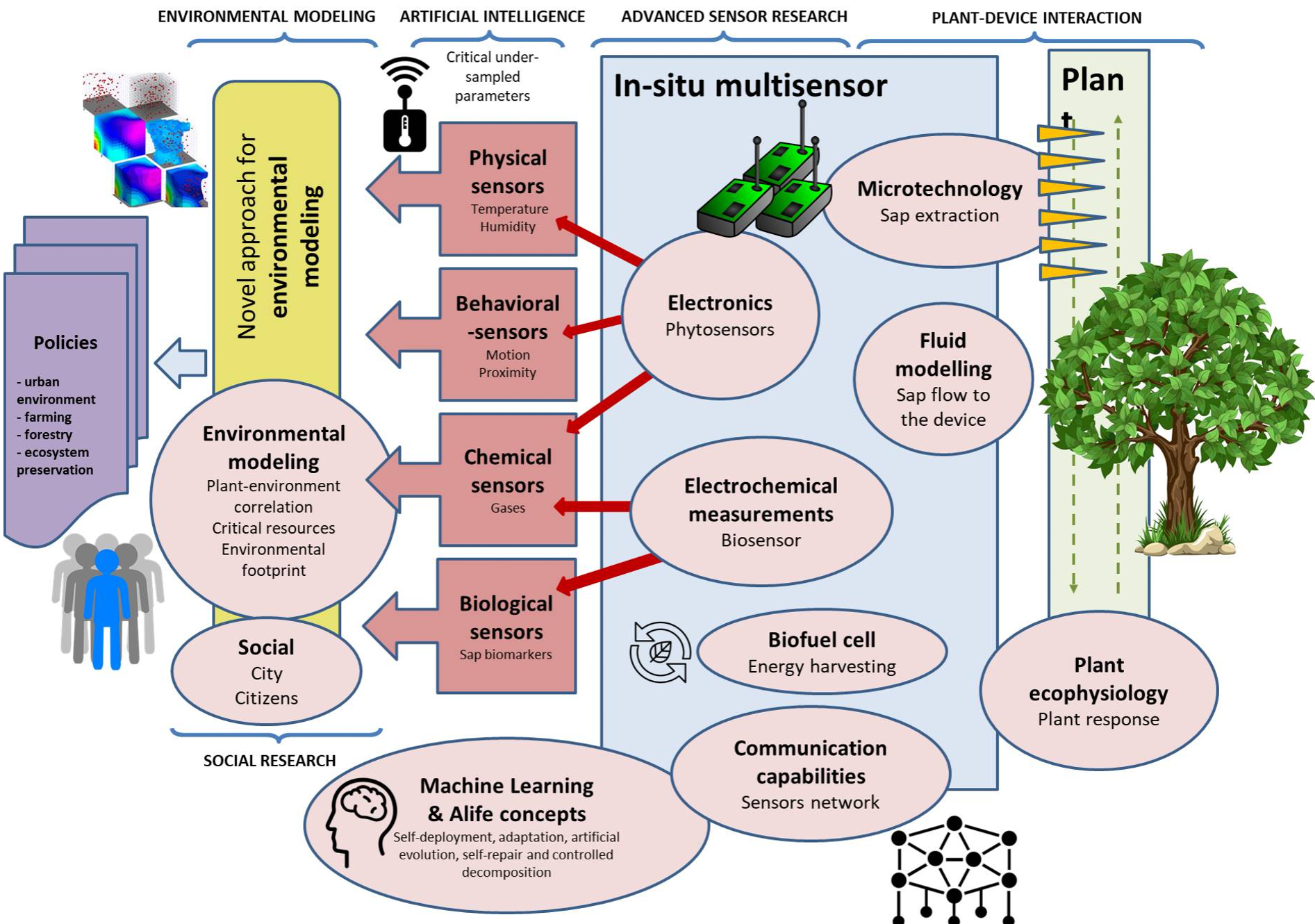 Figure 2: Integration of advanced plant physiology models and ML for environmental intelligence.
Results & Experimental Insights
The research links plant physiological variables—such as stomatal conductance and leaf turgor—directly to urban pollutants.
- Observation: Ozone and particulates create a physical and chemical barrier for gas exchange.
- Impact: Studies cited in the paper show yield losses of ~11% and reduction in urban tree photosynthesis by 20-50% due to pollutants. By monitoring these "well-being" indicators in real-time, WatchPlant can provide higher sensitivity to environmental hazards than a standard chemical gas sensor.
Critical Perspective: Beyond the Tech
The Value-Add
Unlike traditional "Internet of Trees," WatchPlant treats the plant as an active participant. The use of Process-based Models (like the Farquhar photosynthesis model) allows the system to "filter out" natural fluctuations from light or temperature, isolating the specific signal caused by pollution.
Challenges & Limitations
- Longevity: Managing the plant's wound response over months remains a hurdle for microneedle stability.
- Energy Density: While BFCs are revolutionary, the current power output is still at the edge of viability for complex AI tasks, necessitating extremely lightweight "TinyML" implementations.
Future Outlook
WatchPlant is a blueprint for Social Good IT. Future iterations could see these biohybrid systems deployed in precision agriculture or forest fire prevention. By blurring the line between biological organisms and digital systems, we move toward a future where our parks and forests are not just "scenery," but an active, intelligent part of our urban health infrastructure.