
BioVid Emo DB: Bridging Discrete Emotions with Multimodal Data Mining
“BioVid Emo DB”: A multimodal database for emotion analyses validated by subjective ratings
The paper introduces the BioVid Emo DB, a comprehensive multimodal database for discrete emotion analysis. Utilizing 15 standardized film clips to elicit five basic emotions (amusement, sadness, anger, disgust, fear), it records high-resolution video streams and psychophysiological signals (SCL, ECG, tEMG) from 86 validated participants.
TL;DR
Researchers from the University of Ulm have released the BioVid Emo DB, a robust multimodal dataset designed to push the boundaries of affective computing. By combining high-definition video, depth maps, and physiological markers (ECG, EMG, SCL) from 86 subjects, the database enables a granular look at five discrete emotions: Amusement, Sadness, Anger, Disgust, and Fear.
Background Positioning
In the landscape of affective computing, most researchers rely on the Dimensional Model (Valence and Arousal). While useful, this model often fails to distinguish between emotions that feel very different but look similar on a graph—like "Anger" and "Disgust." This paper moves the needle back toward the Discrete Model, providing a SOTA resource that treats emotions as distinct biological and psychological categories.
Problem & Motivation: The "Ambiguity" of Arousal
Prior work often treats emotions as coordinates on a map. However, as the authors point out, both anger and disgust are characterized by "low valence and high arousal." If your AI only sees these coordinates, it cannot tell if a user is offended or revolted.
The authors' insight was to create a dataset that uses standardized film clips—proven to be one of the most effective elicitation methods—while recording a "symphony" of signals:
- Facial expressions (via 3 synchronized cameras + Kinect depth data).
- Autonomic nervous system signals (Heart rate and Skin conductance).
- Muscular tension (Trapezius EMG to detect stress-related shoulder tightening).
Methodology: High-Fidelity Data Acquisition
The experimental setup was designed to be as "clean" as possible while allowing for natural movement. Participants watched three clips per emotion, and only the clip that evoked the strongest subjective reaction was included in the final database.
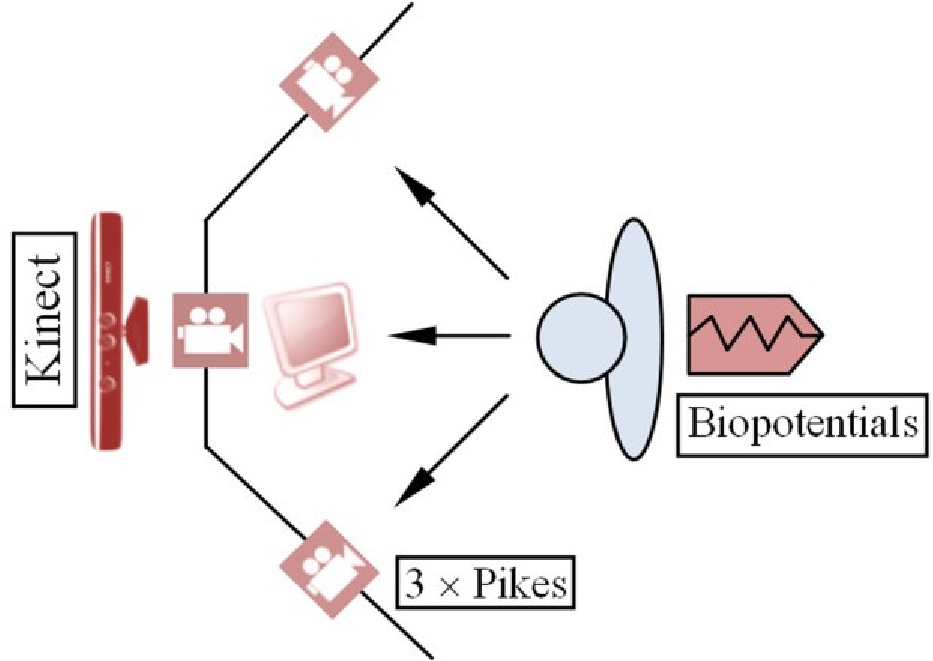 Fig 1: The experimental setup featuring multi-view cameras and biosignal sensors.
The researchers went beyond standard video; by using a Kinect sensor, they captured depth maps, which are invariant to lighting changes—a common failure point for traditional emotion recognition software.
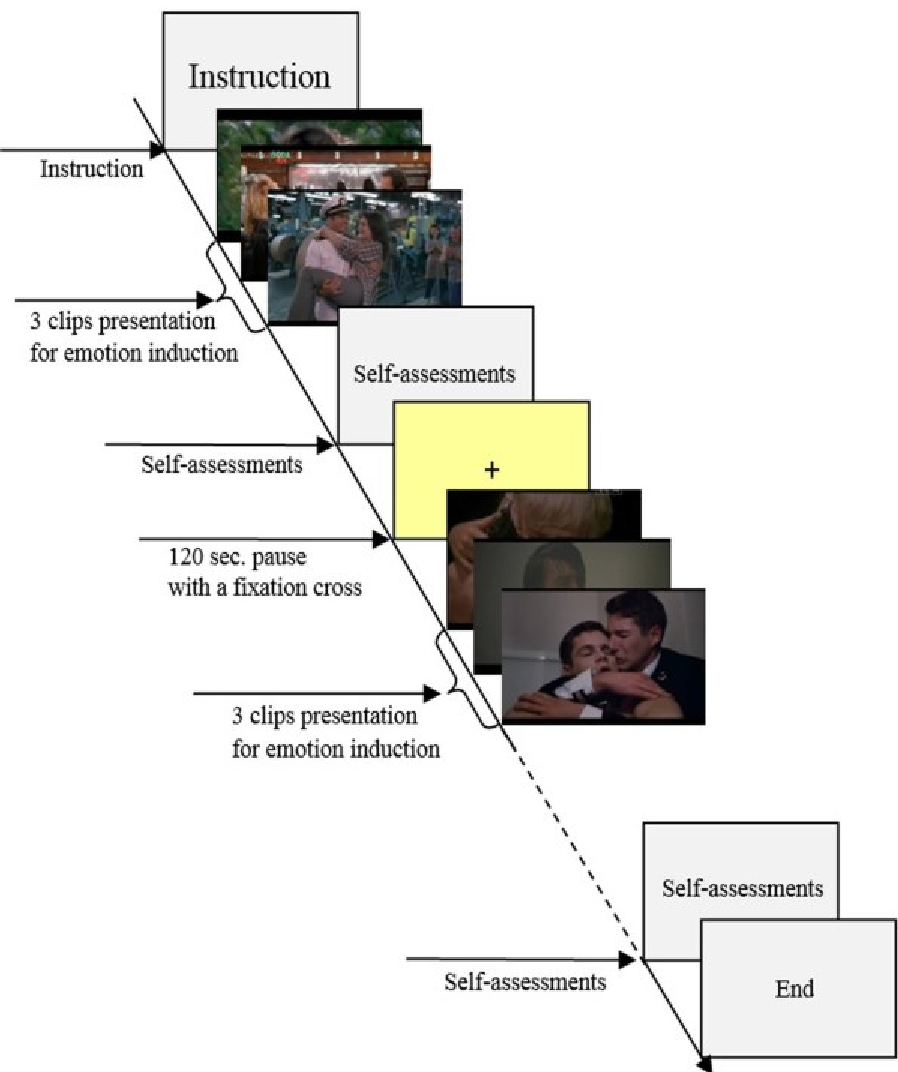 Fig 2: The structured flow of the experiment, emphasizing the 2-minute "neutralization" phase between stimuli.
Experiments & Results: Validating the "Feel"
Before asking an AI to classify the data, the authors validated it using Subjective Ratings. The results were telling:
- Success: Most clips successfully hit their target emotion (scoring ~7 out of 9).
- The Anger-Sadness Overlap: Interestingly, clips intended to evoke "Anger" also evoked high levels of "Sadness." This suggests that in human experience, these two emotions are often co-activated.
- Arousal Peaks: "Fear" clips (e.g., Silence of the Lambs) generated the highest arousal, while "Sadness" clips resulted in the lowest, confirming the physiological "dampening" effect of sad stimuli.
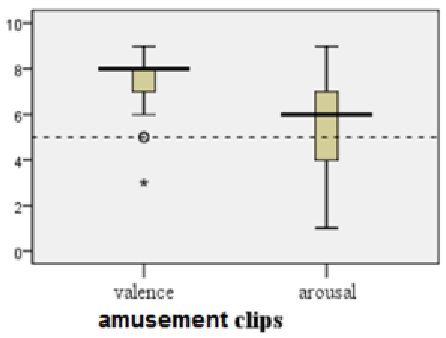 Fig 3: Subjective rating distributions across different emotional stimuli.
Critical Analysis & Future Outlook
Takeaway: The BioVid Emo DB is a significant contribution because it doesn't just provide data; it provides validated experiences. It acknowledges the complexity of human emotion (the fact that we can feel sad and angry simultaneously).
Limitations: The authors acknowledge that laboratory settings induce higher intensity but lack the "natural context" of real-world interactions. Furthermore, the varying lengths of film clips (32s to 245s) require researchers to use specialized windowing techniques during feature extraction to maintain consistency.
Future Work: The logical next step is the application of Multi-modal Fusion. By combining the "flicker" of a facial muscle captured on video with a "spike" in skin conductance, future AI systems can move closer to a human-like understanding of our complex affective states.