
LTCA & PPVC: Redefining Privacy and Efficiency in Blockchain-Enforced Vehicular Social Networks
15968_Blockchain-Based Lightweight Certificate Authority for Efficient Privacy-Preserving Location-Based Service in Vehicular Social Networks.
This paper introduces LTCA (Lightweight Threshold Certificate Authority) and PPVC (Privacy-Preserving LBS Protocol), a blockchain-based framework for Vehicular Social Networks (VSNs). It utilizes a consortium blockchain where RSUs act as decentralized CAs to provide efficient, authenticated, and privacy-preserving location-based services with O(1) complexity for certificate updates.
TL;DR
To solve the bottleneck of frequent certificate updates in Vehicular Social Networks (VSNs), this paper proposes a Lightweight Threshold Certificate Authority (LTCA) and a privacy-preserving protocol named PPVC. By utilizing a threshold proxy signature, vehicles can self-generate certificates for their periodically updated blockchain addresses without needing an online CA, reducing complexity from to and significantly cutting down communication latency in location-based services (LBS).
The "Trilemma" of Vehicular Social Networks
VSNs face a difficult balancing act between three pillars:
- Privacy: Hiding the vehicle's true identity and route from adversaries.
- Accountability: Enabling authorities to trace malicious actors.
- Efficiency: Minimizing the computational load on resource-constrained vehicles.
Existing solutions like RingCT or traditional Public Key Infrastructure (PKI) fail here. RingCT is computationally expensive as the user group grows, and traditional PKI requires vehicles to constantly ping an online CA every time they change their "pseudonym" (blockchain address) to prevent background analysis attacks.
Methodology: The Power of Threshold Proxy Signatures
The core innovation lies in shifting the burden of trust from a single, potentially vulnerable CA to a distributed set of Roadside Units (RSUs).
1. The LTCA Framework
Instead of issuing a certificate for every new address, the RSUs (acting as a consortium blockchain's authorized nodes) use Shamir’s Secret Sharing to issue a Partial Proxy Signing Key to the vehicle.
- Once a vehicle collects a threshold of these partial keys, it recovers a Complete Proxy Signing Key.
- Physical Intuition: Think of this as getting a "master template" approved by a committee. Once you have the template, you can stamp your own sub-permits (addresses) without going back to the committee.
2. The PPVC Protocol
With the proxy key, the vehicle creates a linkable bond between its long-term identity and its short-term blockchain address ().
- Self-Authentication: The vehicle generates its own for each new address.
- Verification: Senders can verify these certificates using the CA's public key without any third-party interaction.
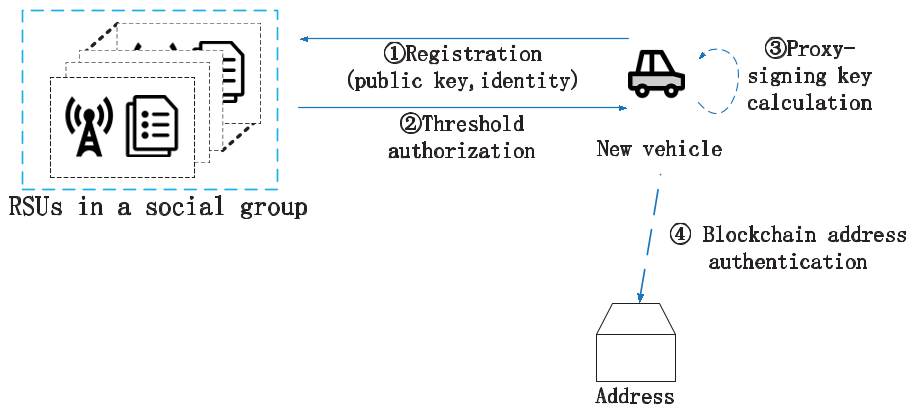 Fig 1: The authorization flow showing the transition from threshold RSU interaction to self-authentication.
Consensus: Rank of Activity
The paper replaces traditional "Stake" in PoS with a Rank of Activity. RSUs that relay more LBS messages gain a higher probability of becoming a block leader. This aligns the incentive of the miners (RSUs) with the utility of the network (LBS delivery).
Experimental Performance
The superiority of LTCA is most evident in its scalability. As the number of updated addresses () increases, traditional methods see a linear spike in cost. In contrast, LTCA remains flat (constant complexity).
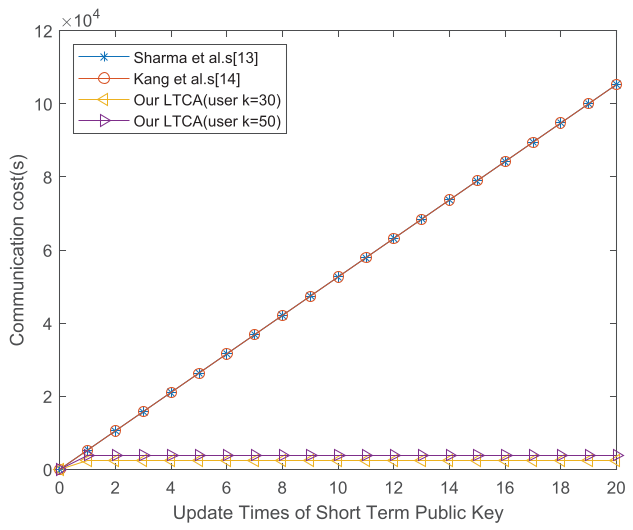 Fig 2: CA's computational cost remains constant in LTCA vs. the linear growth in traditional CA scripts.
Furthermore, the Average Delay for LBS messages is the lowest among all compared SOTA frameworks (including Block-VN and Chen et al.), because the protocol eliminates the "Handshake bottleneck" with online CAs.
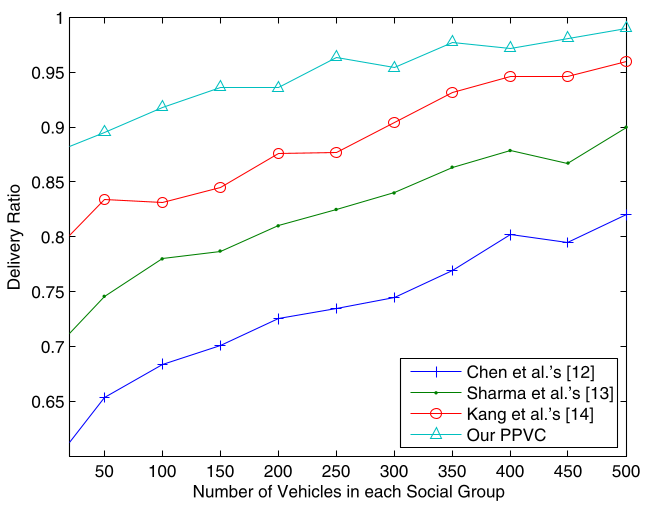 Fig 3: Delivery ratio comparison demonstrating the robustness of PPVC in high-mobility scenarios.
Critical Insight & Conclusion
By leveraging Threshold Cryptography, this paper effectively decouples the registration phase from the utilization phase. The most significant takeaway is that Accountability does not always require a centralized, online monitor. Instead, a "conditional linkability" stored in a distributed account pool can protect user privacy while ensuring that misbehavior can still be traced by a consensus of RSUs.
Future Outlook: While RSUs are powerful, they can still be compromised. The authors suggest "scattering the account pool" in future work to ensure that no single RSU can unilaterally deanonymize a user, further hardening the system against internal threats.