
Decoupling Trust from Location: A Blockchain Shield Against Fake Check-ins
A Blockchain-based Solution to Fake Check-ins in Location-Based Social Networks
This paper introduces a decentralized architecture to mitigate "fake check-ins" in Location-Based Social Networks (LBSNs) by leveraging blockchain and Smart Contracts. The core method utilizes Proof of Location (PoL) via decentralized oracles to provide immutable, verifiable presence claims that automate user rewards.
Executive Summary
TL;DR: This paper tackles the rampant problem of "fake check-ins" in Location-Based Social Networks (LBSNs) by introducing a decentralized Proof of Location (PoL) framework. By replacing centralized verification with Smart Contracts and Blockchain Oracles, the authors ensure that rewards are only granted when physical presence is cryptographically proven.
Strategic Positioning: This is a pioneering work in the "Geo-Blockchain" intersection, moving beyond simple behavioral heuristics (like honeypots) toward a protocol-level solution for spatial integrity.
1. The Incentive Paradox: Why LBSNs are Broken
LBSNs like Foursquare thrive on user engagement, often incentivizing reviews with badges or financial rewards. However, this creates a security loophole: users can easily spoof GPS coordinates to farm rewards.
Current defenses fall into three categories, all of which are flawed:
- Honeypots: Creating fake venues to trap cheaters—requires massive overhead.
- Sybil Defense: Preventing multiple identities—doesn't stop a single user from spoofing location.
- Historical Analysis: Spotting anomalies—prone to high false-positives and "black box" logic.
The investigators argue that the root cause is the lack of a proper location verification mechanism that is independent of the user's own device reporting.
2. The Methodology: Proof of Location (PoL)
The paper proposes a transition from "User-Reported Location" to "Network-Verified Location."
The Core Components:
- PoL Infrastructure (PLI): A decentralized network of independent cells (like FOAM or Platin) that act as "witnesses" to a user's presence.
- Oracles: The bridge that fetches off-chain location data and pushes it onto the blockchain.
- User Smart Contract (USC): A self-executing script that holds the reward tokens and only releases them if a verified Presence Claim exists in the log.
System Architecture
The interaction involves a complex choreography between the Service Provider (LSP) and the Smart Contract Infrastructure (SCI).
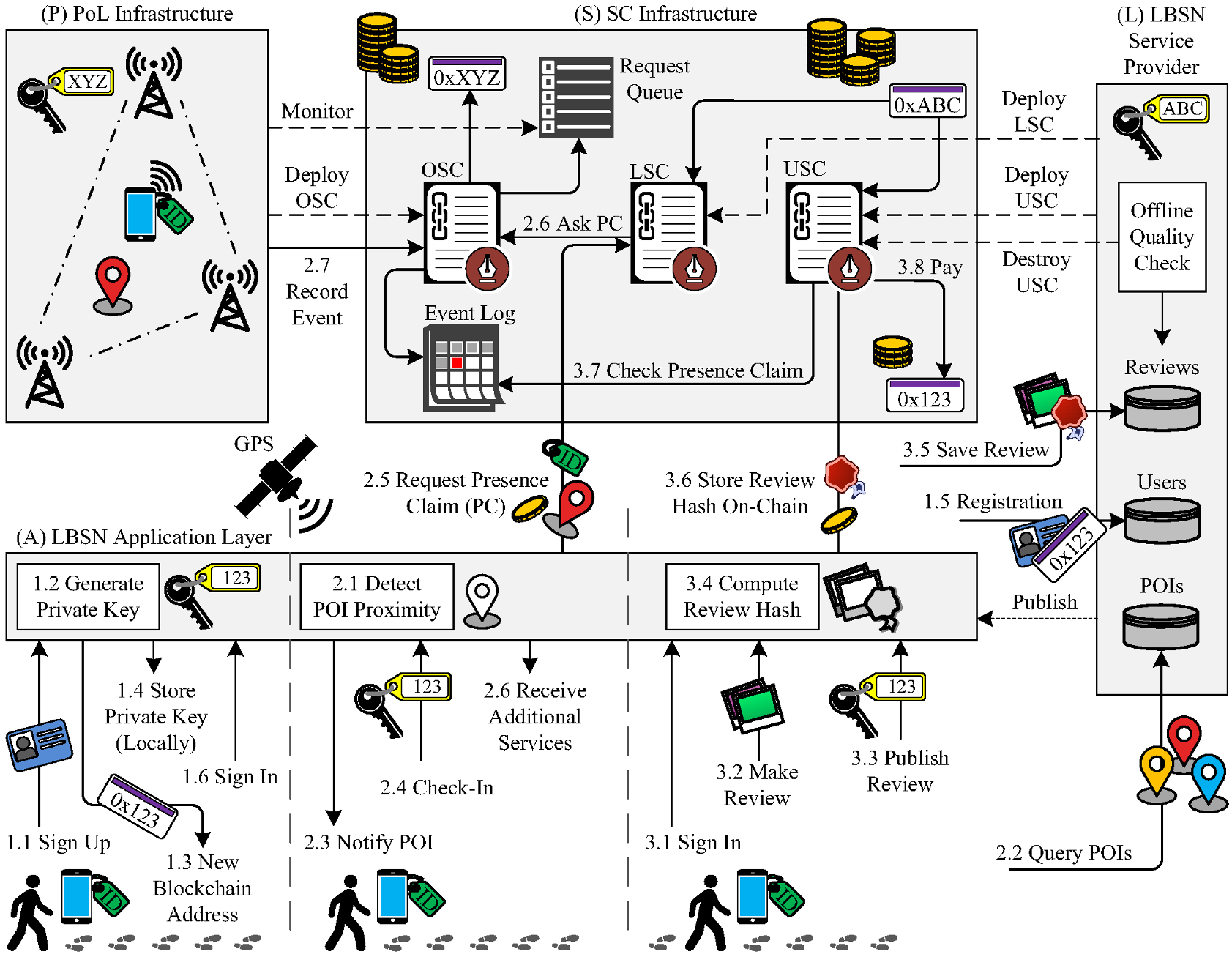 Figure 1: High-level architecture showing the flow from check-in request to automated reward payout.
3. The Workflow: From Check-in to Payout
The process is designed to be economically deterrent to attackers:
- Double-Linked Reviews: A user submits the full review to the LBSN provider but submits a cryptographic hash of that review to the Smart Contract. This keeps data storage costs low while ensuring the review's integrity.
- Location Matching: The Smart Contract queries the
Event Log(populated by the PoL Oracle). If the user's address and timestamp match a verified presence event, the reward is released. - Economic Friction: Users must pay small transaction fees to check-in. This "skin in the game" ensures that the cost of fake check-ins (which might fail verification) outweighs the potential rewards.
4. Critical Analysis & Future Outlook
Strengths:
- Elimination of Central Trust: The LBSN provider no longer needs to play "policeman"; the protocol handles verification.
- Privacy Awareness: By storing only hashes on-chain, the system balances transparency with the need to protect large volumes of user-generated content.
Limitations:
- Scalability: Blockchain networks (especially Ethereum at the time of publication) face significant latency. A "real-time" check-in might take minutes to confirm.
- Oracle Collusion: The system is only as strong as its decentralized oracles. If the PLI cells are compromised, the entire security model collapses.
Summary Takeaway
This research shifts the paradigm of LBSN security from detection to prevention. By anchoring physical presence in a decentralized ledger, it transforms "location" from a self-reported attribute into a verifiable asset. As we move toward Web3, integrating spatial-temporal proofs will be critical for any platform dealing with the "Physical-to-Digital" bridge.