
Secure E-Voting in the AI Era: Balancing Anonymity and Traceability via Blockchain
A Blockchain-Based Traceable Self-Tallying E-Voting Protocol in AI Era
2020-07-27
Summary
Problem
Method
Results
Takeaways
Abstract
The paper proposes a blockchain-based traceable self-tallying e-voting protocol designed for the AI era. It leverages event-oriented linkable group signatures and homomorphic time-lock puzzles to achieve a balance between voter anonymity and accountability while ensuring decentralized tallying.
## Executive Summary
**TL;DR**: This paper introduces a robust, decentralized e-voting protocol that solves the long-standing conflict between voter privacy and system accountability. By utilizing **Homomorphic Time-Lock Puzzles (HTLP)** and **Linkable Group Signatures**, the system ensures that votes remain private until the polls close, double-voting is publicly detectable, and malicious actors can be traced—all without a central tallying authority.
**Background Positioning**: This work represents a significant refinement in the "Self-Tallying" category of e-voting. It moves beyond simple "Yes/No" blockchain voting to support multi-choice elections at scale, addressing the efficiency bottlenecks found in prior SOTA protocols.
## Problem & Motivation: The Decentralization Paradox
The authors identify a critical "Trust Gap" in AI-driven and trust-oriented applications. While E-voting promises convenience, current implementations face two major hurdles:
1. **The Centralization Risk**: Reliance on a central body for decryption leads to "Single Points of Failure" and potential manipulation.
2. **The Efficiency Gap**: In many self-tallying systems, the effort required to compute the result increases as more voters participate, making national-scale elections computationally prohibitive.
3. **Privacy vs. Accountability**: Absolute anonymity allows for double-voting and fraud, while absolute traceability destroys voter privacy.
## Methodology: The Core Mechanism
The protocol’s innovation lies in its "After-Voting" stage, enabled by two advanced cryptographic pillars:
### 1. Homomorphic Time-Lock Puzzles (HTLP)
Instead of using traditional public-key encryption, voters wrap their ballots in HTLPs. This allows the Smart Contract (SC) to perform homomorphic addition on *encrypted* ballots.
* **Physical Intuition**: Imagine a digital "time-vault" that can only be opened after 24 hours. The homomorphic property allows us to "merge" these vaults into one large vault. Opening that single merged vault reveals the sum of all contents without ever exposing individual ballots.
* **Scalability**: Unlike previous methods, the time to "unlock" the final result is constant, regardless of whether there were 10 or 10,000 voters.
### 2. Event-Oriented Linkable Group Signature (ELGS)
To handle the anonymity-accountability trade-off, ELGS is used.
* **Linkability**: If a voter tries to cast two ballots for the same "Event ID," the two signatures can be mathematically linked by anyone.
* **Full Traceability**: While the public only sees that two votes are from the same person (without knowing who), a designated **Supervision Authority (SA)** holds a key that can "de-anonymize" a specific signature if fraud is detected.
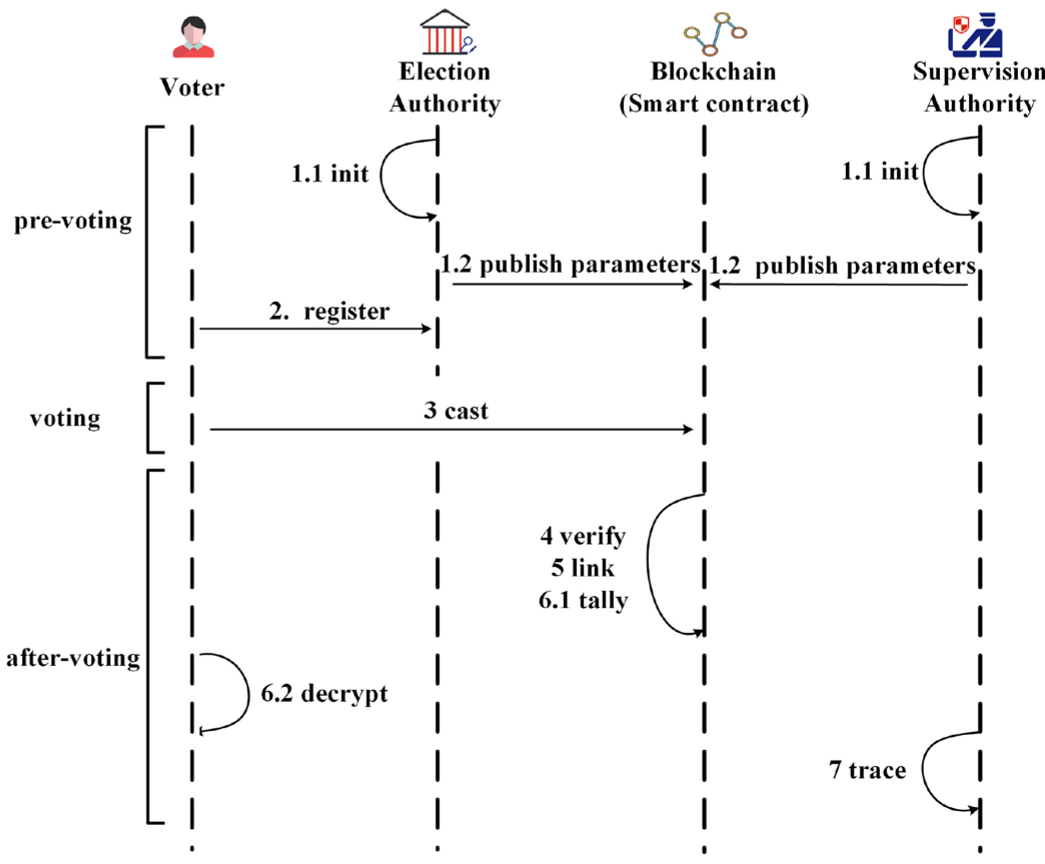
*Figure 1: The Workflow - from Registration to Self-Tallying.*
## Experiments & Results
The authors implemented the protocol using C++ (MIRACL library) and a private Ethereum network (Go-Ethereum).
* **Constant Decryption Time**: As shown in the benchmarking, while the time to *add* ballots on the blockchain grows linearly (very slowly), the voter-side decryption time (Tallying) remains **constant** as the voter base expands. This is a massive win for scalability.
* **Gas Efficiency**: The "Cast" operation, which is the most frequent on-chain interaction, consumes roughly 288k gas, making it viable for public or consortium blockchains.
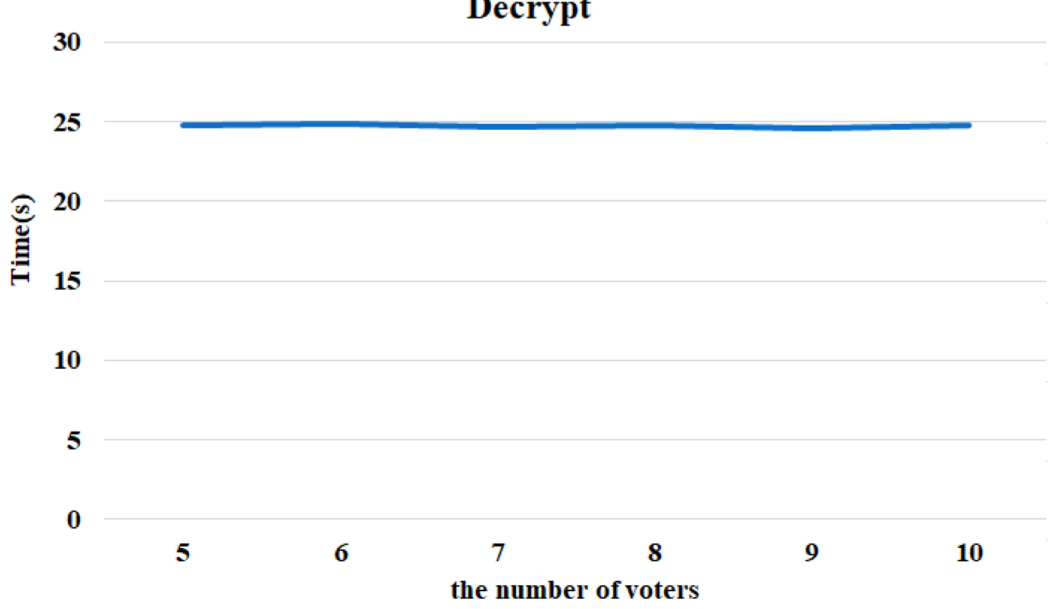
*Figure 2: Time cost of tallying remains stable as voter counts increase.*
## Critical Analysis & Conclusion
**Takeaway**: This protocol successfully bridges the gap between the need for public verifiability on the blockchain and the necessity for time-limited privacy (protecting against intermediate results influencing current voters).
**Limitations**:
* **Sequential Squaring**: The "Time-Lock" relies on the assumption that sequential squaring cannot be parallelized. However, it still puts a significant CPU burden on the person performing the final tally.
* **The SA Trust**: While SA can trace malicious voters, they must be highly regulated to ensure they do not abuse their power to de-anonymize honest voters.
**Future Prospect**: As AI systems become more involved in automated decision-making and democratic processes, protocols like this—which provide a "Mathemetical Proof of Fairness"—will become the cornerstone of digital governance.