
Blockchain-Empowered Framework: Redefining Trust and Efficiency in Software Crowdsourcing
Blockchain-Empowered Decentralized Framework for Secure and Efficient Software Crowdsourcing
This paper proposes a blockchain-empowered decentralized framework for software crowdsourcing, integrating software development and quality control into a single ecosystem. By utilizing smart contracts and cryptocurrency rewards, the authors establish a secure, "trustless" environment that effectively mitigates the risks associated with centralized platforms.
TL;DR
This paper introduces a decentralized architecture that replaces centralized crowdsourcing intermediaries with Blockchain and Smart Contracts. By unifying software development and quality control into one traceable loop, it solves the inherent trust deficit and high operational costs found in traditional platforms like Freelancer or Amazon Mechanical Turk.
Background: The Crisis of the Middleman
The "wisdom of crowds" has revolutionized software engineering, yet the platforms facilitating this change have become bottlenecks. In a centralized model, the platform acts as the judge, jury, and treasurer. This leads to three major pain points:
- Lack of Trust: Requesters may forge quality scores to avoid payment; workers may submit low-quality code; platforms may leak sensitive user data.
- Low Reliability: Centralized servers are prone to DDoS attacks and single points of failure.
- High Costs: Platforms prioritize their own profits, taking significant cuts from workers' rewards and charging requesters high service fees.
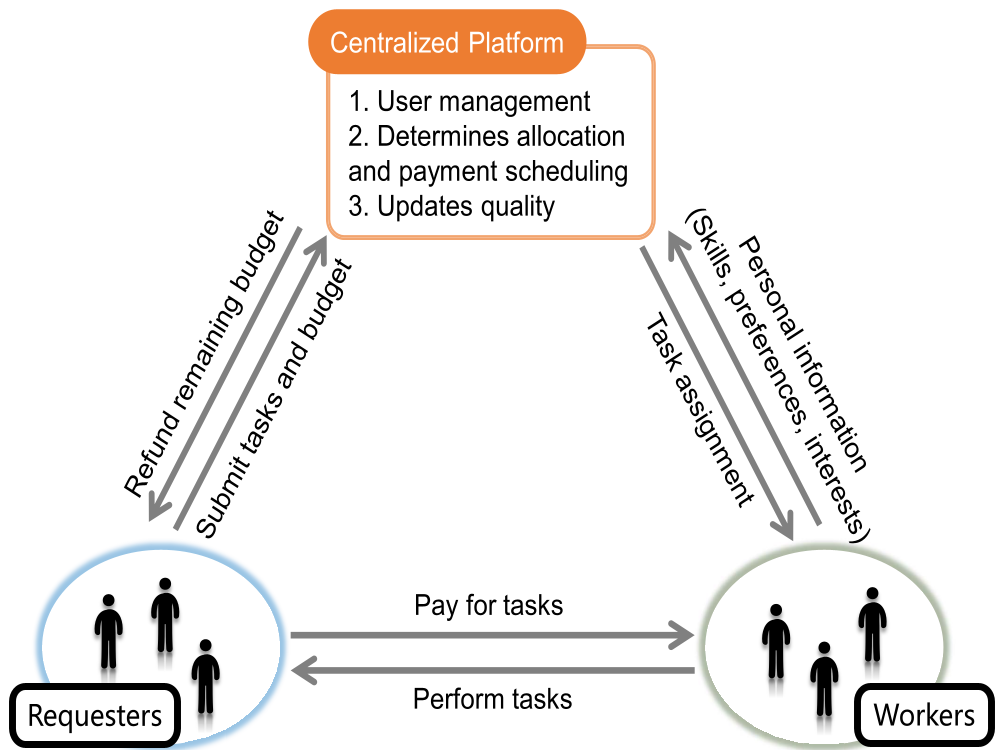
Methodology: The Blockchain-Empowered Ecosystem
The core of this work is the Software Blockchain, which shifts the management of software tasks from a central server to a distributed ledger.
1. System Architecture
The framework provides two participation models:
- Peer-to-Peer Model: Participants join the consensus process directly, offering maximum security at the cost of local computing resources.
- Proxy-based Model: Participants entrust a miner to act as their proxy, suitable for users with limited hardware.
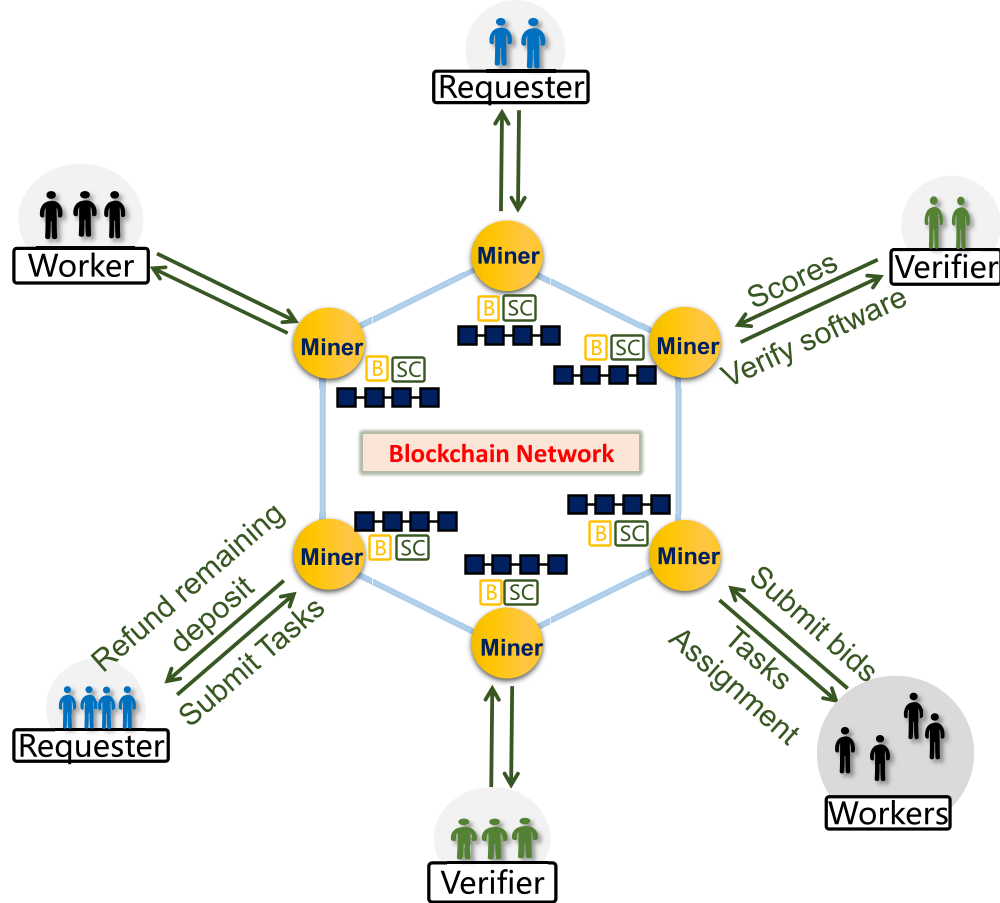
2. Unified Development and Quality Control
Unlike previous methods that isolate coding from testing, this framework treats them as a joint lifecycle.
- Development: Requesters submit requirements with a "deposit" to a smart contract. Winning bidders submit code, and the smart contract records the software hash for traceability.
- Quality Control: The development workers who participated in the task are incentivized to become Verifiers. They evaluate the submitted software against predefined quality standards.
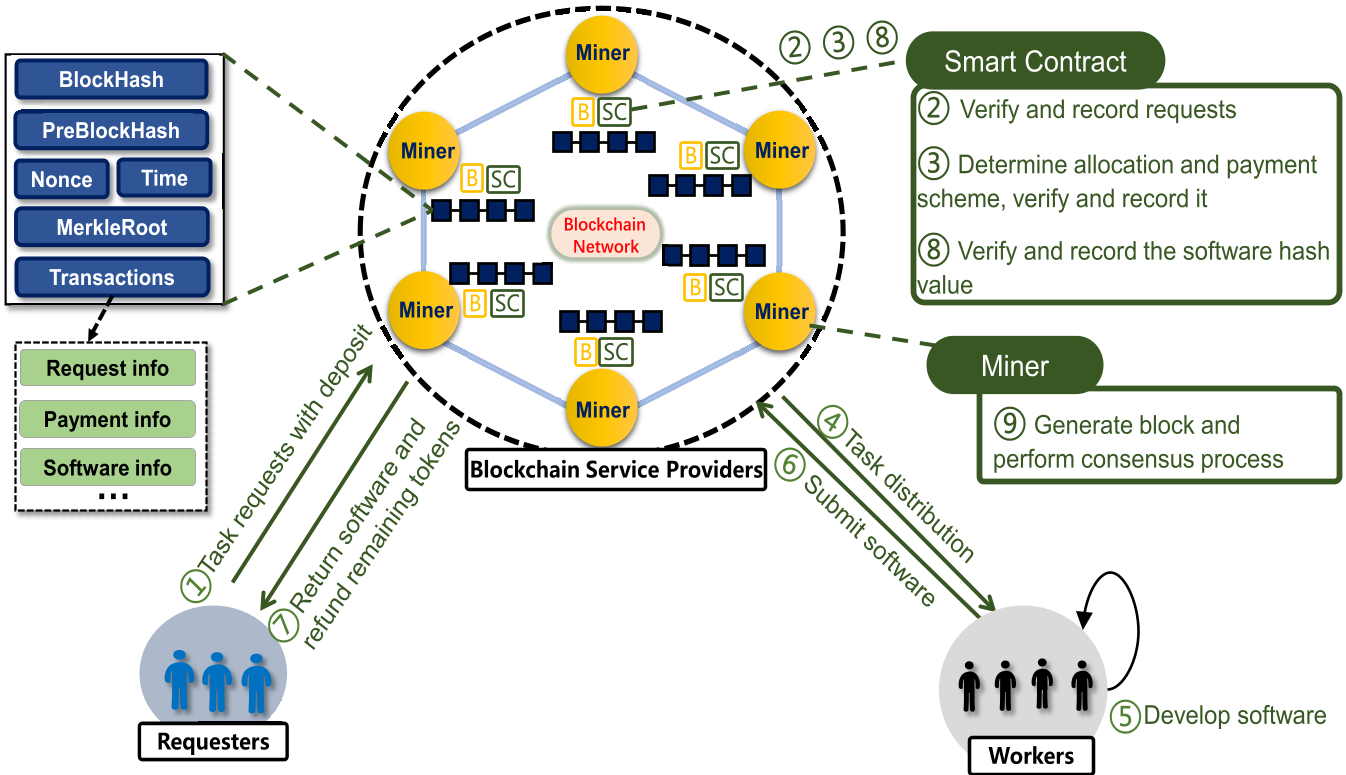
Evolutionary Insights: Why This Works
The "Secret Sauce" of this framework lies in the Smart Contract Automation. When software satisfies quality standards, cryptocurrency (Software Coins) is automatically transferred. This eliminates the "payment refusal" risk.
From an efficiency standpoint, re-utilizing development participants as verifiers significantly lowers the barrier to entry for quality control. Since the blockchain stores a tamper-proof history of transactions, the platform's "innocence" is proved by the math, not by a corporate promise.
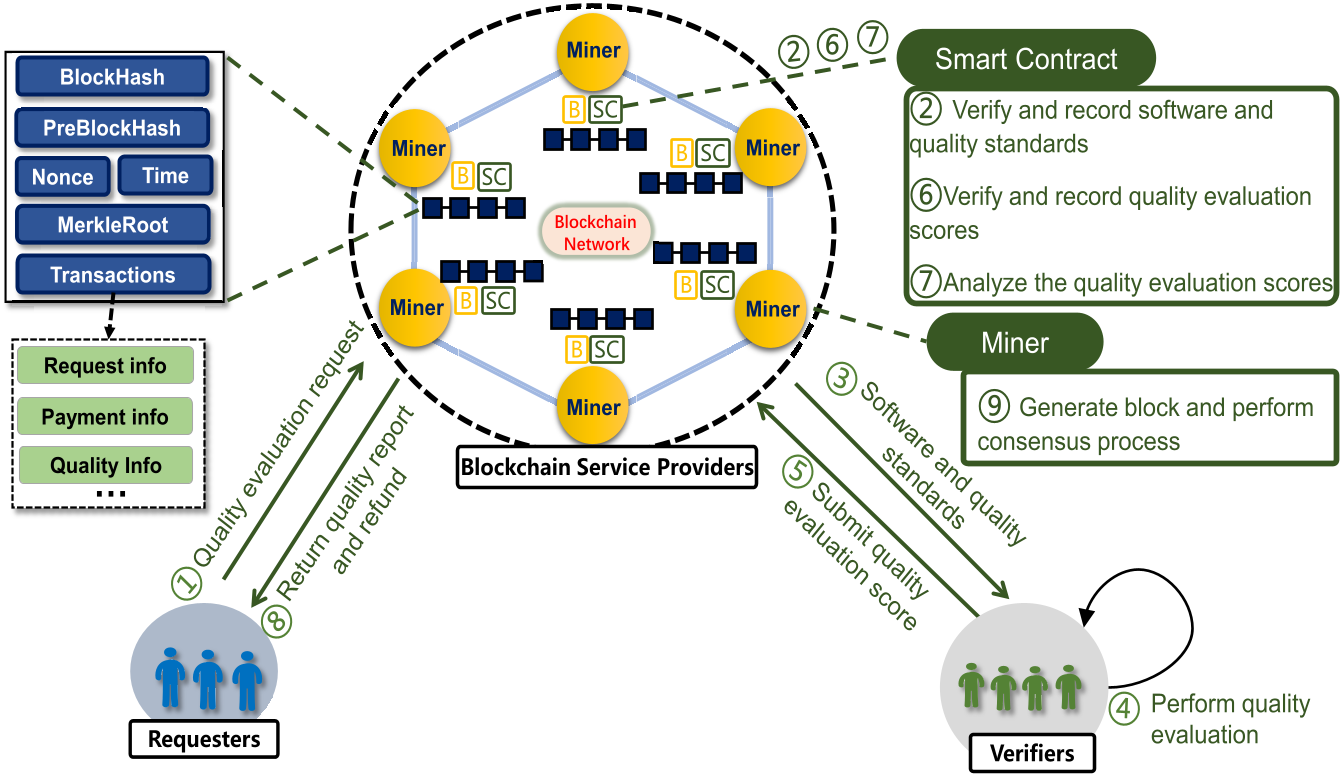
Critical Analysis & Future Outlook
Strengths
- Inductive Bias toward Fairness: The use of smart contracts ensures that neither the requester nor the worker can unilaterally cheat without leaving a cryptographic trail.
- Resource Optimization: Leveraging existing participants for verification is a pragmatically brilliant move to reduce "onboarding lag" for quality assurance.
Limitations & Challenges
- Scalability: The paper relies on Proof-of-Work (PoW). As the crowdsourcing ecosystem grows, the energy consumption and latency of PoW might hinder real-time collaboration.
- Privacy of Source Code: While transaction metadata is secure, the paper briefly touches upon encrypted indexes, but the actual privacy of large source code repositories on-chain remains a complex storage challenge.
Conclusion
This work serves as a blueprint for the next generation of Blockchain-Oriented Software Engineering (BOSE). By moving beyond traditional "separate" crowdsourcing modules and creating a unified, decentralized ecosystem, the authors have provided a robust solution to the trust-efficiency trade-off that has plagued crowdsourcing for a decade.