
Blockchain-Enhanced OSN: Breaking the Chains of Centralized Social Media
A decentralized social networking architecture enhanced by blockchain
The paper proposes a novel decentralized social networking architecture that integrates blockchain technology to resolve privacy and data ownership issues. The framework utilizes a two-layer sharding mechanism to ensure scalability and a reputation-based authority control system to enhance security across a peer-to-peer communication network.
TL;DR
The dominance of centralized social giants (Facebook, Weibo) has led to systemic privacy abuse and data sovereignty loss. This paper introduces a decentralized social networking architecture that leverages two-layer sharding for scalability, blockchain for immutable trust, and a reputation-based permission system to safeguard the network from malicious actors.
Background & Motivation: The Trust Deficit
In traditional OSNs, users are the "product." Data is hoarded in silos, making it nearly impossible for users to migrate or truly own their digital footprint. While decentralized social networks have been proposed before, they often fail because:
- The Performance Gap: Blockchain-based systems are notoriously slow.
- The Trust Gap: It is difficult to verify the integrity of distributed data without a central gatekeeper.
The authors argue that by combining Peer-to-Peer (P2P) communication with a hierarchical blockchain, we can build a system that is both private and performant.
Methodology: The Three-Layer Architecture
The proposed system functions across three distinct layers:
- Communication Network: A pure P2P structure for rapid routing.
- Blockchain Network: The "source of truth" that manages consensus and data consistency.
- Social Network: The UI/UX layer where users interact as followers and followees.
1. The Sharding Framework (Two-Layer Blockchain)
To solve the scalability problem, the authors move away from a single-chain bottleneck to a two-layer sharding model:
- Main Chain (Layer 1): Records the state of various shards.
- Sub-Chains (Layer 2): Individual shards that process localized user interactions and posts in parallel.
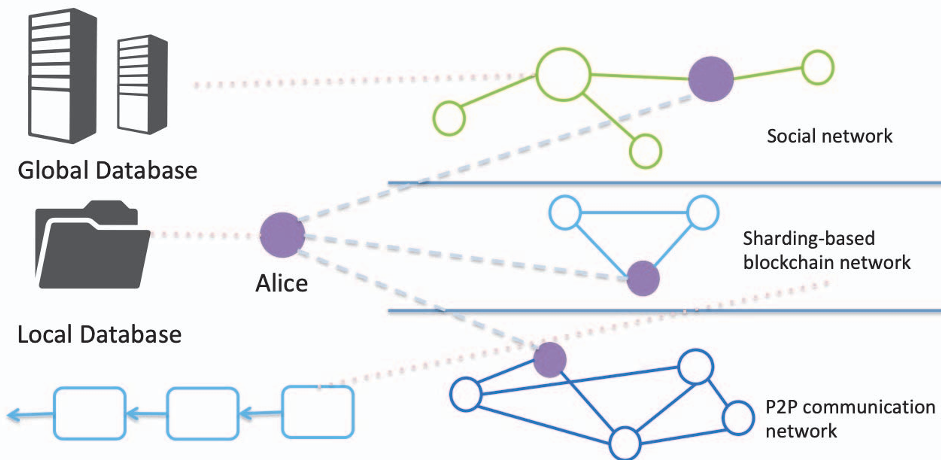 Fig 1. The overall system architecture showing the interplay between P2P and Blockchain layers.
2. Data Decoupling
The system distinguishes between Social Data (UGC, profiles) and Hash Data (digital fingerprints).
- Social data is stored in remote databases (Data Holders) using erasure or coded blocks to ensure availability.
- Only the Hash of this data is stored on the blockchain. This prevents the blockchain from bloating while allowing users to verify if their data has been tampered with.
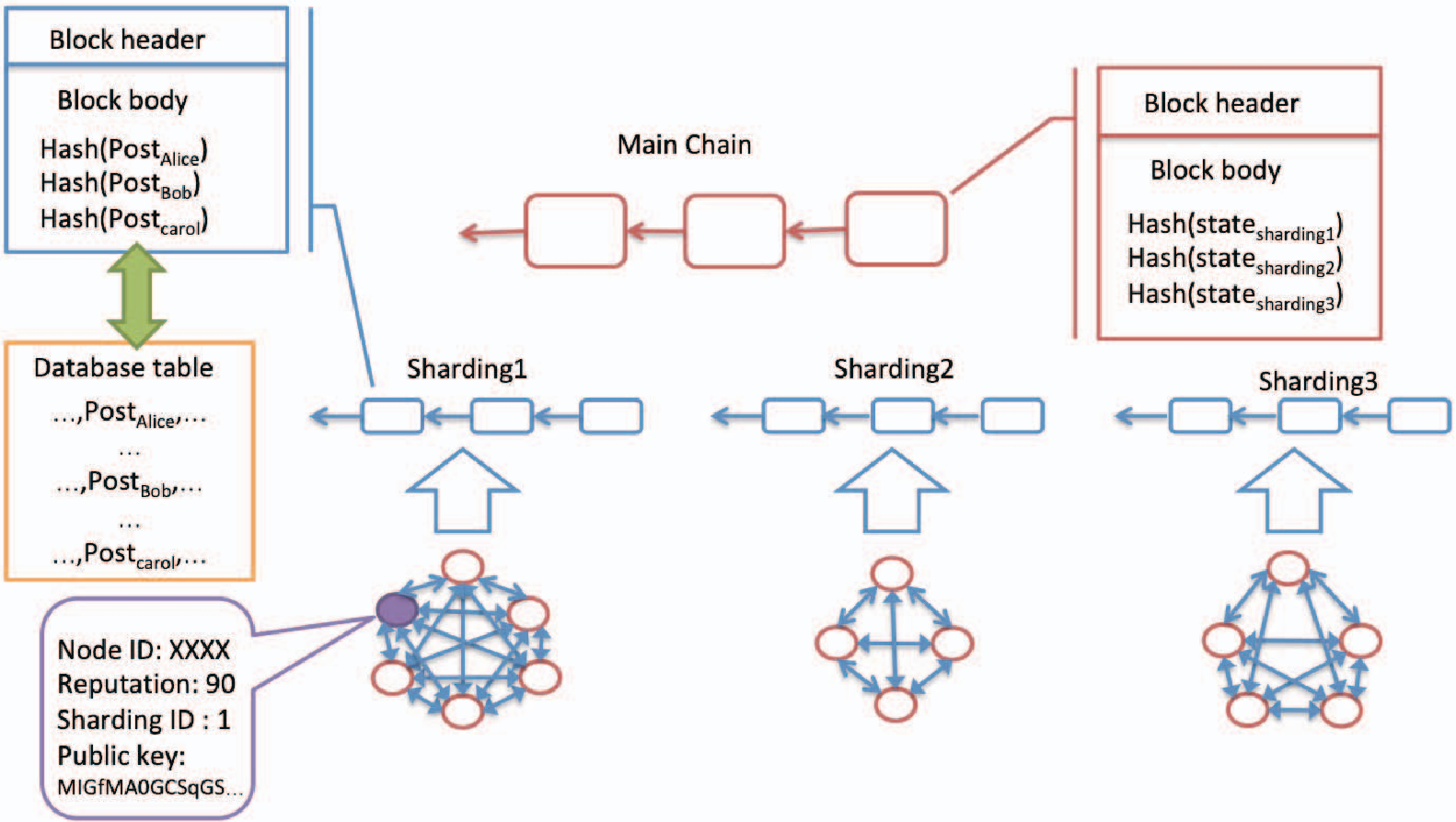 Fig 2. Representation of the two-layer sharding mechanism.
Reputation-Based Authority Control
A unique insight in this paper is the application of "Social Reputation" to blockchain security. Instead of treating all nodes as equals (which invites Sybil attacks), nodes are categorized based on behavior:
- Malicious: Limited to "View-only" access.
- Suspicious: Restricted from storage and mining.
- Normal/Credible: Granted full participation rights including block production and data storage.
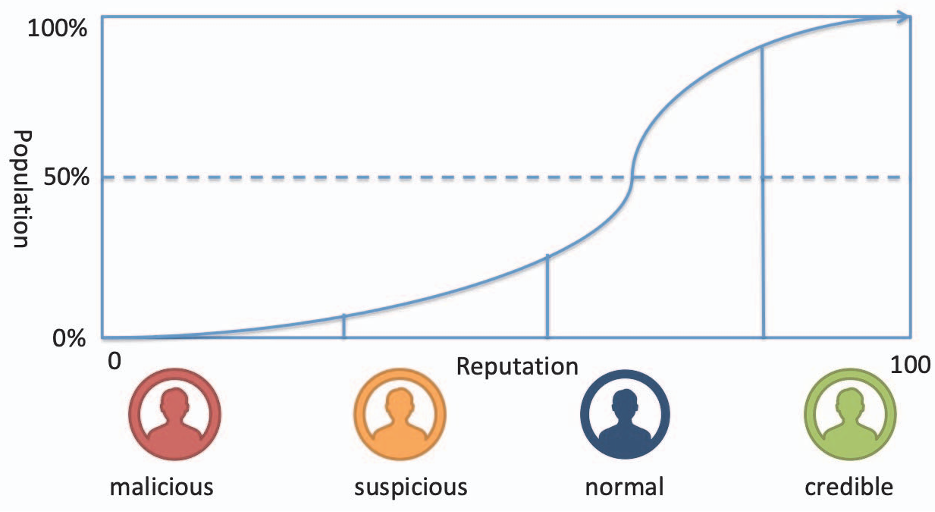 Fig 3. Logic flow for classifying users based on social reputation and behavior.
By assigning "Mining" and "Storage" rights only to Normal and Credible nodes, the system effectively raises the cost of a 51% attack, as a malicious actor would need to build a significant positive social reputation before they could attempt to subvert the network.
Critical Insight & Future Outlook
The core strength of this proposal lies in its sharding-driven scalability. Most blockchain social networks (like Steemit) eventually face bloat issues. By partitioning users into shards while maintaining a "Root Chain" for global consistency, the authors provide a pathway for social networks with millions of users.
Limitations: While the architecture is robust, the paper leaves the specific reputation-calculation algorithm (the "Social Scoring" logic) somewhat abstract. In a real-world scenario, the formula for what constitutes a "Normal" vs. "Suspicious" user would be a primary target for gaming systems.
Takeaway: This architecture proves that the future of social media isn't just about decentralization—it's about hierarchical verification. We don't need the whole world to store our photos; we just need the whole world to be able to verify that our photos haven't been changed.
Conclusion
This study bridges the gap between the chaotic freedom of P2P networks and the rigid security of Blockchains. By using sharding and reputation, the authors propose a social ecosystem where users—not corporations—are the true masters of their digital lives.