
Blockchain: The Paradigm Shift in Trusted Crowdsourcing Services
A survey of blockchain technology on security, privacy, and trust in crowdsourcing services
This paper provides a comprehensive survey of blockchain technology's integration into crowdsourcing services. It categorizes core mechanisms into security, privacy, and trust frameworks, highlighting how decentralized ledgers replace traditional centralized third-party intermediaries to achieve a "Value Internet."
TL;DR
Crowdsourcing is evolving from centralized platforms to decentralized ecosystems. This paper explores how blockchain technology—through its unique architecture of data, consensus, and smart contracts—solves the inherent "trust deficit" in crowdsourcing, enabling secure, private, and automated task management without third-party oversight.
Background Positioning
The paper serves as a seminal survey that bridges the gap between distributed ledger technology (DLT) and social computing. It classifies the transition from the Information Internet to the Value Internet, positioning blockchain as the "Machine of Trust."
The Core Problem: The Failure of Centralization
Traditional crowdsourcing (e.g., Amazon Mechanical Turk) relies on a central authority. This creates three distinct "Pain Points":
- Security Risk: Central servers are honey pots for hackers; a single breach exposes all participant data.
- Opacity: Requesters can deny payment unfairly, and workers can submit low-quality data without transparent recourse.
- High Costs: Intermediaries take significant commission fees to "guarantee" trust that is often fragile.
Methodology: The Architecture of Decentralized Trust
The authors dismantle the blockchain into a six-layer architecture to show how it redefines crowdsourcing:
1. The Data Layer & Merkle Trees
The use of Merkle Trees is the "how" behind data integrity. Instead of checking a massive dataset, nodes only need to verify the Merkle Root hash.
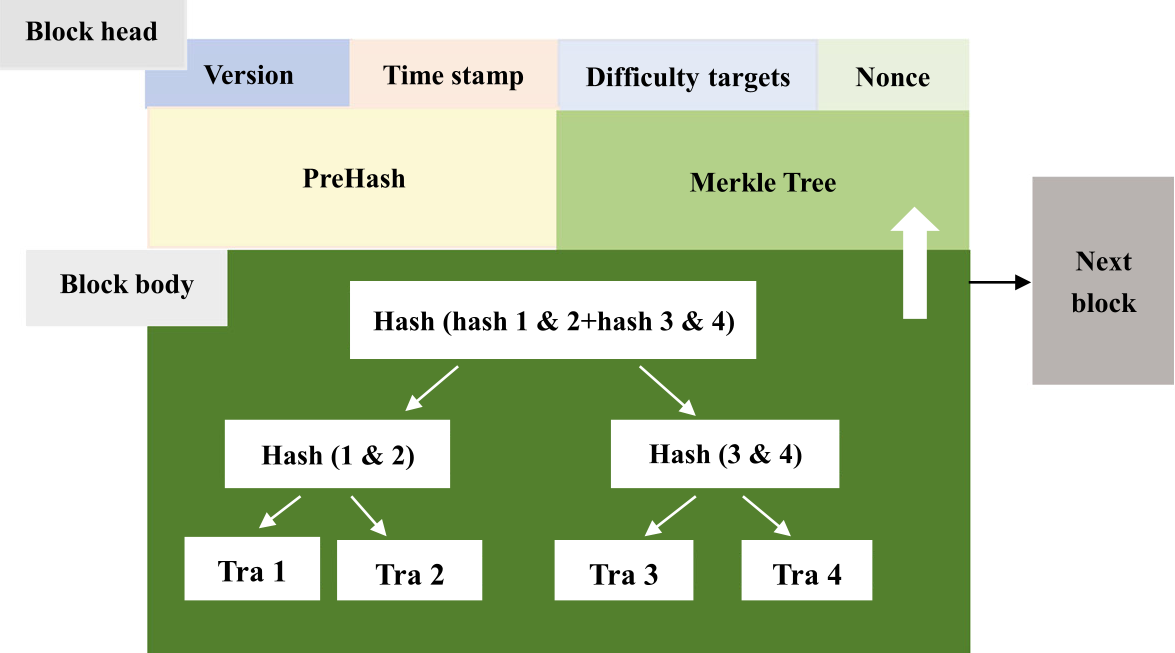 Figure 1: The standard block structure connecting via parent hashes to ensure immutability.
2. Consensus: The Engine of Agreement
The paper compares four key consensus mechanisms that replace the "Central Admin":
- PoW (Proof of Work): High security but energy-heavy.
- PoS/DPoS (Proof of Stake): Faster, used in modern crowdsourcing for efficiency.
- PBFT: Ideal for consortium blockchains where participants are known but not fully trusted.
3. Smart Contracts: The Soul of the System
Smart contracts are the "if-then" logic of the crowd.
- Logic: If Worker A completes Task B to the satisfaction of the script, Payment C is released automatically.
- Benefit: This eliminates human subjective bias and payment delays.
Key Insights from the "Relevant Articles" Analysis
The survey highlights a surge in research since 2016, with a focus on Identity Authentication and Privacy Protection.
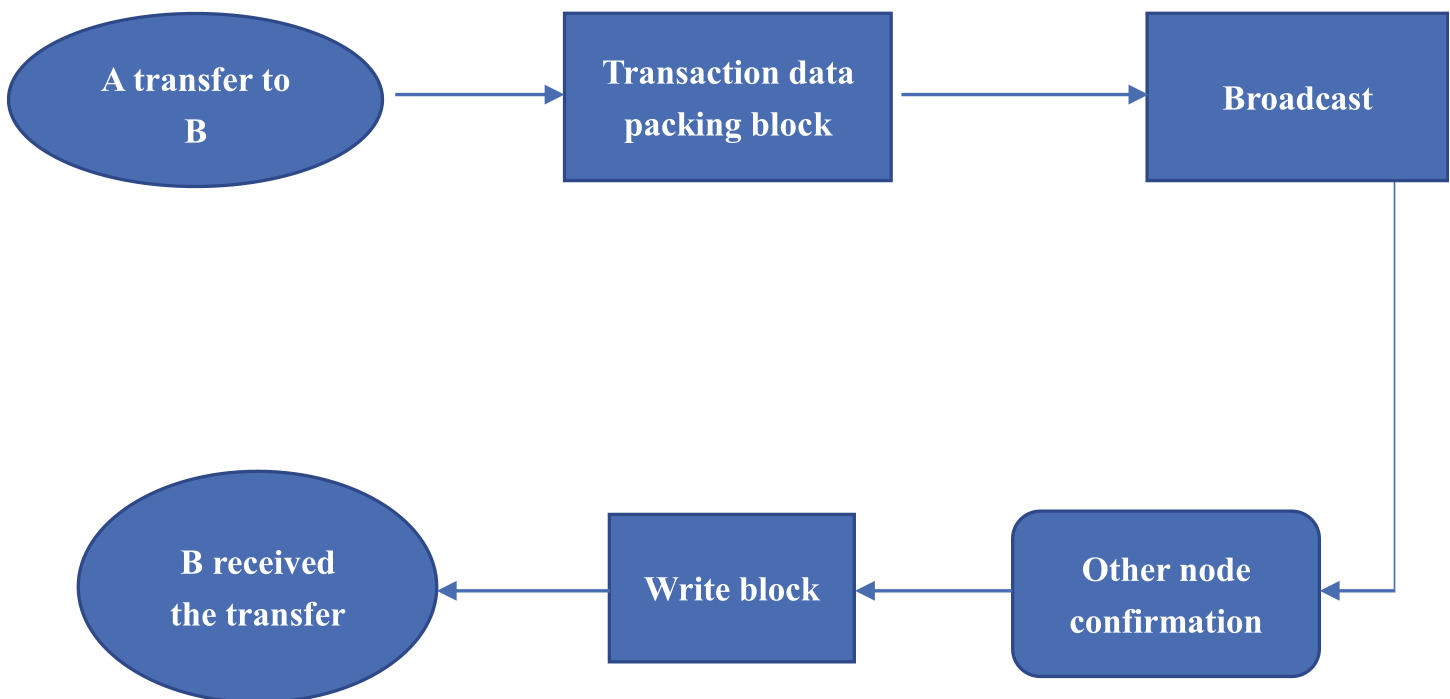 Figure 2: Global distribution of blockchain research, showing the dominance of Chinese and US-based institutions.
Application Scenarios in Crowdsourcing
The paper identifies several transformative use cases:
- Mobile Crowdsensing (MCS): Protecting user location privacy using differential privacy on-chain.
- Logistics & Supply Chain: Real-time tracking of goods where each hand-off is a "task" verified by a block.
- Medical Data Management: Using blockchain to manage patient consent and electronic health records (EHR) securely.
Critical Analysis & Future Outlook
While the paper is optimistic, it acknowledges significant hurdles:
- Storage Scalability: Blockchain is not designed for "Big Data." Storing raw audio/video from crowdsourcing tasks directly on-chain is currently unfeasible.
- The "Key" Vulnerability: In a decentralized world, losing your private key means losing your identity and assets—there is no "Forgot Password" button.
- Future Direction: The future lies in Hybrid Storage (Off-chain data storage like IPFS paired with On-chain verification) and Zero-Knowledge Proofs for absolute privacy.
Conclusion
This survey establishes blockchain not just as a financial tool, but as a foundational infrastructure for collective intelligence. By shifting from Institutional Trust to Machine Trust, we can build more equitable and efficient global crowdsourcing markets.