
Blockchain in E-commerce: Engineering Decentralized Trust for the Next Retail Generation
Blockchain Technologies in E-commerce: Social Shopping and Loyalty Program Applications
The paper presents a comprehensive survey and design framework for integrating blockchain technology into e-commerce, specifically focusing on "Social Shopping" and "Loyalty Programs." It proposes two novel system architectures that utilize blockchain's immutability and traceability to enable multi-tier dynamic pricing and unified reward tokenization.
TL;DR
This research investigates the integration of blockchain into e-commerce, moving beyond simple cryptocurrency payments. It introduces two major architectural prototypes: Social Shopping, which uses blockchain to track referral tiers for group discounts, and a Unified Loyalty Program, which tokenizes rewards to prevent value fragmentation. The paper highlights that while scalability remains a bottleneck, permissioned chains like Hyperledger Fabric offer a viable path for industrial adoption.
Background & Motivation: The Intermediary Tax
In the current e-commerce landscape, "trust" is an expensive commodity. Retailers pay heavy commissions to platforms for exposure and payment gateways (like PayPal or Credit Cards) for security. Furthermore, customer loyalty is often trapped in "walled gardens"—reward points that expire or cannot be used elsewhere.
The authors argue that the industry is ripe for a decentralized shift. By leveraging blockchain, we can move from a model where a central platform owns the data to a "trustless" environment where math and cryptography guarantee the integrity of transactions and reviews.
Methodology: Two Disruptive Prototypes
1. Social Shopping & Multi-tier Pricing
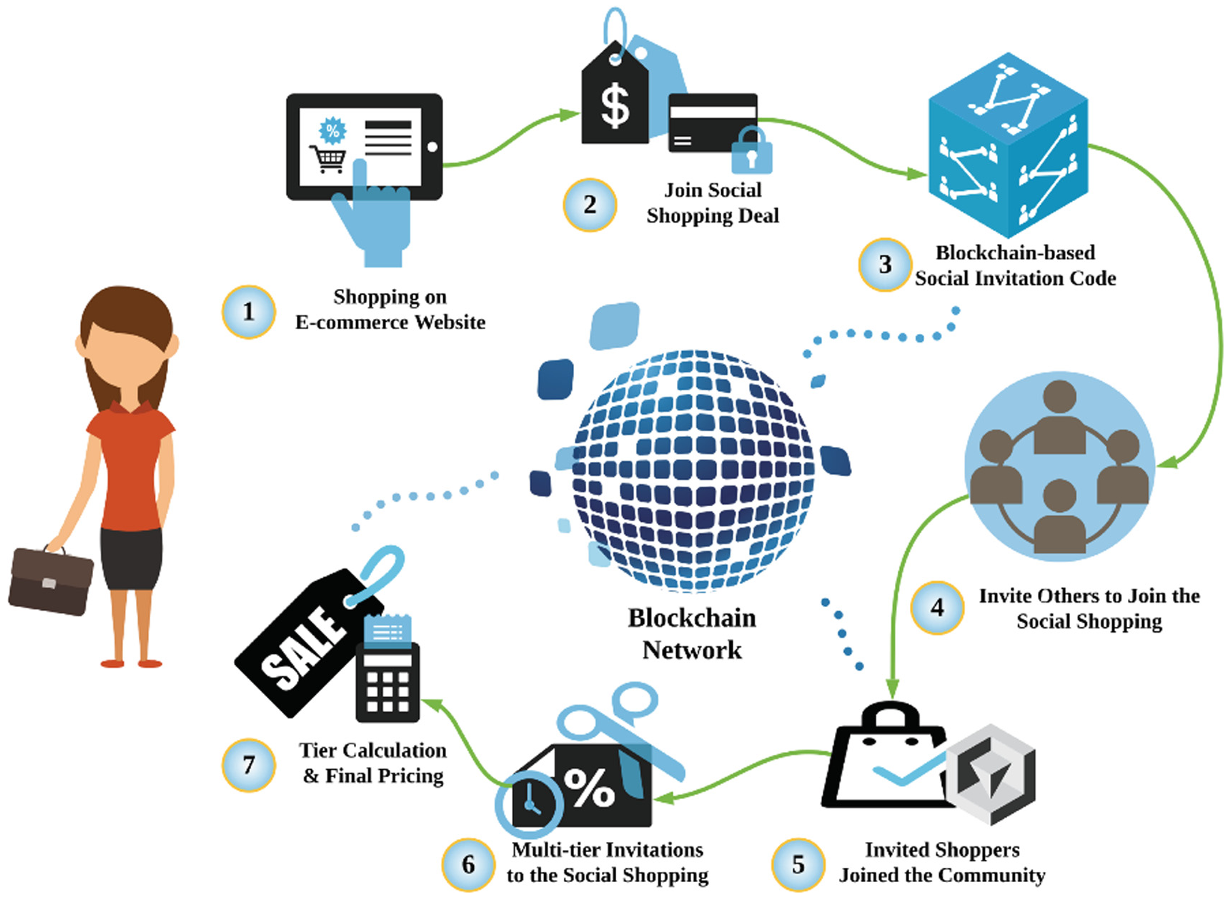
The proposed Social Shopping model reinvents "group buying." Instead of a flat discount, it uses the blockchain's linked-block nature to map out a social hierarchy. When a user shares an invite code, a new transaction block is created that links the invitee to the inviter.
The Intuition: By using the blockchain as a ledger for social connections, the system automatically calculates dynamic pricing (e.g., Tier 1 for 1-4 items, Tier 3 for 11+ items) once a "time-limited deal" expires. This eliminates the need for complex, private database management of referral links.
2. The Unified Loyalty Wallet
The second pillar addresses the fragmentation of reward systems. By tokenizing points on a blockchain, the authors propose a single wallet where rewards from multiple retailers are converted into a unified token. This uses "Session Aggregation" to batch shopping behaviors into blocks, which are then hashed to prevent double-spending of points.
Comparative Landscape: Choosing the Right Engine
A critical contribution of this paper is the performance benchmark of current blockchain technologies. As shown in the table below, the choice of protocol is a trade-off between decentralization and speed.
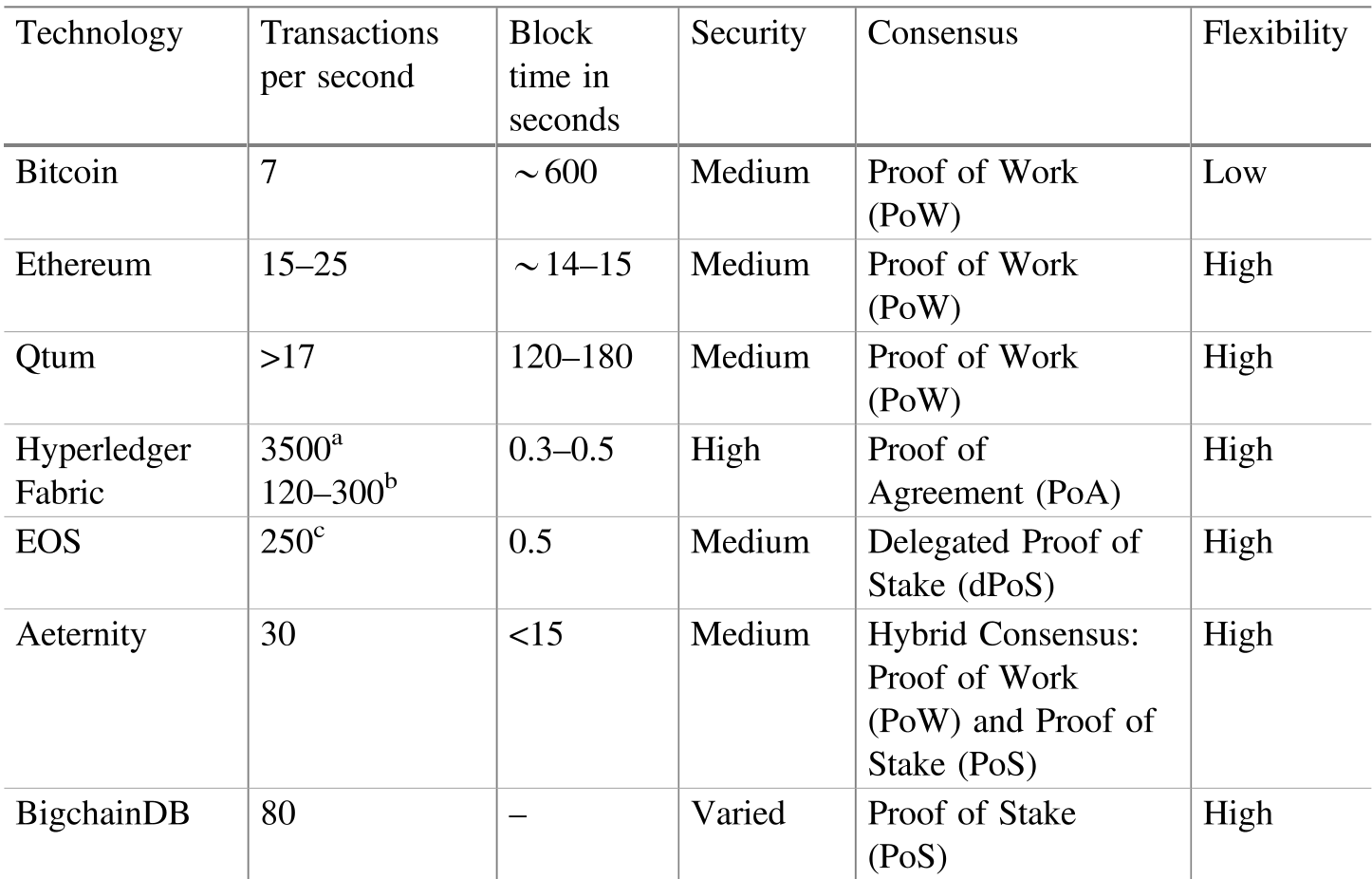
Key Insight: While Bitcoin and Ethereum are the most famous, their low TPS (7-25) makes them unsuitable for retail. Hyperledger Fabric, with its Proof of Agreement (PoA) consensus, reaches up to 3,500 TPS, making it the most likely candidate for enterprise-level e-commerce.
Critical Analysis & Future Outlook
The paper successfully bridges the gap between high-level blockchain theory and practical e-commerce design. However, it acknowledges substantial hurdles:
- Scalability: Even 3,500 TPS pales in comparison to Visa’s 48,000+ TPS.
- Privacy: Because blockchain is "write-only," handling sensitive customer data requires careful off-chain storage or advanced zero-knowledge proofs (not deeply covered in this text).
- Acceptance: The cost of re-engineering legacy supply chain systems remains the biggest barrier to entry for SME retailers.
Conclusion
The future of e-commerce lies in transparency and traceability. Whether it is verifying that a "limited edition" sneaker is authentic or ensuring a social discount is fairly applied, blockchain provides the immutable audit trail that traditional databases lack. This research provides a solid blueprint for developers looking to move from concept to prototype in the Web3 retail space.