
HCUBE: Unleashing Blockmodeling for Precise Web Social Network Partitioning
A new blockmodeling based hierarchical clustering algorithm for web social networks
The paper introduces HCUBE, a novel hierarchical clustering algorithm tailored for Web Social Networks (WSNs). By leveraging "blockmodeling" and structural equivalence, the method accurately partitions complex networks into comprehensible subnetworks, achieving superior performance over classical baselines like Chameleon and k-means.
TL;DR
Web Social Networks (WSNs) are far more complex than simple geometric data points. Traditional clustering fails to capture the "social" logic of the web. This paper introduces HCUBE, a hierarchical algorithm that uses blockmodeling and structural equivalence to group web pages based on their roles and connection patterns rather than just raw distance. It delivers a 10.8% precision boost over k-means and features an optimized two-phase execution mode for large-scale data.
The Core Problem: Why Distance Isn't Enough
In a standard dataset, closeness is measured by Euclidean distance. In a Web Social Network, "closeness" is a matter of Position. Two web pages might not link to each other, but if they both link to the same set of authority sites and are cited by the same set of blogs, they are "structurally equivalent."
Prior works like Chameleon or k-means fail here because:
- They require manual parameter specification (like in k-nearest-neighbors).
- They struggle with arbitrary shapes in high-dimensional link spaces.
- They cannot handle the dynamic, "meta-complicated" nature of evolving web links.
Methodology: The Logic of HCUBE
The authors propose a shift from relational analysis to Positional Analysis.
1. Structural Equivalence
The mathematical heart of HCUBE is the Dissimilarity Matrix, calculated using an Euclidean-like measure:
eq i,j} ((r_{is} - r_{js})^2 + (r_{si} - r_{sj})^2)}$$ This formula ensures that if two nodes $X_i$ and $X_j$ have identical incoming and outgoing links to all other nodes ($s$), their distance is zero. ### 2. The HCUBE Algorithm The process follows an agglomerative (bottom-up) flow: 1. **KNN Graph Generation**: Establish initial neighborhood structures. 2. **Blockmodeling**: Group units that have similar patterns into "blocks." 3. **Hierarchical Merging**: Use two unique metrics—**Inter-connectivity** (internal density) and **Closeness between clusters** (external proximity)—to decide which blocks to merge.  *Figure 1: Illustration of a complex Web Social Network with intricate link relations.* ## Experiments & Results The authors validated HCUBE against *Chameleon* and *kn-means* (a k-means variant using geodesic shortest paths). ### Precision and Recall HCUBE demonstrated superior stability. As the number of pages increased to 500, HCUBE’s precision remained high, while others fluctuated. - **Precision Improvement**: +10.8% over k-means. - **Recall Improvement**: +3.7% over k-means. ### Optimization (HCUBE*) The standard HCUBE has a complexity of $O(|V|^2)$. To handle the "TB-order" of web growth, the authors introduced a two-phase optimization. By partitioning the network into $p$ units (b-areas) and clustering locally before globally, they achieved a significant speedup. 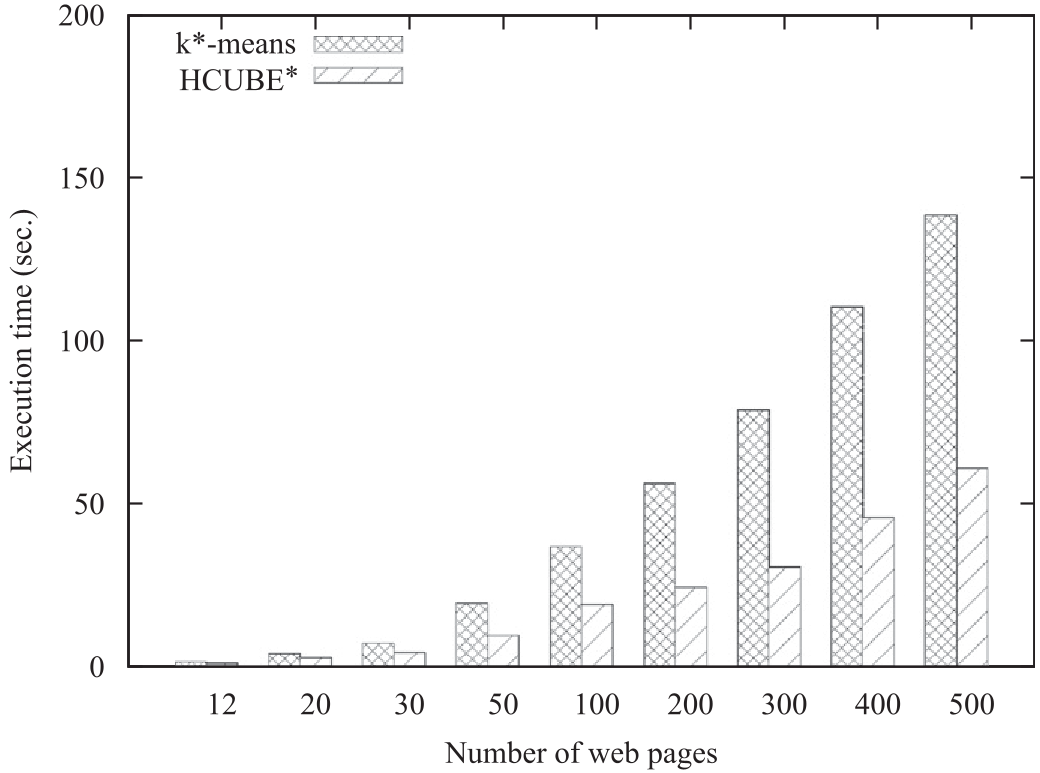 *Figure 2: Execution time comparison showing HCUBE* effectively reducing latency compared to kn-means.* ## Critical Insights & Future Outlook HCUBE represents a bridge between traditional Graph Theory and modern Social Network Analysis (SNA). Its ability to identify "Structural Equivalence" makes it particularly powerful for: - **E-commerce**: Classifying users by interaction patterns rather than just profile data. - **Cybersecurity**: Identifying key members in covert or criminal networks (e.g., Terrorist networks). **Limitations**: The algorithm still relies on the initial construction of a KNN graph, which can be a bottleneck for truly massive graphs. Future work involves integrating these structural insights with generative models or Bayesian classification to predict how these clusters evolve over time. ## Conclusion By focusing on "Position" over "Distance," HCUBE provides a more philosophically and mathematically sound way to partition the social web. It proves that in a networked world, it is not just who you know, but *how* you know them that defines your place in the structure.