
Beyond Bearish and Bullish: How "Fear" and "Sadness" on Social Media Drive Taiwan Index Futures
Investigating the Relationship Between the Emotion of Blogs and the Price of Index Futures
This paper investigates the predictive power of multivariate emotions extracted from social media on the Taiwan Index Futures market. By analyzing real-time discussions on the PTT "Option" board using the Jieba segmentation tool and a specialized Chinese emotional vocabulary, the study establishes that specific emotions like "Fear" and "Sadness" are significant indicators of market declines.
TL;DR
Is market volatility driven by data or by the collective "gut feeling" of retail investors? This study analyzes the PTT "Option" board—Taiwan's most influential discussion forum—to prove that emotional nuances like Fear and Sadness are not just noise; they are statistically significant predictors of the TAIEX (Taiwan Stock Exchange Capitalization Weighted Stock Index) futures price movements. Unlike previous binary sentiment studies, this research highlights that specific negative emotions have distinct impacts on market declines.
Problem & Motivation: The Limitation of Binary Sentiment
In the world of behavioral finance, the "Efficient Market Hypothesis" has long been challenged by the reality of human irrationality. While previous researchers used Twitter to predict the Dow Jones, they often categorized human feelings into a simple "Positive vs. Negative" dichotomy.
The authors of this paper argue that this is too reductive. For instance, "Dislike" might not influence a trader's behavior as much as "Panic" or "Fear." By focusing on the Taiwan market—where retail participation is high and discussion is concentrated on platforms like PTT—the researchers aimed to build a more granular emotional map to forecast derivatives.
Methodology: Decoding the Chinese "Vibe"
The methodology involves a robust pipeline of text mining tailored for the Chinese language:
- Data Extraction: Collecting 1,360 articles from the PTT Option board over a two-year period.
- Segmentation: Using the
Jiebalibrary to handle the lack of spacing in Chinese text. - Emotion Scoring: Utilizing the IR Laboratory vocabulary from Dalian University of Technology, which categorizes words into seven dimensions: Happy, Good, Angry, Sad, Fear, Hate, and Surprise.
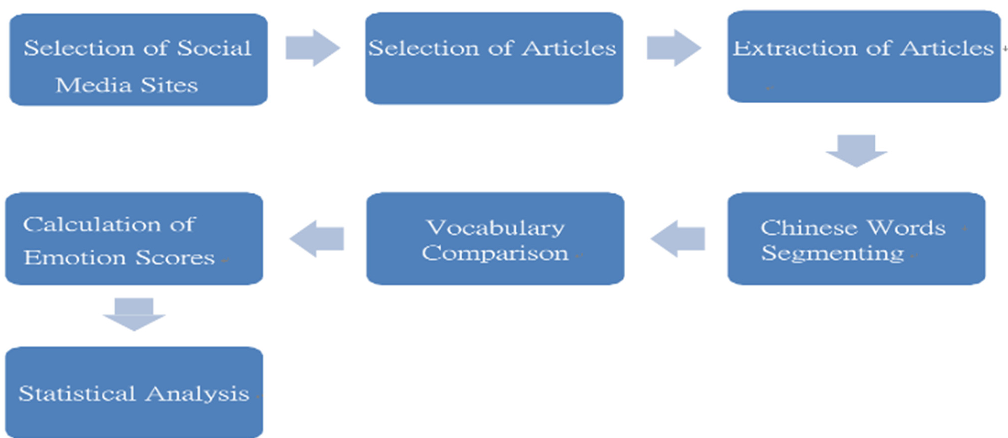 Figure 1: The research workflow from PTT collection to statistical regression.
The core of their analysis is Definition 1, which calculates the "Emotion Intensity" of a specific day by summing the weighted scores of all emotional keywords identified in that day's "after-hours" and "intraday" chat threads.
Experiments & Results: Fear as a Market Catalyst
The statistical findings offer a fascinating glimpse into investor psychology:
- The Fear Factor: Regression analysis showed that "Fear" was the only emotion with a statistically significant -value () for predicting immediate next-day price drops.
- Conditioned Correlation: If we already know the market is going to drop, the intensity of Fear () and Sadness () tells us exactly how "bloody" that drop will be.
- The Optimism Bias: When the market is bullish, the emotion "Good" () correlates strongly with the magnitude of the price rise.
Table: Correlation coefficients showing the strength of specific emotions during market shifts.
Crucially, the study found that "Hate" or "Dislike" (惡) had almost no predictive power. This suggests that while investors might complain about a stock or a trend, it is only when they feel visceral fear that they actually change their trading behavior enough to move the futures market.
Critical Analysis & Conclusion
The "takeaway" for any quant or retail trader is clear: watch the panic levels, not just the negativity.
Strengths:
- Higher Resolution: Moving from sentiment (2 categories) to emotion (7 categories) provides a more precise lens for risk management.
- Cultural Specificity: By using PTT, the study captures the "authentic" voice of the Taiwanese retail investor, which is often lost in global English-language datasets.
Limitations:
- The "Contrarian" Effect: The authors briefly mention that PTT is sometimes known for "anti-indicator" behavior (where the crowd is spectacularly wrong). This study doesn't fully model the scenarios where extreme high "Fear" might actually signal a market bottom (a classic contrarian buy signal).
- Static Lexicon: The study uses a fixed vocabulary. In the fast-evolving world of internet slang (e.g., "to the moon" or "paper hands"), a static dictionary might miss emerging emotional cues.
Future Outlook
The authors suggest that the next frontier is applying this multivariate emotional analysis to professional news rather than just social media. While social media reflects the "crowd," professional news might act as the "catalyst" for those emotions. Integrating these two sources could create a powerful "early warning system" for index futures.
Key Takeaway: When the PTT forum starts feeling "Fearful" and "Sad," it's time to re-evaluate your long positions. The crowd's mood today is tomorrow's price movement.