
Blogs as Social Learning Hubs: Decoding Message Structures and Student Engagement
Blogs as User Based Social Networks for Learning: An Exploratory Study
This paper explores the role of blogs as "user-based social networks" in formal education, proposing three collaborative learning dynamics: Problem-Based, Project-Based, and Discussion-Based learning. The study evaluates student engagement and the impact of message structuring (Linear, Hierarchical, and Net) on collaborative outcomes across undergraduate and graduate levels.
TL;DR
This research investigates how the underlying architecture of digital communication—specifically in blogs—affects collaborative learning. By testing three distinct pedagogical dynamics (Problem, Project, and Discussion-based), the authors reveal that student engagement is heavily influenced by academic level and that linear comment threads often hinder deep collaboration.
Background: Blogs as User-Centered Networks
In the landscape of social media, blogs represent a User Based Social Network. Unlike modern "feeds" that push content to you, blogs require users to "go to the information." As educational tools, they offer a semi-public profile and a platform for articulation, but their effectiveness is governed by how messages are organized.
The Structural Challenge: List, Tree, or Graph?
The core insight of the paper is that the "shape" of a conversation dictates its value. The authors identify three primary message structures:
- Linear (List): Chronological, but lacks explicit relationships. Common in basic comment sections.
- Hierarchical (Tree): Uses "Reply-to" features. Ideal for divergent discussions where multiple sub-topics emerge.
- Net (Graph): Uses "Quotations" to link multiple ideas, fostering a convergent discussion.
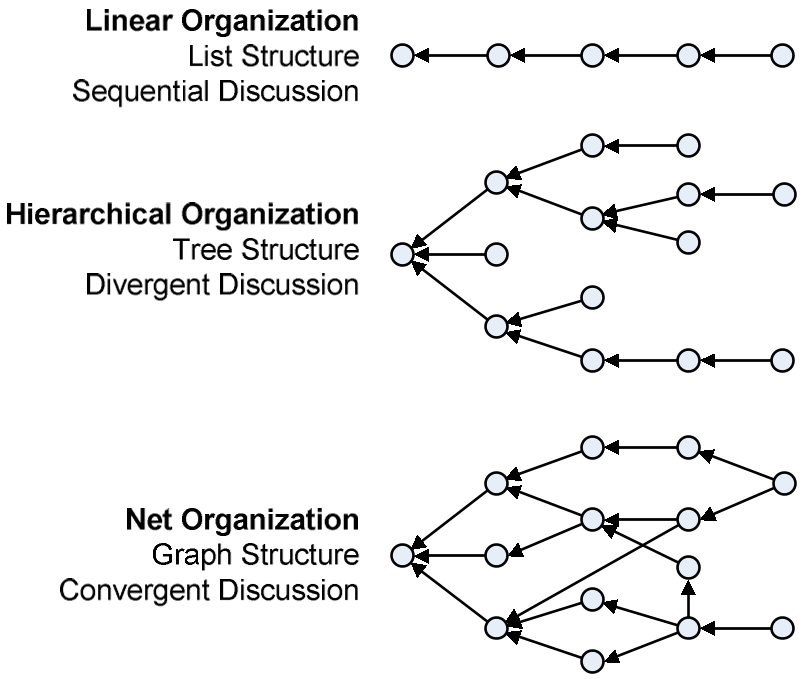 Figure 1: Comparison of Linear, Hierarchical, and Net organizations of messages.
Methodology: Three Dynamics of Collaborative Learning
The researchers deployed blogs across four classes using different frameworks:
- Problem-Based: Teacher-centered; students contribute solutions via comments.
- Project-Based: Student-centered; learners host their own blogs to showcase project stages and receive peer critiques.
- Discussion-Based: Shared ownership; focusing on debating specific subjects.
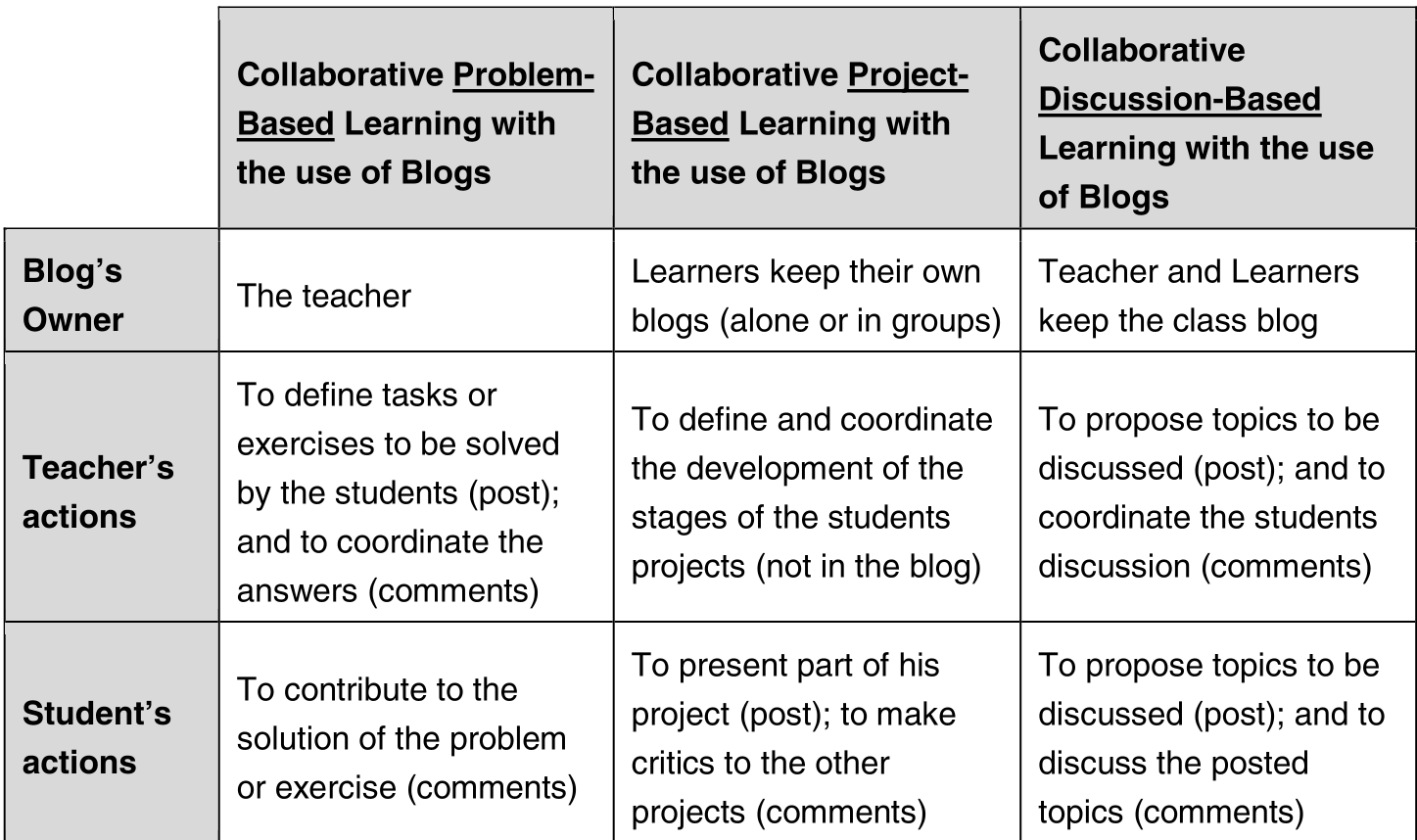 Table 1: Comparison of the three collaborative learning dynamics supported by blogs.
Key Findings: The "Muddled" Discussion Traps
The exploratory study yielded several critical observations:
- The Maturity Gap: Graduate students engaged at a rate of 77%, nearly double the 38% seen in undergraduate classes.
- The "Structural" Failure: Students frequently complained that comments were "muddled," "tiring to visualize," and "confusing." This was due to the Star Graph structure of typical blogs (one post, many independent comments), which fails when students try to talk to each other rather than just to the post.
- Feature Resistance: Even when "Reply-to" and "Quotation" features were enabled to create hierarchical and net structures, students rarely used them. This suggests a strong behavioral inertia toward simple linear scrolling.
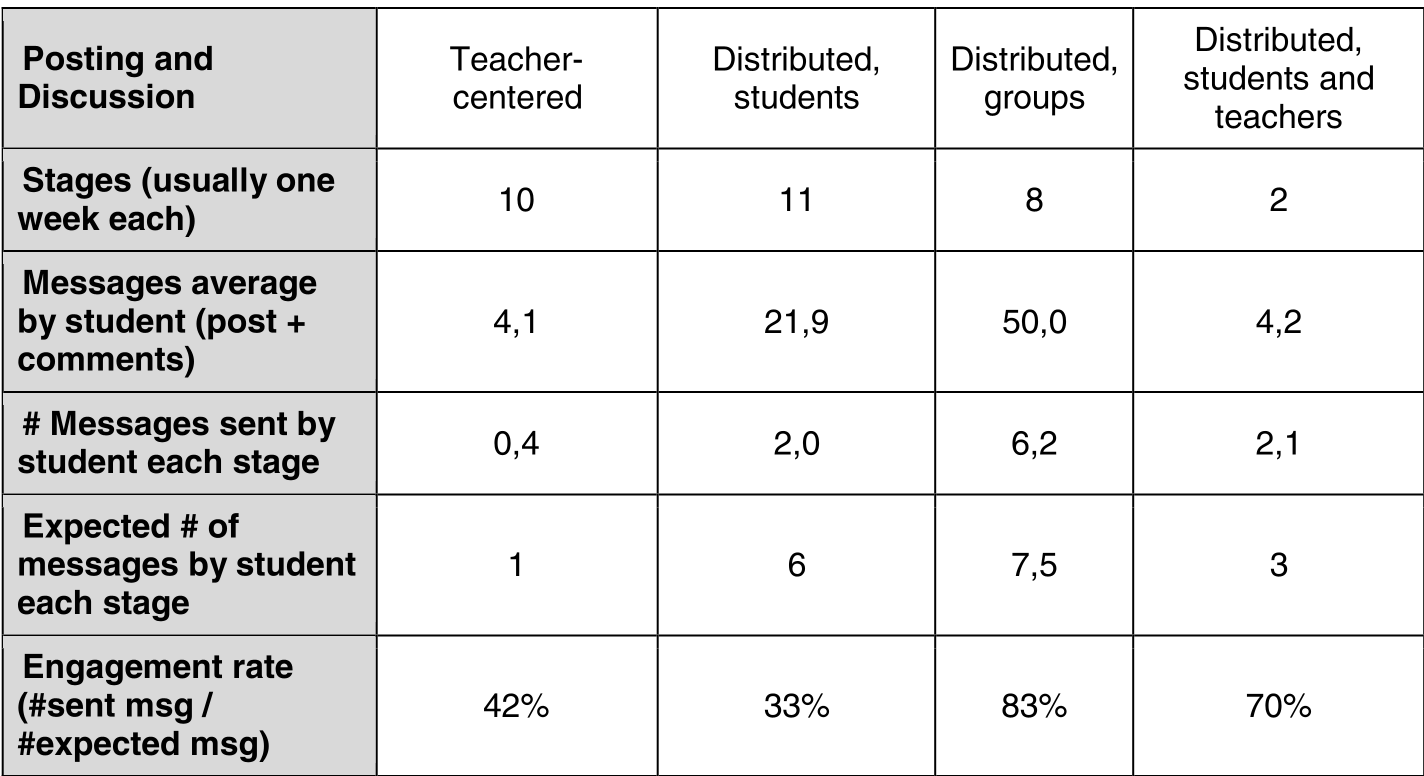 Table 2: Participation data across different classes and dynamics.
Critical Insights: Why Structure Matters
The study highlights a fundamental tension in EdTech: Flexibility vs. Discipline. While blogs provide a democratic space for expression, the "All-to-One" (many comments to one post) relationship inherent in the Star Graph structure (see Figure 2 in the paper) creates a bottleneck. To move toward true All-to-All collaborative learning, we must transition to "Connection Based" networks (like Microblogs) where the focus shifts from the profile to the streaming interaction.
Conclusion & Future Outlook
The paper concludes that simply providing a blog isn't enough to guarantee learning. The difficulty in following comments and identifying senders remains a significant hurdle. Future research is moving toward Connection Based Social Networks (Microblogs) to see if shorter, feed-based interactions can solve the "muddled" conversation problem of traditional blogs.
Takeaway for Educators: When using blogs, don't just "post and hope." You must explicitly train students on how to use threading (Reply-to) and cross-referencing (Quotation) to prevent the discussion from collapsing into a chronological list of disconnected thoughts.