
Body Sensor Networks: Delivering the "Guardian Angel" for Pervasive Healthcare
An overview of body sensor networks in enabling pervasive healthcare and assistive environments
This paper provides a comprehensive review of Body Sensor Networks (BSNs) and Wireless Body Area Networks (WBANs) as enabling technologies for pervasive healthcare. It evaluates various physiological sensors, ultra-low-power communication protocols (Bluetooth LE, UWB, ZigBee), and state-of-the-art system architectures that achieve SOTA ambulatory monitoring.
TL;DR
Body Sensor Networks (BSNs) are evolving from simple wireless patches into intelligent, ultra-low-power systems that enable continuous, long-term health monitoring. By leveraging advances in MEMS, textile electrodes, and specialized protocols like Bluetooth Low Energy and UWB, researchers are moving away from restrictive clinical "snapshots" toward pervasive "Guardian Angel" systems that protect patients without modifying their daily behavior.
Background: Beyond the Clinic
In the traditional medical model, vitals are captured in unrepresentative states—often while the patient is supine or sedated. This "snapshot" approach frequently misses transient abnormalities. BSNs and WBANs (Wireless Body Area Networks) aim to fill this gap. While the terms are often used interchangeably, the paper clarifies that BSN focuses on a system-level approach (processing, energy scavenging, data mining), while WBAN emphasizes the communication infrastructure within a 2-meter radius of the body.
The Pain Points: Why is Pervasive Monitoring Hard?
The transition from "wired" clinical monitors to "wireless" wearables faces three primary hurdles:
- Power Constraints: Devices must be tiny, yet current batteries cannot sustain long-term sensing.
- Obtrusiveness: Standard "wet" electrodes irritate skin; bulky hardware restricts movement.
- Communication Dynamics: The human body is a hostile environment for RF signals, suffering from diffraction and path loss that varies with movement.
Methodology: The Core Architecture of BSNs
The paper details an architecture that bridges the physical and electronic worlds through a hierarchy of networks (WBAN -> WLAN -> WMAN).
1. Advanced Sensing Layer
The move toward Textile-Structured Electrodes is a game-changer. By weaving sensors directly into garments using conductive fibers, researchers have created "smart clothes" that minimize movement artifacts and skin irritation. Furthermore, MEMS technology allows for miniaturized accelerometers and gyroscopes that capture motion with high precision.
2. The Communication Protocol Battle
The choice of "language" for these sensors is critical for balancing power and speed:
- Bluetooth Low Energy (BLE): Optimized for hardware cost and millisecond-level synchronization, making it ideal for alarm generation.
- UWB (Ultra-Wideband): Excellent for high data rates (up to 480 Mbps) and low interference in hospital environments.
- ZigBee: Suited for mesh topologies in static environments like hospitals (as seen in the CodeBlue project).
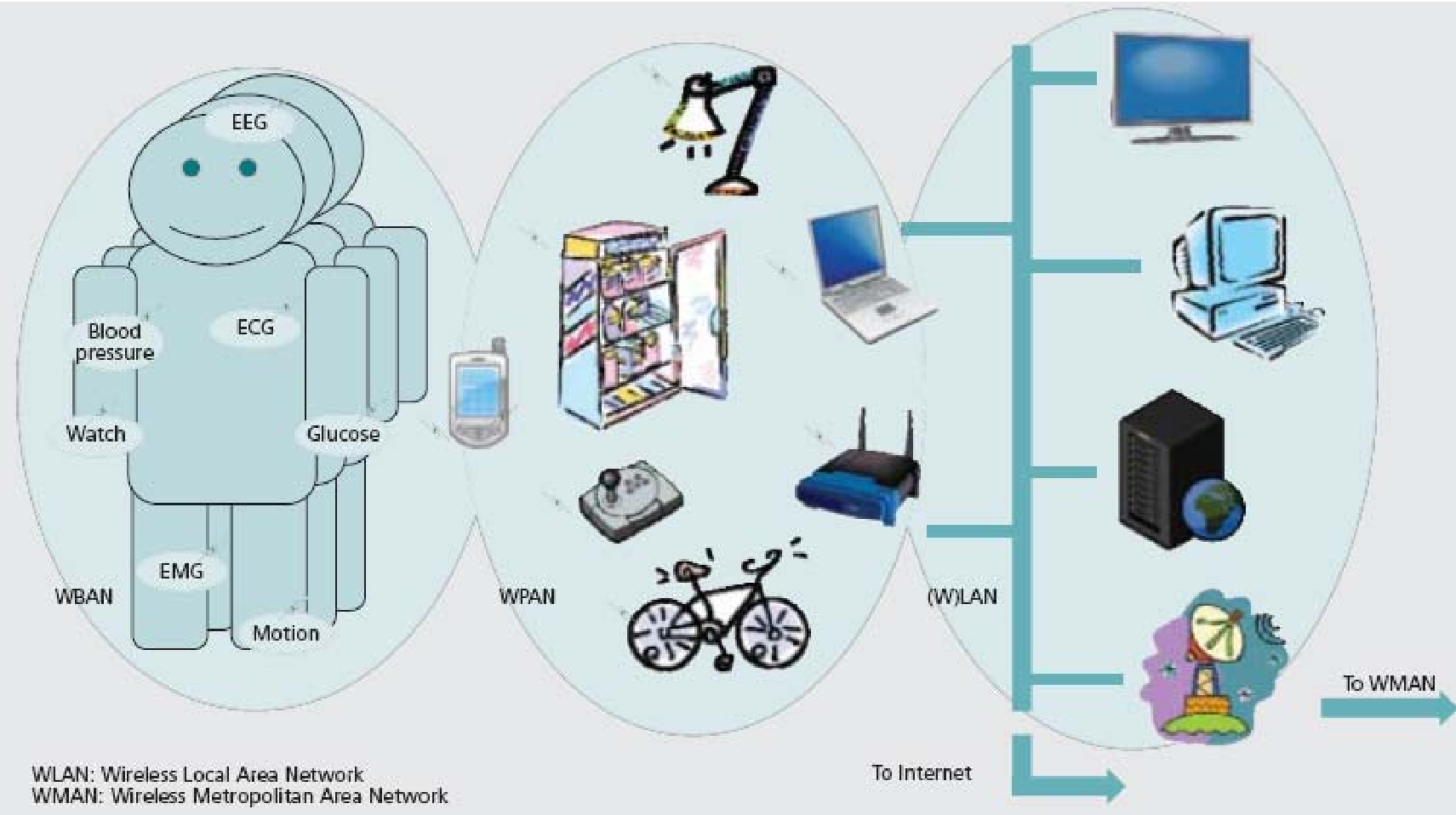 Figure 1: The hierarchical interconnection of Body Sensor Networks with wider infrastructure.
Experiments and Comparative Results
The paper categorizes technologies based on their performance metrics, providing a roadmap for implementation.
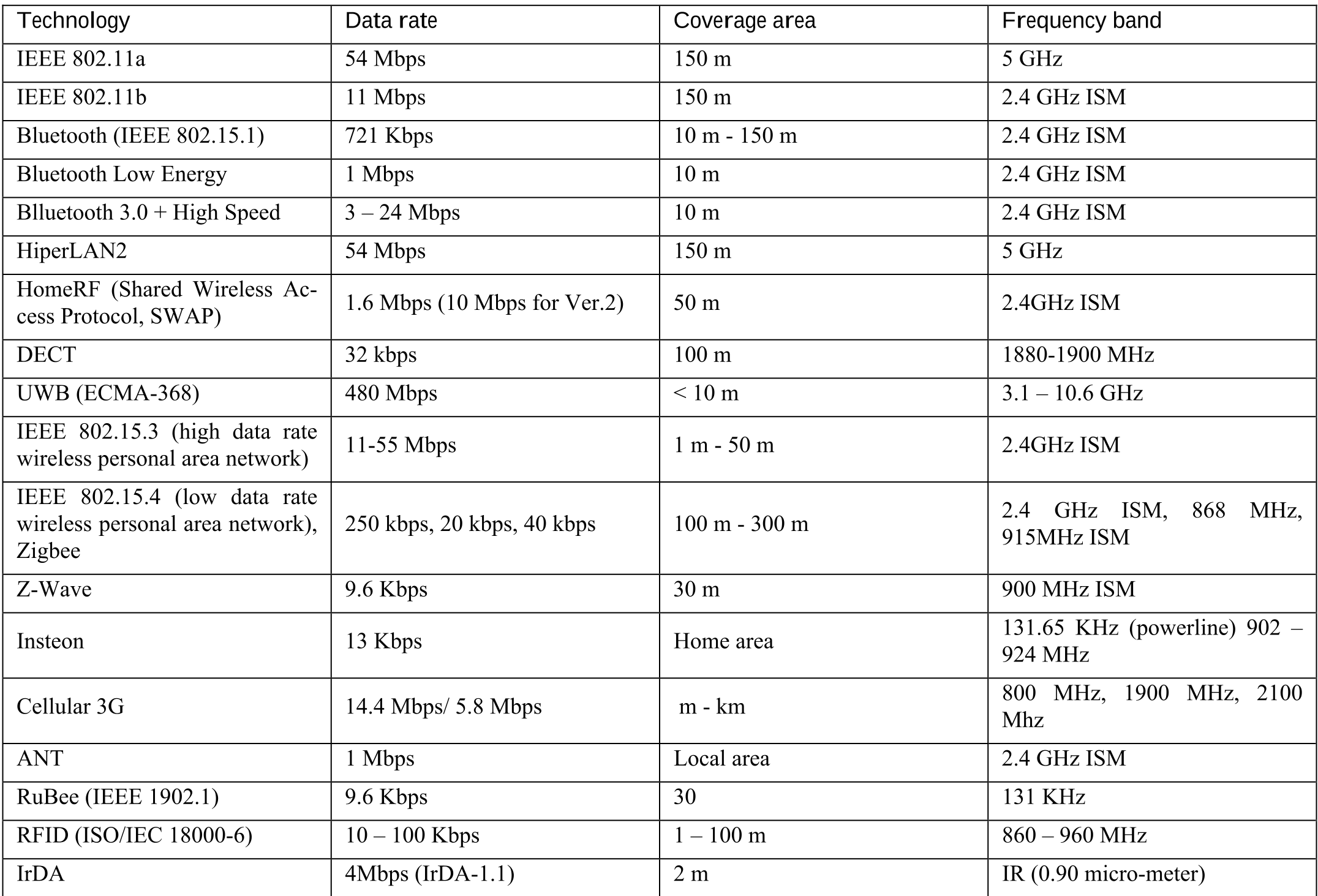 Table 2: Comparison of RF standards showing the efficiency of BLE and UWB for body-centric tasks.
Key Findings include:
- Energy Efficiency: New SoC (System-on-Chip) designs integrate MAC protocols and custom sensor interfaces, reducing the footprint to a single wearable patch.
- Application Success: Projects like CodeBlue (Harvard) and WHMS (Alabama) demonstrate that while packet loss remains a challenge (keep under 1%), real-time triage and motor fluctuation monitoring for Parkinson's patients are now feasible.
Deep Insights & Future Outlook
The ultimate goal of BSN research is Autonomic Sensing. We are moving toward a world where energy is scavenged from the body itself (using biofuel cells or motion) and where "proactive" sensors—like inflatable airbags for fall prevention—act before an injury occurs.
Limitations & Challenges
Despite the progress, the "Rules of Engagement" remain unstandardized. Issues surrounding Security and Privacy (e.g., distinguishing life-threatening data from routine noise) and Interoperability between different vendors remain significant barriers to mass adoption.
Summary
BSNs are not just about "connecting sensors"; they are about creating a seamless, intelligent layer of protection that follows the human body. As we move toward 2026 and beyond, the integration of long-term power solutions and standardized communication protocols will turn these research prototypes into ubiquitous life-saving tools.