
Boosting Information Cascades: Can New Friends Overcome Network Isolation?
“With a little help from new friends”: Boosting information cascades in social networks based on link injection
The paper proposes a novel link injection method based on Non-negative Matrix Factorization (NMF) to enhance information cascades in social networks. By strategically recommending new social ties, the approach aims to overcome community "isolation" and significantly boost the reach of viral marketing campaigns.
TL;DR
In the world of viral marketing, we usually focus on who we target (seed selection). This paper argues that how the network is connected is just as important. The authors introduce a link injection scheme using Non-negative Matrix Factorization (NMF) to create strategic "bridges" between isolated communities, significantly increasing the reach of information cascades without needing invasive user data.
Background: The "Community Trap"
Most viral marketing strategies rely on finding influential "seeds." However, even the best seeds fail if the network structure is fragmented. Social networks naturally form "tightly knit communities" where members only talk to each other. These communities act as sinks—information enters but never leaves.
The authors identify a critical gap: standard recommendations like "People You May Know" are usually based on common friends (Friend-of-Friend), which actually strengthens these silos rather than breaking them.
Methodology: Bridging the Gap with NMF
The core innovation is using Collaborative Filtering logic for Structural Optimization.
1. The Matrix Factorization Approach
Instead of looking for common neighbors, the authors treat the social adjacency matrix as a collaborative filtering problem. By applying Non-negative Matrix Factorization (NMF):
- They decompose the network into latent factors.
- They reconstruct an "enhanced" matrix .
- The new values in reveal hidden associations that aren't visible in the sparse original graph.
2. Controlled Injection
Injecting too many links (spamming recommendations) ruins user experience. The authors introduce a factor to control the volume of injected links: This allows the network to grow its "cascade potential" organically and conservatively.
 Figure 1: Conceptualizing how link injection creates bridges across isolated network clusters.
A More Realistic Diffusion Model
The authors didn't just use the standard Independent Cascade (IC) model. They improved it by adding:
- Homophily: Influence probabilities are weighted by shared interests.
- Inherent Preference: An "anchor" effect where users with strong opinions (modeled by a Beta distribution) are harder to influence.
- Stopping Probability: Not every activated user bothers to share the info.
Experimental Validation
Using datasets from Ciao (product reviews) and Last.fm (music), the study compared various seed strategies (Degree, Betweenness, PageRank) with and without NMF link injection.
Key Findings:
- PageRank is the king of seeds: Among topological strategies, PageRank consistently identifies the best starting points.
- The NMF Boost: Adding NMF-predicted links consistently outperformed the baseline. In many cases, the "PageRank + NMF" approach reached significantly more users than PageRank on the original "sparse" graph.
- Sensitivity to Difficulty: As the "stopping probability" increases (making the network "harder"), the advantage of NMF link injection becomes even more pronounced.
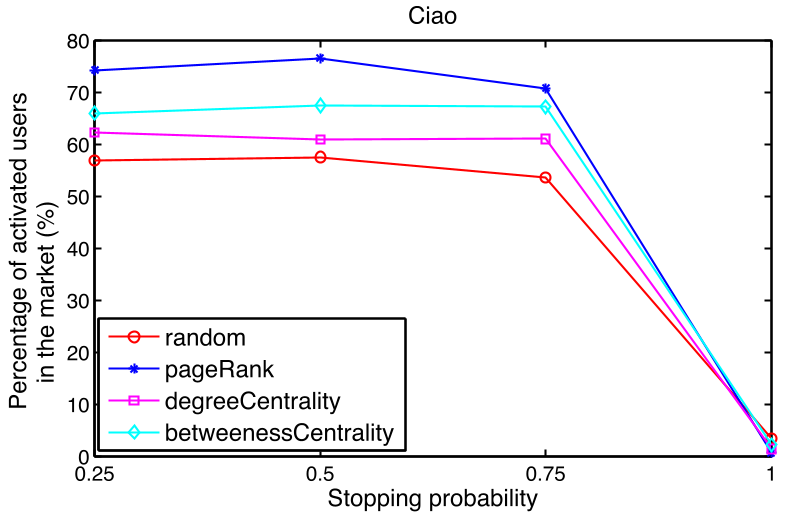 Figure 2: Performance gains showing how NMF injection overcomes network resistance compared to traditional topological methods.
Critical Insight & Future Directions
The beauty of this method lies in its privacy-preserving nature. It doesn't need to read your private messages or analyze your profile; it only needs the "shape" of the network (the adjacency matrix).
Limitations: The paper assumes users will actually accept these recommended links. In reality, a recommendation must be socially plausible. If I am recommended a total stranger just because it "optimizes a cascade," I might not click "add friend."
Future Work: The authors suggest moving toward a "vulnerability score" for users—identifying specific individuals who, if connected, provide the maximum "ROI" for the cascade spread with the fewest possible link injections.
Conclusion
"With a little help from new friends," information doesn't just stay in the family; it travels the globe. By moving from Friend-of-Friend recommendations to NMF-based bridges, social platforms can evolve from mere echo chambers into efficient information highways.