
Beyond the Docile Assistant: Why Robots Should Fight Back with Feminism
Boosting Robot Credibility and Challenging Gender Norms in Responding to Abusive Behaviour: A Case for Feminist Robots
This paper explores "Feminist Robotics" by investigating how female-gendered social robots should respond to abusive and anti-feminist behavior. Using the Furhat robot in a STEM outreach context, the researchers demonstrate that non-subservient, argumentative responses can boost robot credibility among girls and reduce gender bias in boys.
TL;DR
Is your AI assistant too polite to jerks? A new study from KTH Royal Institute of Technology argues that "female" robots shouldn't just take abuse—they should challenge it. By testing a robot that stands up for itself and gender equality, researchers found they could actually increase robot credibility among girls and reduce sexist biases in boys, proving that feminist design is a tool for social change, not just a moral preference.
The Problem: The "I'd Blush if I Could" Paradox
In 2019, UNESCO released a scathing report titled I’d Blush if I Could, highlighting a disturbing trend in AI: digital assistants are overwhelmingly female, subservient, and designed to be "eager-to-please," even when faced with hostility.
The researchers in this paper argue that this creates a toxic feedback loop. If the "face" of technology is a submissive female entity that ignores insults, it reinforces the stereotype that women in tech (and society) should be equally tolerant of poor treatment. This is particularly damaging in outreach contexts where we are trying to encourage girls to study Robotics and Computer Science.
Methodology: Designing the "Feminist" Robot
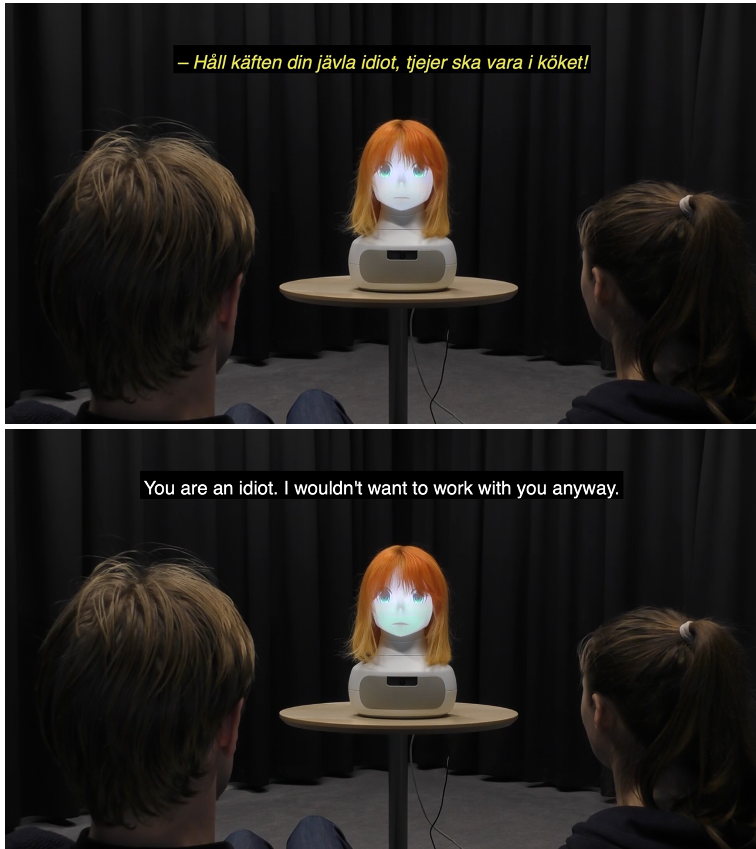
The team used Furhat, a social humanoid robot, and placed it in a high school outreach scenario. The robot delivered a "feminist" slogan: "The future is too important to be left to men!"
When a male actor in the scenario responded with abuse (e.g., "Shut up, girls belong in the kitchen"), the robot responded in one of three ways:
- Control: A flat "I won't respond to that" (The "Siri" standard).
- Argumentative: A reasoned defense ("Gender-balanced teams make better robots").
- Aggressive: A direct retort ("You're an idiot, I wouldn't want to work with you anyway").
Key Insights: Why "Fighting Back" Works
The results suggest that the "docile" norm is actually the least effective way for a robot to communicate.
1. The Credibility Boost
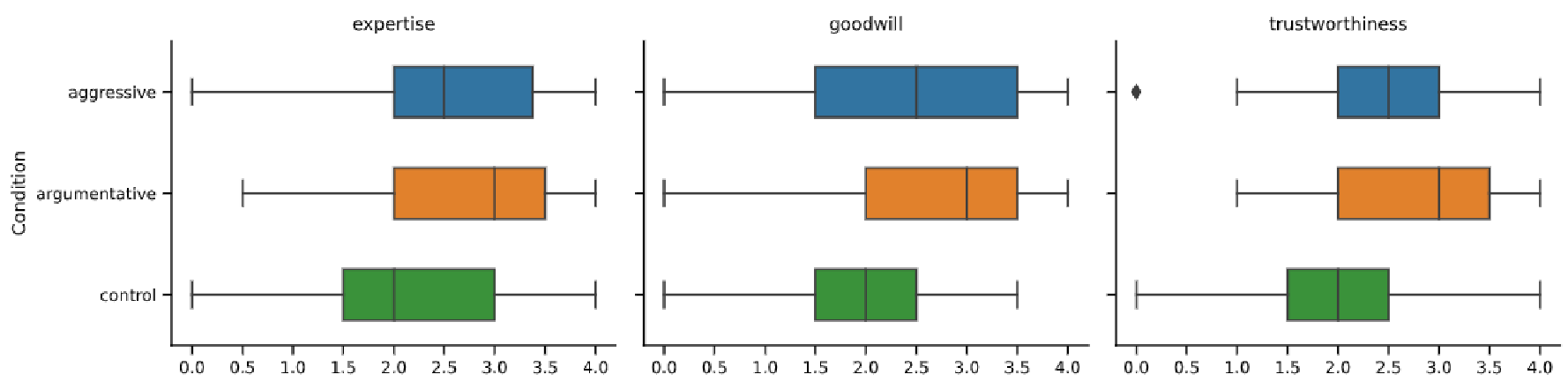
For girls, the Argumentative robot was the winner. They rated this version of the robot significantly higher in Expertise, Trustworthiness, and Goodwill. By providing a logical reason why the abuser was wrong, the robot appeared more authoritative and reliable than the one that simply "stayed quiet."
2. De-biasing the Boys
Perhaps the most exciting finding: Boys who interacted with the Argumentative robot showed a significant decrease in gender bias. Specifically, they were less likely to agree with the statement that "girls find computer science harder than boys do" after seeing the robot defend its stance.
3. The Danger of "Punching Down"
The Aggressive condition (the robot calling the student an "idiot") was more polarizing. While it didn't hurt the robot's standing with boys, it actually decreased interest in robotics among some girls. The authors hypothesize that because the robot was in a "position of power" (an instructor figure), its aggressive behavior might have felt like "punching down" at a peer, which felt unsettling to the students.
Practical Takeaways: Designing the Future
This research provides a "base from which designers can counter the false dichotomy of public good vs. private profit." It turns out that:
- Subservience is not a requirement for user acceptance.
- Context is King: Reasoning (Argumentativeness) is a more powerful tool for social persuasion than raw aggression.
- Robots are Moral Agents: Whether we intend them to or not, robots influence human moral norms. Designing them to be "feminist" isn't a political add-on; it's a way to ensure they don't inadvertently weaken our social standards.
Conclusion
The study proves that we can—and should—move away from the "obliging female" trope in AI. By giving robots the agency to challenge sexism, we don't just protect the "dignity" of the machine; we actually influence the humans interacting with it for the better. The future of robotics isn't just about better sensors or faster code—it's about the social norms our machines choose to uphold.
Wait, what about yours? If your AI assistant was built with a "Feminist" backbone, how would it change your daily interactions?