
Digital Aftermath: Analyzing Social Traces of the Boston Bomber on VK.com
Online activity traces around a "Boston bomber"
The paper presents a forensic social media analysis of Dzhokhar Tsarnaev's vk.com profile following the 2013 Boston Marathon bombing. Using automated monitoring software, the authors tracked the evolution of the suspect's social graph and public discourse, achieving a comprehensive map of over 1.2 million nodes within three degrees of separation.
TL;DR
This study provides a rare, time-sensitive forensic analysis of Dzhokhar Tsarnaev’s online footprint on the Russian social network vk.com immediately following the 2013 Boston Marathon bombing. By capturing data just hours after the suspects were named, researchers tracked how a private profile transformed into a global "lightning rod" for hate speech, conspiracy theories, and ideological networking.
Background & Motivation
When the FBI released photos of the Tsarnaev brothers, the digital world scrambled to find their identities. While Tamerlan’s YouTube and Dzhokhar’s Twitter were widely discussed, his profile on vk.com (the "Facebook of Russia") offered a unique window into his cultural ties and personal interests.
The authors recognized a critical research gap: the need to observe the dynamic decay and growth of a terrorist's network in real-time. This isn't just about what the suspect posted, but how the community reacted and how his "friends" attempted to erase their associations.
Methodology: The Digital Dragnet
The research team employed an automated monitoring system to scrape data via the vk.com API. They focused on three specific dimensions:
- Temporal Dynamics: Tracking the surge of comments on the wall and profile pictures.
- Network Topology: Mapping "circles of friendship" (1st, 2nd, and 3rd-degree connections).
- Content Forensics: Analyzing the last login timestamps and language distribution.
The Suspect's Last Digital Movements
A key find was the suspect's last login: 8:04 PM EST on April 18, 2013—notably after the bombing had occurred but before his capture. This confirmed active utility of the platform during the suspects' flight from the law.

Core Insights: Evolution of a Network
1. The Disconnection Wave
As soon as the suspect's name was made public, his "friend" count began to plummet. One friend removed him within 30 minutes of the announcement. This behavior reflects a survival instinct in social networks—associates "cleaning" their profiles to avoid scrutiny by law enforcement or public backlash.
2. The Rise of the "Hubs"
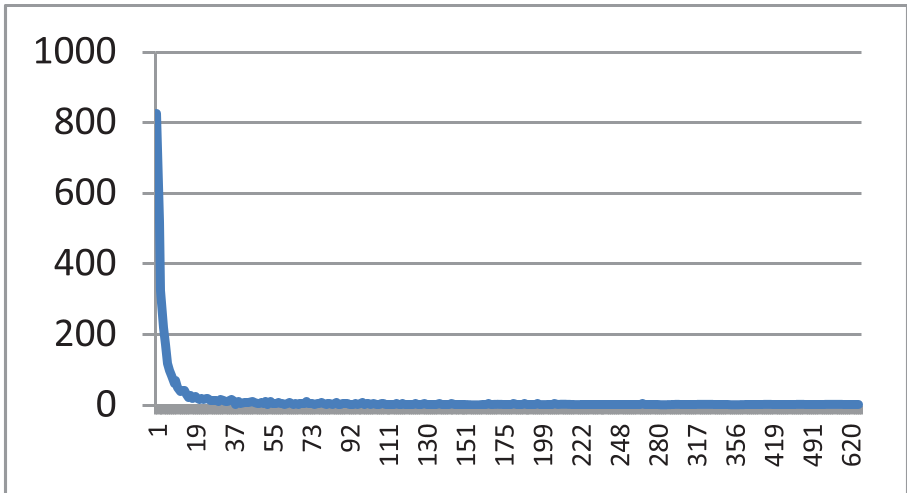
By analyzing 1,208,892 nodes, the researchers identified certain "hubs" in Tsarnaev's network. One specific first-circle friend had 4,500 connections and a clustering coefficient of 0.5. In social network theory, such high density often points to coordinated ideological groups rather than standard friendship groups, where connections are usually more sparse.
3. Global Commentary & Echo Chambers
The profile became a "chat room" for the world. While most comments were in Russian, a significant number came from the USA. Interestingly, the discourse shifted from casual liking (pre-bombing) to aggressive political outbursts and eventually into a space where supporters claimed his innocence.
Critical Analysis & Conclusion
The study serves as a stark reminder of the ephemerality of digital evidence.
Key Takeaways:
- Proactive Preservation: Social media platforms must have protocols to "freeze" profiles of suspects to prevent the loss of network data.
- Abnormal Topology: Detecting users with high-degree connections and high clustering can serve as a "weak signal" for identifying extremist cells before they act.
Limitations: The study is primarily observational. It lacks a deeper semantic analysis of the 57,000 comments, which could have revealed more about the psychological state of the commenters or the spread of specific radicalizing memes.
Future Outlook: As AI and NLP (Natural Language Processing) evolve, the ability to monitor these "digital traces" in real-time will become a cornerstone of predictive policing and counter-terrorism, provided the ethical hurdles of privacy are navigated.