
BPM4People: Bridging the Gap Between Rigid Workflows and Social Intelligence
8443_Combining social web and BPM for improving enterprise performances the BPM4People approach to social BPM.
The paper introduces BPM4People, a model-driven approach and technical framework that integrates Business Process Management (BPM) with Social Web features. It proposes a Social BPMN notation as a BPMN 2.0 extension and a dual-level Model-Driven Development (MDD) pipeline to generate functional Enterprise 2.0 Web applications.
TL;DR
The BPM4People project introduces a formal way to break the "siloed" nature of traditional business processes by infusing them with Social Web capabilities. By extending the BPMN 2.0 standard and using a Model-Driven Development (MDD) approach, the framework allows organizations to transform rigid internal workflows into participatory social applications that engage external stakeholders via platforms like LinkedIn or public social networks.
Context: From Closed Systems to Social Ecosystems
In the traditional BPM universe, processes are "closed." They are designed by central authorities and executed by internal actors. However, the rise of the Social Web has proven that communities of practice and external influencers hold massive untapped value. The challenge isn't just "adding a comment box" to a workflow—it's about formalizing how social interaction (voting, sourcing, feedback) actually drives the process forward.
The "Why": Motivation for Socialization
The authors argue that socialization is a process optimization phase. They identify several critical goals:
- Activity Distribution: Finding the best performers outside the immediate organization.
- Exploitation of Weak Ties: Using informal relationships to solve complex problems.
- Transparency: Making decision-making visible to those affected by the process.
Methodology: The MDA Pipeline
The core innovation lies in the two-level transformation architecture. Instead of manually coding social integrations, the developer follows a high-level modeling path:
- Social BPMN: Users model the process with new icons for "social tasks" (e.g., publishing to a wall, collecting votes).
- WebML (Web Modeling Language): The BPMN model is automatically mapped to a Web-specific conceptual model.
- Automatic Code Generation: The framework produces standard Java Enterprise Edition (JEE) code that handles the API calls to social networks (Oauth, REST, etc.) automatically.
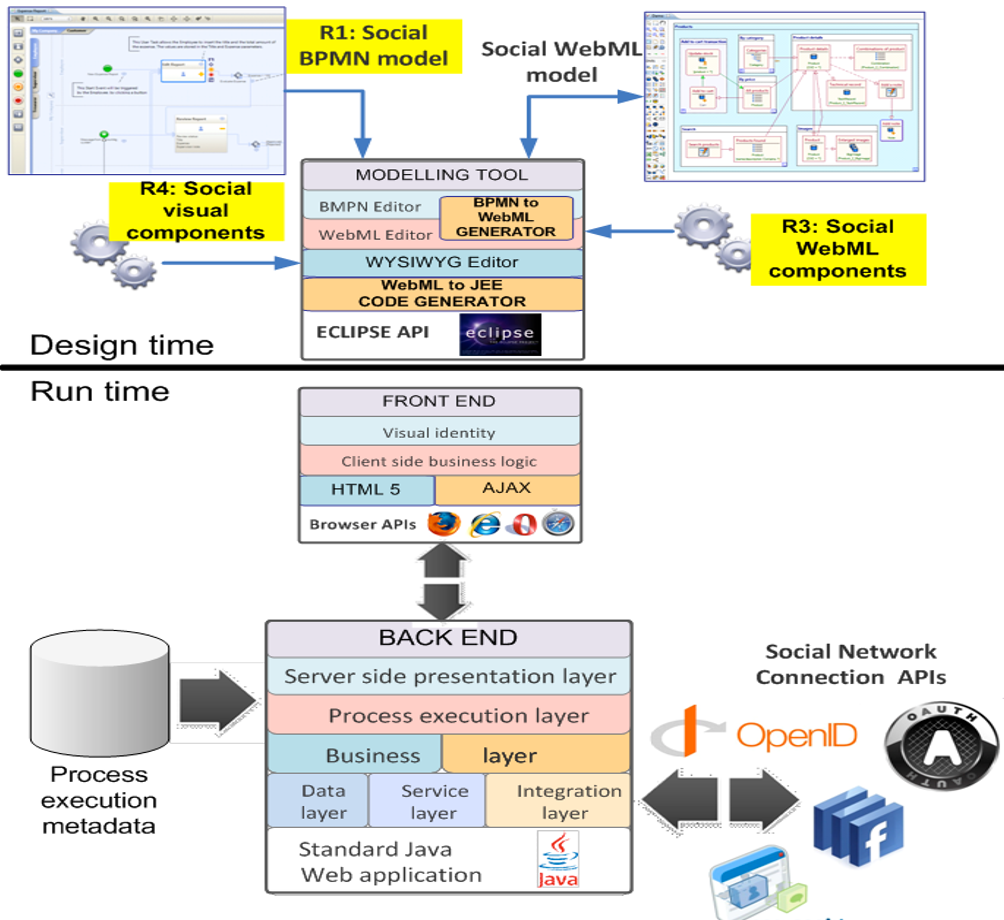 Figure 1: The dual-level transformation architecture from Social BPMN to JEE Code.
Visualizing the Process
The paper extends BPMN 2.0 by introducing specific notation for social behavior enactment and monitoring. For instance, a "Social Pool" represents the community of external users, and specific "Social Tasks" define interactions like "Social Voting" or "Social Sourcing."
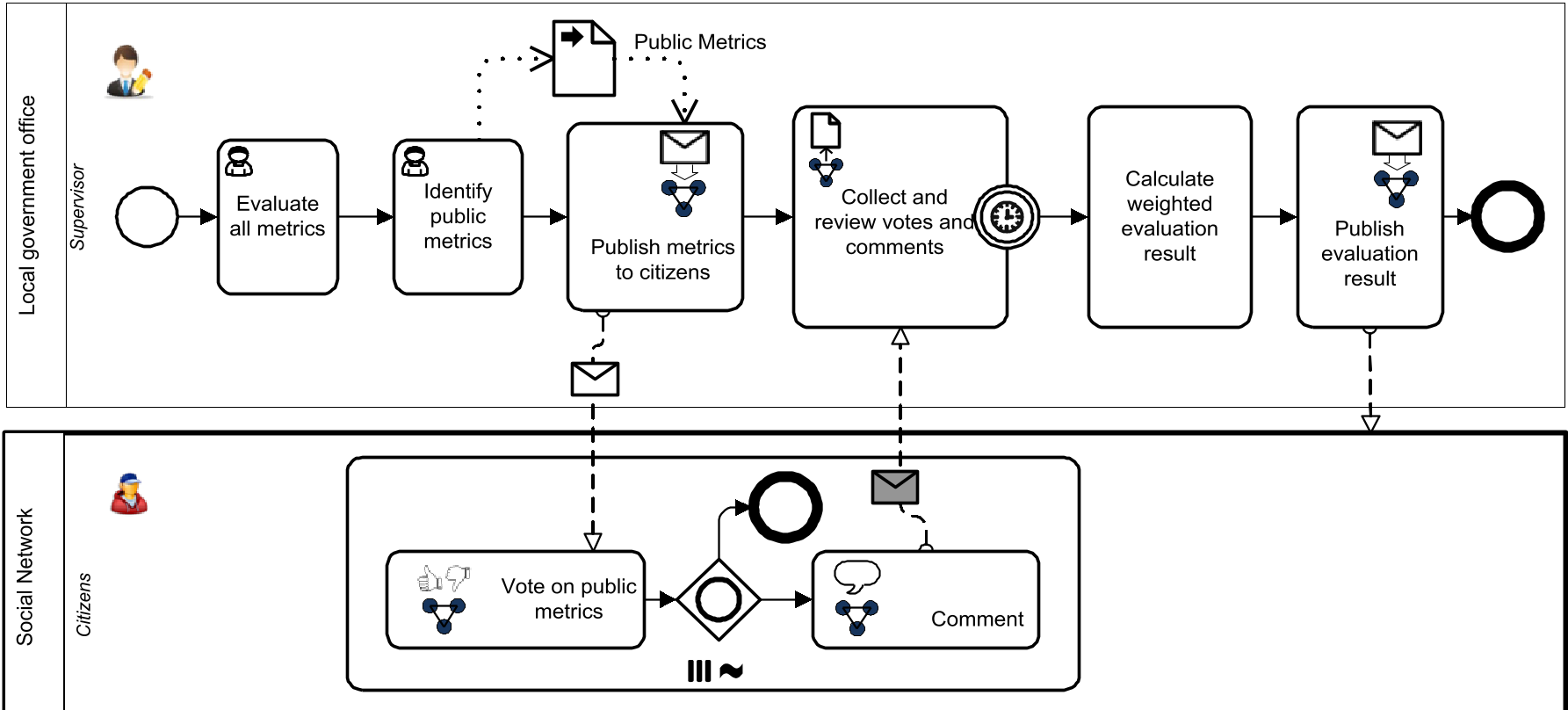 Figure 2: A participatory public administration process where citizens evaluate government performance via a social network.
Experimental Validation
The authors demonstrated the approach through WebRatio, a commercial modeling tool. They successfully generated applications that:
- Interfaced with LinkedIn to recruit professional contacts into a process.
- Used Doodle as a social engine for decision-making (polling).
The primary metric of success here is the reduction in development time through "one-click prototyping," which allows business analysts to test social theories without writing a single line of integration code.
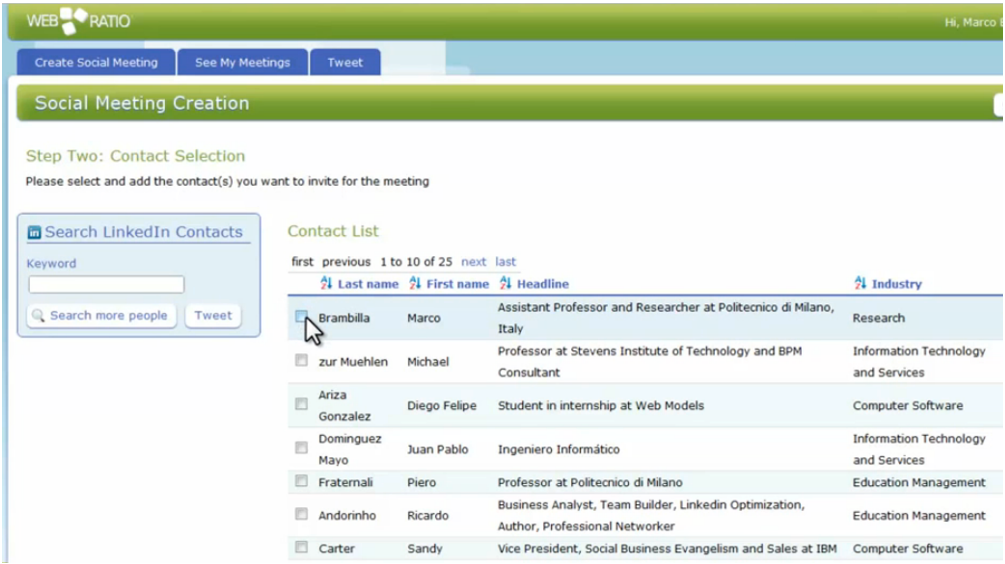 Figure 3: A functional JEE application generated automatically, showing LinkedIn contact integration.
Critical Insight & Conclusion
BPM4People is more than a tool; it’s a shift toward Agile Social BPM. By providing a formal notation and a methodology, it moves "Social BPM" from a vague buzzword to a measurable engineering discipline.
Limitations: While the framework excels at structured social interactions (polls, notifications), it remains to be seen how it handles the "chaos" of unstructured social data or the privacy implications of moving sensitive business logic into public social spheres.
Future Outlook: We expect this model-driven approach to eventually incorporate AI/LLM agents as "social participants," where the "social pool" isn't just humans, but a hybrid network of human and machine intelligence.