
Brand Communities on Social Media: The Double-Edged Sword of Peer Interaction
The roles of brand community and community engagement in building brand trust on social media
This study investigates the impact of Social Media-Based Brand Communities (SMBBCs) on brand trust using a customer-centric model. By analyzing four key relationships (product, brand, company, and other consumers), it identifies that while most interactions foster trust, peer-to-peer relationships can paradoxically diminish it.
TL;DR
In the hyper-social era, a brand is no longer what the company tells the consumer it is—it is what consumers tell each other. This study deconstructs social media brand communities into four pillars and reveals a startling truth: while connecting with a brand and its products builds trust, the uncontrolled "vibe" between customers can actually erode it. The secret weapon for managers? Deep community engagement.
Problem & Motivation: The "Pinball" Effect of Social Media
Traditional relationship marketing was a one-on-one game. Today, marketing is more like a pinball machine; the brand is the ball, and social media users are the bumpers, sending the brand in directions managers never intended.
The researchers identified a gap: we know brand communities are good, but we don't fully understand how the specific structure of social media—where every user has a megaphone—changes the trust equation. Does a million-member Facebook group actually help a brand, or does the noise create skepticism?
Methodology: Deconstructing the Community
The authors used a Customer-Centric Model, breaking the community into four essential relationships:
- Consumer-Product: The functional love for the item.
- Consumer-Brand: The emotional tie to the identity.
- Consumer-Company: The trust in the organization's values.
- Consumer-Other Consumers: The social bond with fellow fans.
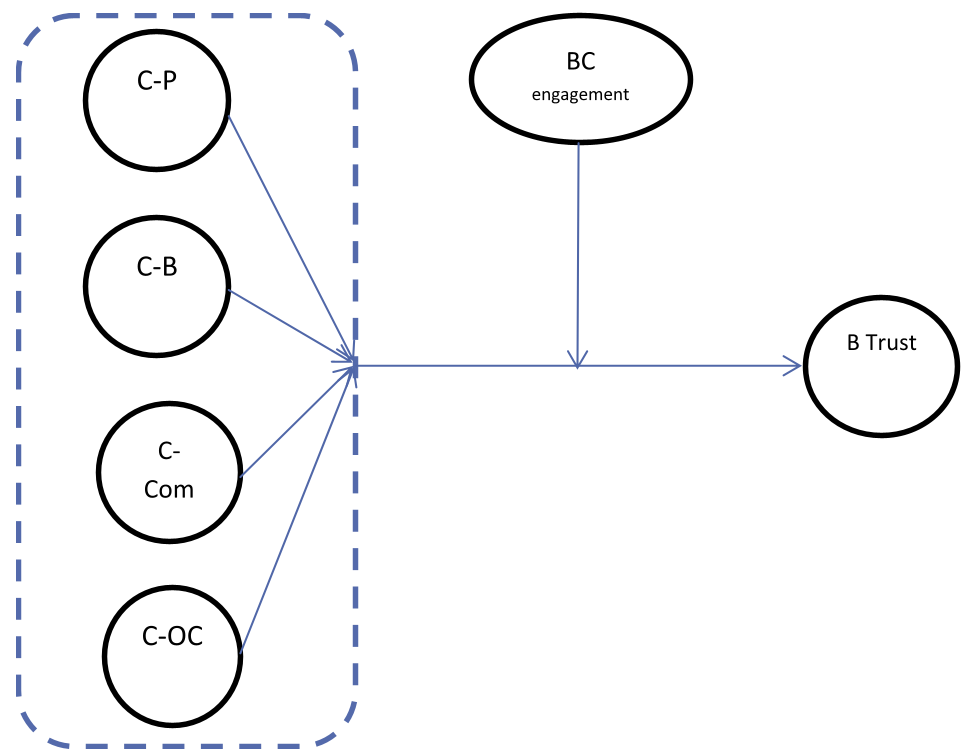
Using data from 569 participants across platforms like Facebook and Twitter, they tested how these four pillars influence Brand Trust.
The "Other Customer" Paradox
The most provocative finding was that Customer-to-Other Customer relationships negatively influenced brand trust.
Why? In the wild west of social media:
- Lack of Hierarchy: Newbies can't distinguish between a brand expert and a random complainer.
- Negativity Bias: Negative posts can have five times the impact of positive ones.
- Empowerment: As customers connect, they demand more. When the community talks, they often highlight flaws, creating an "informational asymmetry" that can make the brand seem less reliable.
Results: Engagement as the Ultimate Moderator
The study proved that "liking" a page isn't enough. The real value is trapped in Engagement—the intrinsic motivation to interact.
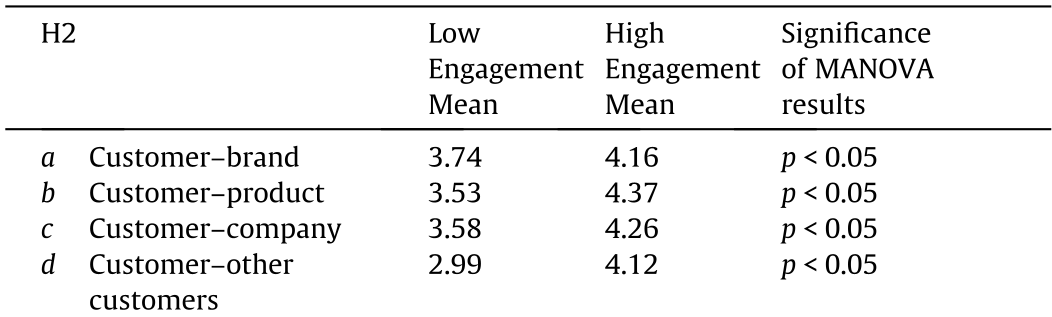
High-engagement members showed significantly stronger ties across all pillars. Crucially, high engagement acted as a buffer; it amplified the positive feelings toward the brand and product while helping the consumer filter out the "noise" or negativity from other users.
Critical Insight & Conclusion
This paper serves as a warning against "vanity metrics." A million followers mean nothing if they aren't engaged.
Takeaway for Managers: Don't just facilitate a space for customers to talk to each other; you must give them meaningful ways to engage with the brand and the product directly. If you leave a community to its own devices (Customer-OC), you risk losing control of the trust narrative.
Limitations
The study relies on self-reported data and a broad range of products. Future research should investigate if "High-Involvement" products (like cars) behave differently than "Convenience" products (like soda) in the social media trust ecosystem.