
Proposing to Your Fans: The Science of Driving Brand Engagement on Social Media
Proposing to your fans: Which brand post characteristics drive consumer engagement activities on social media brand pages?
This study investigates the drivers of consumer engagement (likes, comments, and shares) with brand posts on Facebook. Utilizing a regression analysis of 792 posts from the apparel and food retail industries, it explores the impact of vividness, interactivity, and content types on social media popularity.
In the digital courtship between brands and consumers, every post is a "proposal" for attention. But why do some posts receive a flood of "likes" while others sparks meaningful "comments" or go viral through "shares"? This paper, authored by Carsten D. Schultz, dives into the mechanics of Facebook brand pages to decode the DNA of successful consumer engagement.
TL;DR
Social media success isn't a monolith. This study reveals that the characteristics that drive a "Like" are fundamentally different from those that trigger a "Comment." While interactivity (questions, hashtags, contests) is a universal win, vividness (video/images) offers a trade-off: it increases reach but often silences the conversation.
The "Like" Trap: Why One Metric Isn't Enough
Most social media managers obsess over the "Interaction Rate." However, Schultz argues that this is a "black box" approach. Liking, commenting, and sharing represent different levels of cognitive and emotional investment:
- Liking: A low-effort nod of approval (Connection).
- Commenting: An active contribution to the brand dialogue (Contributing).
- Sharing: A public endorsement to one's own social circle (Value creation).
The study identifies a crucial tension: high-vividness content like video can actually hinder commenting, likely because users spend more time consuming the media than engaging in the text-based dialogue.
The Framework of Engagement
The researcher analyzed 13 brands across two distinct sectors: Apparel (High involvement) and Food Retail (Low involvement). By categorizing posts by their vividness, interactivity, and content type, the study mapped out what actually moves the needle.
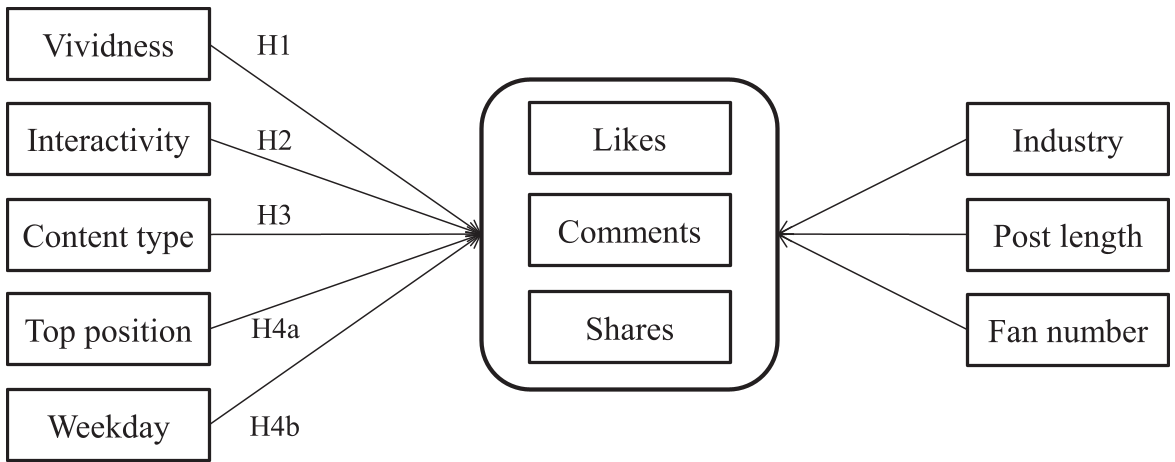 Figure 1: The research model illustrating post characteristics as drivers of social interactions.
Key Findings: What Works?
1. The Power of Interactivity
Interactive elements were the clear winners. Specifically:
- Hashtags: Beyond just searchability, they boost likes and comments by signaling a modern, clickable brand identity.
- Contests and Voting: These provide high-octane fuel for comments and shares, as they demand a specific response from the user.
- Questions: Surprisingly, while they drive comments, they don't necessarily drive likes.
2. The Vividness Paradox
Contrary to popular belief, "more visual" isn't always "better."
- Pictures and Videos significantly boosted Likes and Shares.
- However, they had a negative effect on Comments. If you want a conversation, sometimes a simple, provocative text post or an interactive prompt works better than a polished video.
3. Timing and "Fame"
The study confirmed that position matters. The longer a post stays at the top of a brand's timeline before being displaced by a new post, the more engagement it accumulates across all categories. Interestingly, there was no significant difference between posting on a weekday versus a weekend—accessibility via mobile has turned social media into a 24/7 activity.
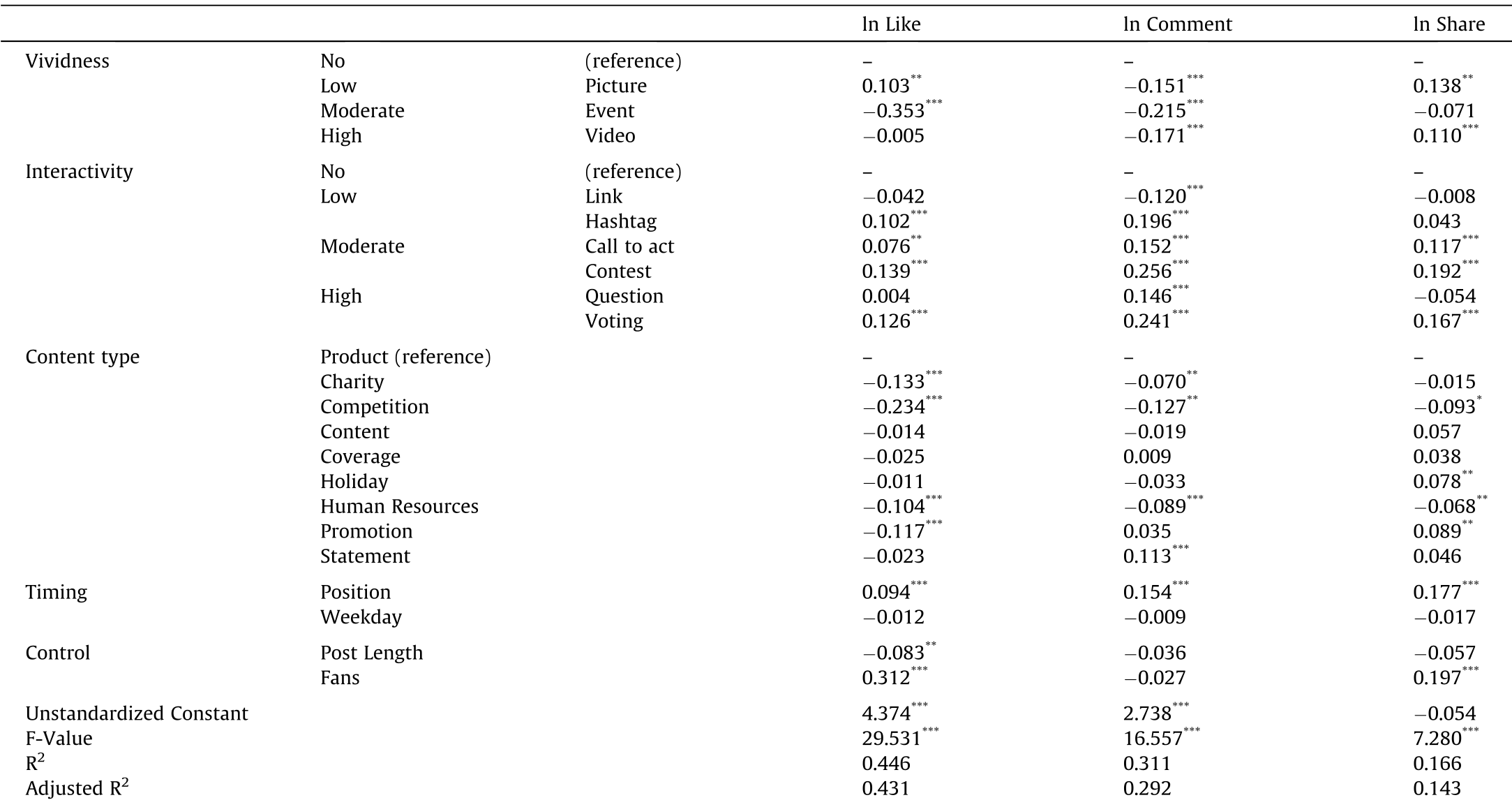 Table 1: Standardized estimation results showing the divergent impacts of characteristics on Likes, Comments, and Shares.
Industry Nuances: Apparel vs. Food
The research found that Apparel fans are more sensitive to post length; long-winded posts in the fashion world lead to a drop in likes. In Food Retailing, promotional posts (sales/discounts) were actually shared more frequently, suggesting that utility-based sharing is a key driver for essential goods.
Critical Insight & Strategy
The most profound takeaway for social media strategists is the Content Category impact. Posts categorized as "Product" (introduction of new items) served as a strong baseline. In contrast, "Human Resources" or "Charity" posts often saw lower engagement. Why? Because they appeal to a narrower segment of the audience compared to the universal appeal of the product itself.
Strategic Recommendations:
- Define the Goal First: If you want "Shares" (Viral Reach), invest in high-quality Video. If you want "Comments" (Community Building), use High-Interactivity prompts like Voting or Questions.
- Manage the Timeline: Don't post too frequently. Give your "hero" posts enough time at the top of the page to reach their full engagement potential.
- Hashtag Everything: Use hashtags to bridge the gap between "consuming" and "interacting"—they are low-cost tools that improve both likes and comments.
Conclusion
Social media is no longer about just "being present." It is about understanding the specific levers of consumer behavior. By tailoring post characteristics—vividness for reach and interactivity for dialogue—brands can transition from merely being "followed" to being truly "engaging."