
Case-Based Reasoning & Ontology: A Synergistic Approach to Breast Cancer Diagnosis
10004_A Breast Cancer Classifier based on a Combination of Case-Based Reasoning and Ontology Approach.
This paper presents a breast cancer classification model that integrates Case-Based Reasoning (CBR) with an Ontology-based approach. The authors benchmark two prominent object-oriented CBR frameworks, jCOLIBRI and myCBR, using the Wisconsin Breast Cancer Dataset to achieve high-accuracy binary classification (benign vs. malignant).
TL;DR
Breast cancer remains a leading cause of mortality among women, making early and accurate diagnosis critical. This research moves beyond "black-box" machine learning by proposing a classification model based on Case-Based Reasoning (CBR) and Ontology. By utilizing frameworks like jCOLIBRI and myCBR, the authors demonstrate how historical patient data can be structured into a knowledge base to provide reliable, automated tumor classification.
Problem & Motivation: The Diagnostic Challenge
The manual differentiation of benign and malignant tumors is an extremely tedious task. As shown in the biopsy images below, the visual differences are often subtle to the untrained eye, yet the cost of a wrong diagnosis is life-threatening.
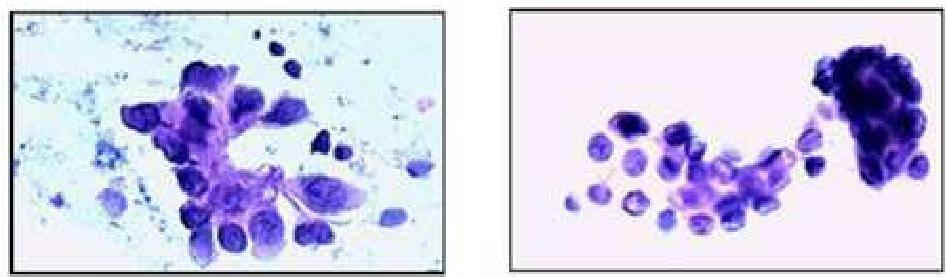
Traditional automated systems often lack the "reasoning" aspect of a human physician. The authors argue that a system should not just output a label, but should leverage an Ontology (a formal description of domain concepts) and CBR (reasoning by analogy to past cases) to mimic clinical expertise.
Methodology: The Core Frameworks
The research evaluates the diagnostic process using two distinct object-oriented frameworks. The core logic relies on the CBR Cycle:
- Retrieve: Finding the most similar past instances.
- Reuse: Applying the old solution to the new case.
- Revise: Adjusting the solution if necessary.
- Retain: Storing the new experience.
1. jCOLIBRI (The Developer's Choice)
jCOLIBRI integrates a library of Problem Solving Methods (PSMs) with an ontology called CBROnto. It allows for deep configuration of tasks through a graphical interface, managing connectors that link case structures to database or text file sources.
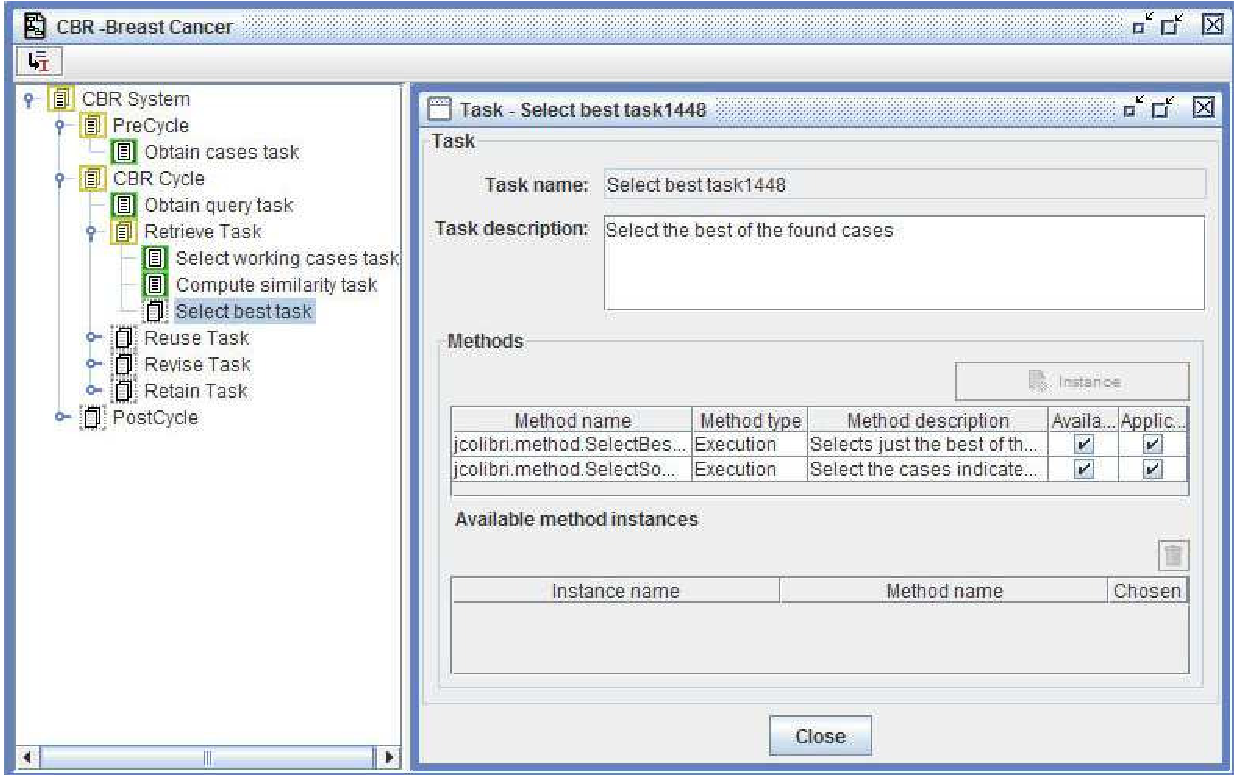
2. myCBR (Rapid Prototyping)
myCBR functions as a plug-in for the Protégé ontology editor. Its primary strength is its ability to import raw CSV data and automatically generate case representations. It uses a Local-Global Similarity approach, where the similarity between a query () and a case () is calculated as: This allows clinicians to assign different "weights" () to different symptoms, such as Clump Thickness or Mitoses.
Experiments & Results
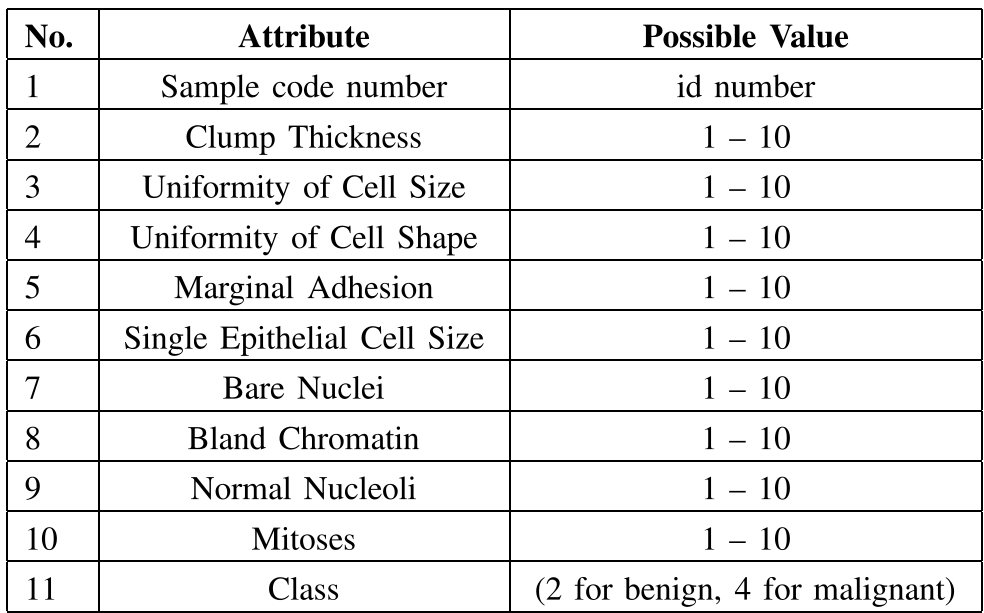
The study utilized the Wisconsin Breast Cancer Dataset (699 records, 10 attributes).
| Attribute | Range |
|---|---|
| Clump Thickness | 1-10 |
| Uniformity of Cell Size | 1-10 |
| Bare Nuclei | 1-10 |
| ... | ... |
Key Findings:
- Incomplete Data Handling: When tested against 16 cases with missing values, the system only failed twice, showing that CBR is naturally resilient to "noise" or missing information compared to rigid rule-based systems.
- Efficiency: myCBR was noted for its "speed to prototype," allowing a standalone application to be generated in seconds via its CSV import module.
Critical Analysis & Conclusion
Takeaway
The integration of Ontologies into CBR systems provides a "semantic bridge" that allows AI to understand the relationship between medical terms, rather than just treating them as numerical features. This makes the classification process more transparent and easier for physicians to trust.
Limitations & Future Work
- Dataset Scope: The study currently relies on the Wisconsin dataset. Future work should involve multi-center clinical trials to validate the ontology's generalizability.
- Image Integration: While the paper discusses biopsies, the input is currently tabular clinical data. The next evolution of this work would involve Knowledge-Intensive Image Retrieval, where the CBR system retrieves similar pathological slides directly.
In conclusion, both jCOLIBRI and myCBR serve as powerful tools for building "Explainable AI" in medicine, ensuring that every diagnosis is backed by the weight of historical success and formalized domain knowledge.