
Bridging the Semantic Gap: Formalizing Collective Intelligence for Agricultural Early Warning
Bridging the semantic gap in agriculture early warning
The paper introduces "Warncons" (Warning Contents), a semantic algebraic model designed for early warning systems in small and medium-scale agriculture. It bridges the semantic gap between raw sensor data and human observations by integrating 5W1H contextual metadata and multimedia through a many-sorted algebra.
TL;DR
While industrial "satellite farming" dominates Precision Agriculture, small and medium farms are often left behind due to high costs. This paper introduces Warncons, a semantic algebraic framework that treats both hardware sensors and farmers ("human sensors") as data sources. By formalizing how observations are composed and described through a 5W1H metadata structure, the authors provide a pathway for low-cost, collaborative crop monitoring.
Background: Beyond the Satellite
Most Precision Agriculture (PA) research assumes a high-investment infrastructure. However, the World Bank notes that for most of the world, resilience against environmental shocks depends on Collective Intelligence (CI)—the ability to share knowledge across a community. The technical challenge is the "Semantic Gap": how do we turn a farmer's qualitative observation ("the rice looks wilted") and a sensor's quantitative data ("32°C") into a unified, actionable warning?
Methodology: The Warncons Algebraic Model
The core contribution is the definition of Warncons (Warning Contents). Unlike a raw data packet, a Warncon is a complex object consisting of:
- Observation Data: The raw reading or image.
- Contextual Metadata: A 5W1H facet (Who, What, Where, When, Why, How).
- Multimedia Enhancement: Integrated photos, audio, or video to confirm findings.
Theoretical Framework: Many-Sorted Algebra
To make these observations computable, the authors utilize a Many-Sorted Algebra. This allows the system to handle different "sorts" or types—such as OBSREG (Observation Regions) and WARNCONS—using formal operators.
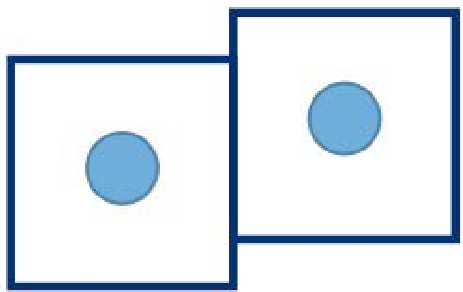 Figure 1: Collective monitoring setup where farmers act as human sensors across a 14.9 ha rice field.
The algebra defines spatial predicates such as:
- Distance: Calculating the gap between two observation areas.
- Disjoint/Overlap: Determining if two warnings refer to the same physical space.
- Union: Composing several individual reports into a single macro-warning for the region.
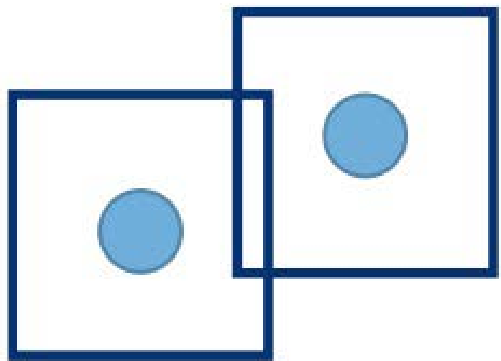 Figure 2: Examples of Intersecting, Disjointed, and Adjacent Early Warning Observations (EWO).
Experimental Validation: Rice Cultivation in Thailand
The authors applied this model in Don Pho Thong, Thailand. By mapping observations from seven farmers (human sensors), the system could visualize and mathematically analyze the "coverage" of the early warning network.
The metadata schema (based on the 5W1H approach) was mapped to SensorML 2.0 and MPEG-7 formats, ensuring that the semantic descriptive layer remained interoperable with existing standards.
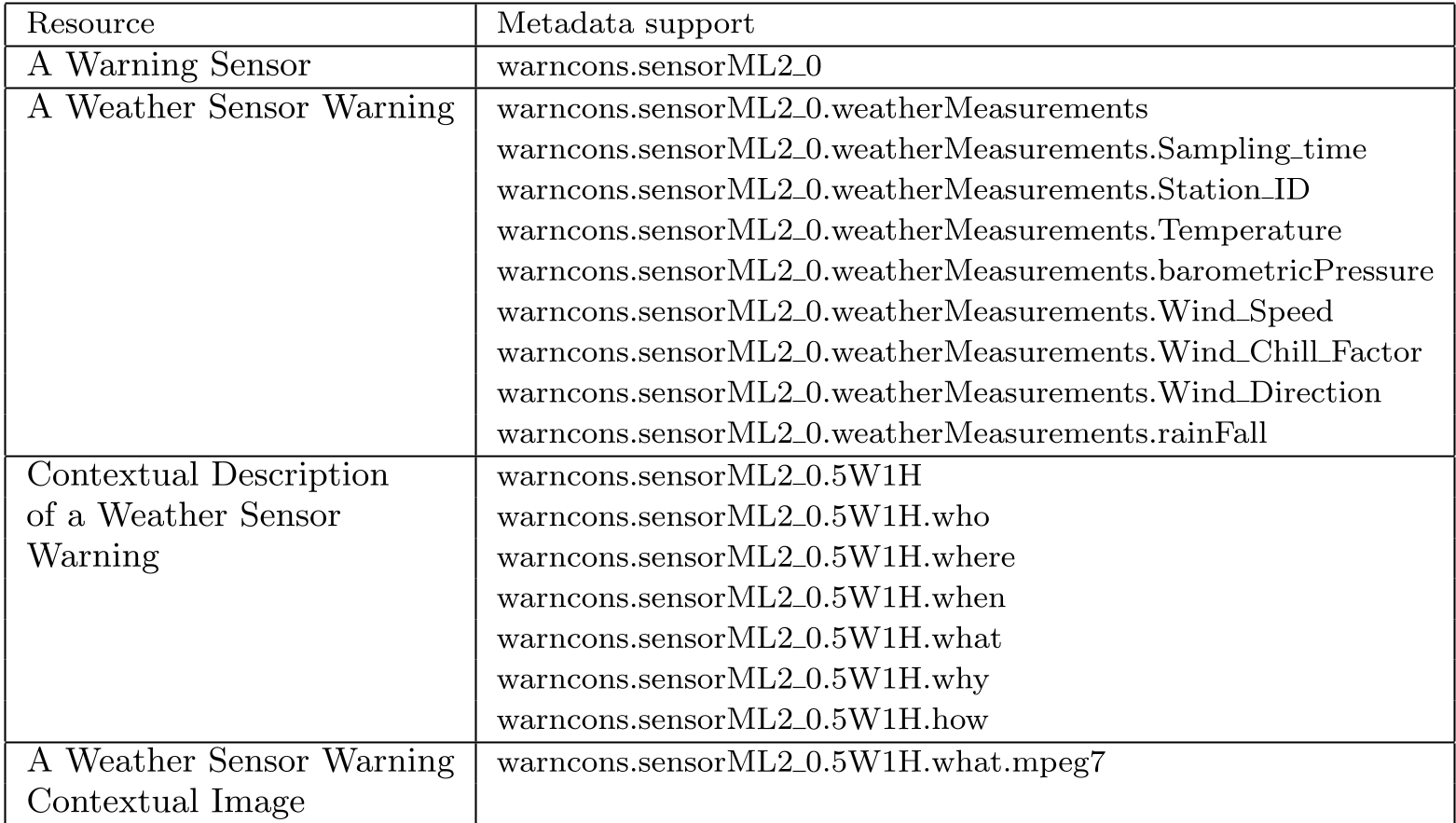 Figure 3: Semantic structure of Warncons integrating weather measurements and contextual descriptions.
Critical Insight & Analysis
The brilliance of this work lies in its Inductive Bias toward human-centric data. By treating human input as a formal algebraic entity, it allows for a "Social Translucence" where the origin and context of knowledge are preserved.
However, there are two notable limitations:
- Confidence Levels: The paper identifies but does not yet solve how to mathematically weight a "high-confidence" sensor vs. a "low-confidence" human report.
- Scalability of Manual Entry: Getting farmers to provide detailed 5W1H facets consistently remains a UX and social challenge rather than just a technical one.
Future Outlook
The move toward "Collective Intelligence" in agriculture suggests a future where IoT isn't just a network of silicon, but a socio-technical system. Integrating this algebraic model with modern Large Language Models (LLMs) could potentially automate the extraction of 5W1H facets from natural language farmer reports, truly closing the semantic gap.