
Psycholinguistic Grounding: A New Lens for Visual Sentiment Analysis
Browsing Visual Sentiment Datasets Using Psycholinguistic Groundings
The paper introduces an interactive visualization tool for exploring visual sentiment datasets by grounding image metadata in psycholinguistic attributes. Using the MVSO dataset, the authors map images into a 30-dimensional sentiment-psycholinguistic space to reveal how human perception clusters visual content.
TL;DR
Researchers from Nagoya University have developed a sophisticated browsing tool that moves beyond simple sentiment labels. By extracting psycholinguistic scores (like arousal, dominance, and imageability) from image metadata, they have mapped hundreds of thousands of images into a 3D "human perception space." This allows researchers to see not just what an image depicts, but how it resonates with the human psyche.
Background & Motivation: Beyond "Positive" and "Negative"
In the world of Computer Vision, sentiment analysis is often reduced to a classification task: Is this image "happy" or "sad"? However, human emotion is far more complex. The "sentiment" of an image is often locked within the psycholinguistic grounding of the words we use to describe it.
Current datasets like MVSO (Multilingual Visual Sentiment Ontology) provide Adjective-Noun Pairs (ANPs), but they treat all images within a pair the same way. The authors realized that the noisy metadata provided by users (tags, descriptions) actually contains a goldmine of information about human perception that was previously being ignored.
Methodology: Mapping the Mind to the Image
The core innovation lies in the transformation of raw textual metadata into a structured 30-dimensional vector for each image.
1. The Per-Image Psycholinguistic Score
For each image, the authors extract the title and tags, lemmatize them, and filter them through the Glasgow Norms—a database of 5,500 words rated by humans on nine psycholinguistic scales:
- Arousal & Valence: The emotional intensity and positivity.
- Concreteness & Imageability: How easy it is to visualize the word.
- Familiarity & Age of Acquisition: When and how often we encounter the concept.
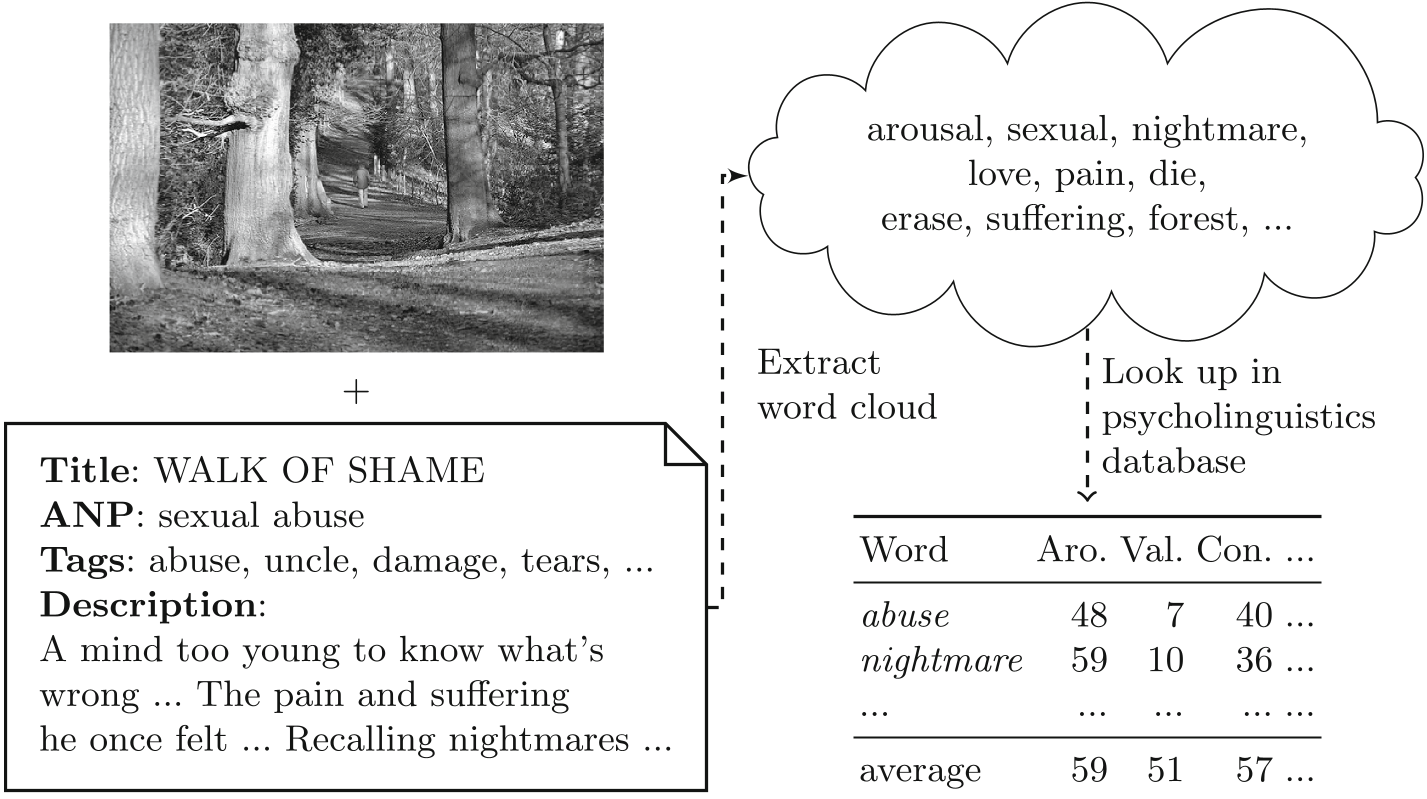 Figure 1: The workflow for calculating individual psycholinguistic ratings from noisy metadata.
2. High-Dimensional Embedding
By combining 21 sentiment scores with these 9 psycholinguistic ratings, the authors create a 30D vector. They then use UMAP (Uniform Manifold Approximation and Projection) to squash this high-dimensional data into a 3D space that humans can navigate.
Interactive Visualization: Seeing the Data
The resulting tool is a dataset browser that feels more like a telescope into human cognition than a standard database.
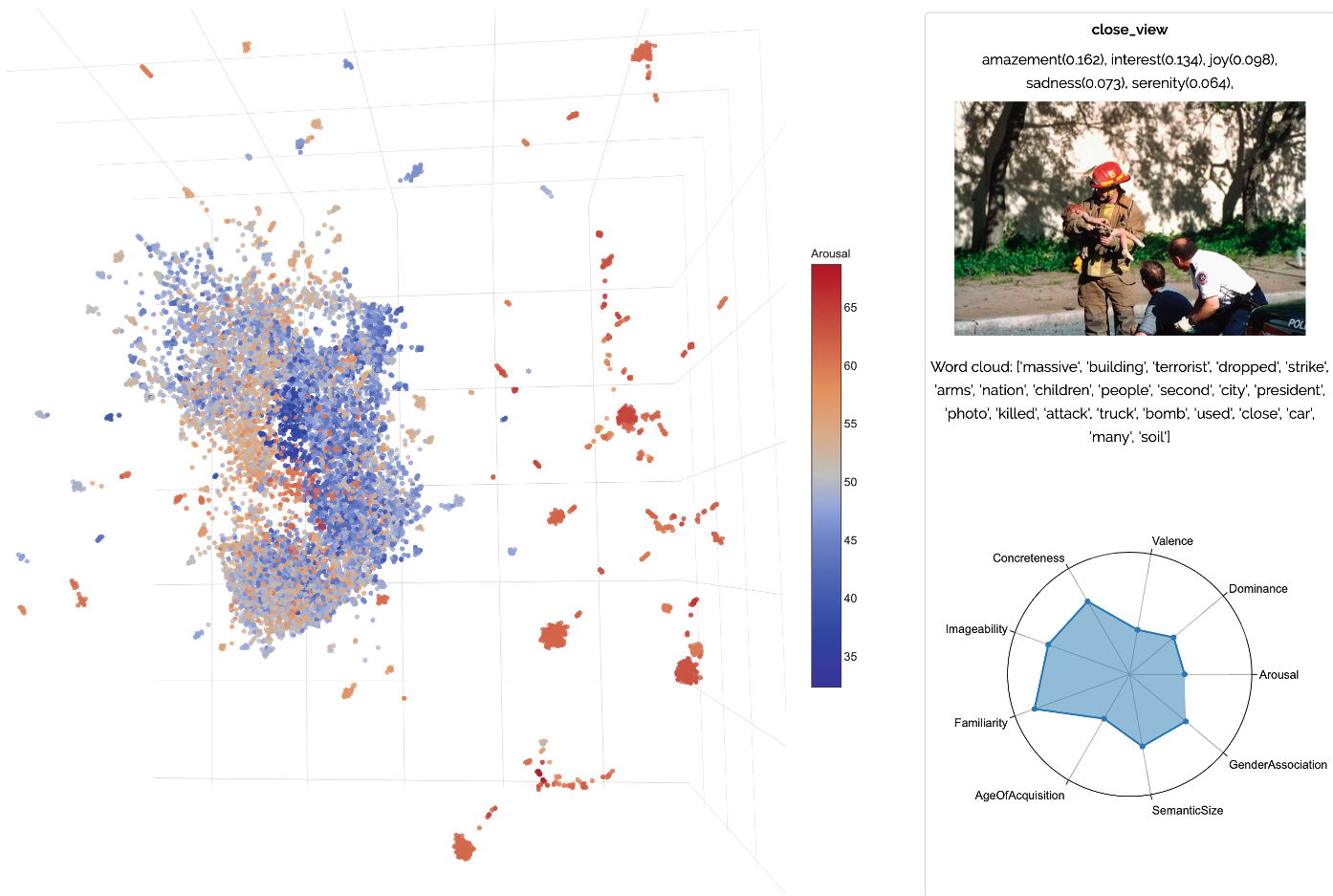 Figure 2: The interactive dataset browser showing the 3D sentiment-psycholinguistic space.
Key Features:
- Heatmap Overlays: Users can see "hotspots" in the data for specific traits like Arousal. This reveals that certain images, even within the same noun category (e.g., "dog"), can vary wildly in their emotional intensity.
- Ontology Filtering: You can filter by nouns or adjectives to see how a concept like "City" drifts across the psycholinguistic landscape when described as "abandoned" vs. "vibrant."
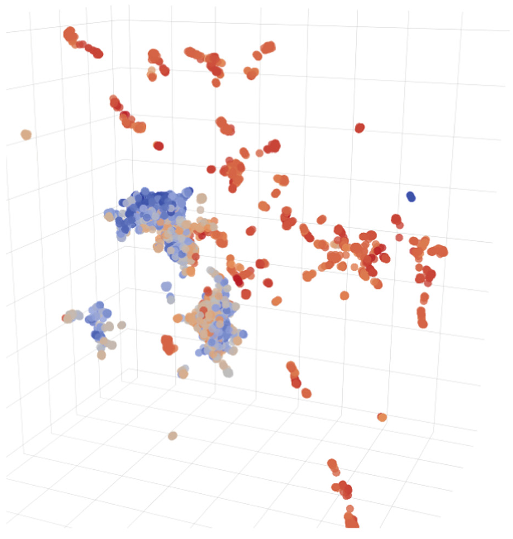 Figure 3: Comparing Arousal heatmaps with traditional ontology-based color coding.
Critical Insight: Why This Matters
The most striking takeaway is that human-provided metadata is a feature, not a bug. While previous researchers might have seen Flickr tags as "noisy," this work shows that the specific words users choose to describe their photos are deeply indicative of their psychological state.
By using this tool, researchers can:
- Identify Dataset Bias: See if a dataset over-represents "concrete" vs "abstract" concepts.
- Refine Categorization: Understand that the emotional impact of a "sunset" is vastly different depending on its "arousal" score.
Future Work & Limitations
The tool currently relies on the existence of textual metadata and the English language (via Glasgow Norms). Future iterations could benefit from zero-shot psycholinguistic estimation directly from image pixels, removing the dependency on tags. Furthermore, comparing the visual characteristics of different psycholinguistic clusters could lead to a "Grammar of Visual Sentiment."
Conclusion
This demonstration provides a vital link between the technical world of Multimedia Retrieval and the human-centric world of Psycholinguistics. It transforms flat datasets into rich, multidimensional landscapes of human experience.