
Bubble Trouble: Why Knowing About Filter Bubbles Isn't Enough to Pop Them
17858_Bubble Trouble Strategies Against Filter Bubbles in Online Social Networks.
This study investigates the awareness and mitigation strategies of Facebook users regarding "filter bubbles." Using an online survey of 149 participants in Germany, the researchers identified that while awareness of algorithmic filtering is high, actual engagement with avoidance strategies remains low.
TL;DR
In an era of hyper-personalized feeds, the "filter bubble"—the algorithmic seclusion of users into ideologically homogenous spaces—is often cited as a threat to democracy. This study by RWTH Aachen University researchers reveals a striking "Awareness-Action Gap": while nearly everyone knows about these bubbles, very few actually do anything to escape them. The secret to resistance? It’s not your personality; it’s your motive.
The Invisible Silo: Motivation and Problem
The core issue of the digital age is Information Overload. Algorithms were designed as the cure, filtering thousands of posts into a manageable stream. However, as Eli Pariser famously argued, this creates a "Filter Bubble" where we only see what we already like.
The authors identify a critical disconnect in prior research: we know algorithms can predict our political leanings, but we don't know if users feel empowered to fight back. Are we passive consumers or active navigators? The study explores the tension between Selective Exposure (choosing what aligns with us) and Algorithmic Curation (the platform choosing for us).
Methodology: Decoding the Resistor
To understand the "Why" and "How" of bubble-bursting, the researchers surveyed 149 participants (primarily young, highly educated Germans) focusing on three dimensions:
- Big Five Personality Traits: Does being "Open" or "Conscientious" make you more likely to resist?
- Usage Motives: Do you use Facebook for friends, work, or political expression?
- Awareness Level: Do you even know the bubble is there?
The Proposed Theoretical Framework
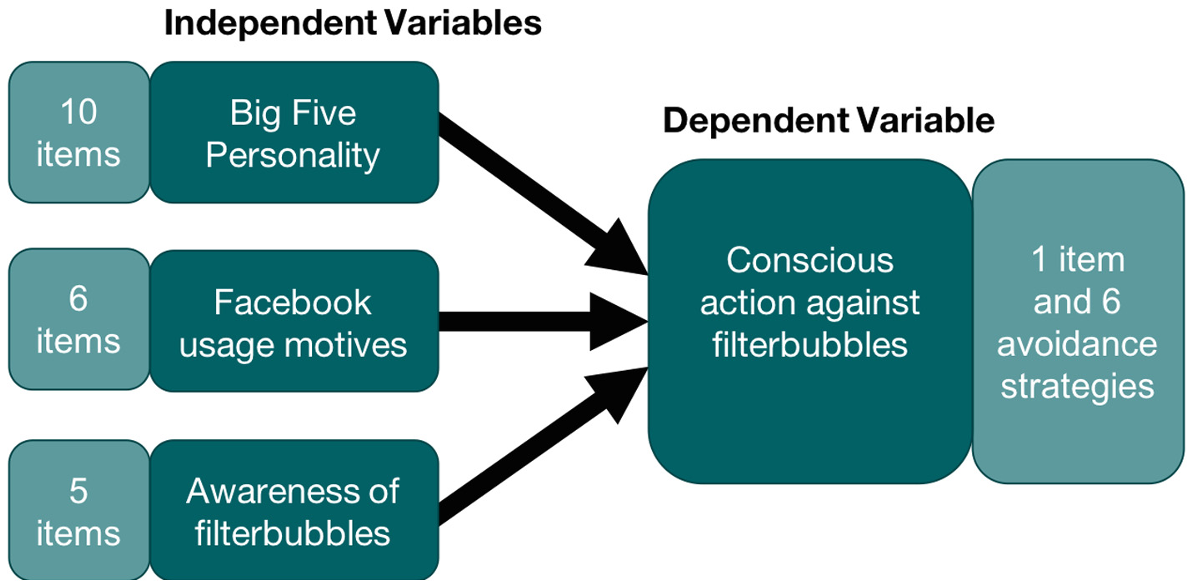 Figure 1: Conceptual model testing the influence of awareness, motives, and personality on active strategies.
Key Findings: The Motive Matters
The results settled a long-standing debate: Your personality (Big Five) has almost zero impact on whether you fight filter bubbles. Whether you are an extrovert or a neurotic, your general tendency to resist algorithms is virtually the same.
Instead, the study found three key predictors for taking active action:
- Prior Awareness: Having heard of the term "Filter Bubble."
- Problem Perception: Believing that these bubbles are a genuine threat to society.
- The "Influencer" Motive: Users who use Facebook specifically to express opinions are significantly more likely to take action. This suggests that those who want their voice to reach across the aisle are the ones most motivated to clear their cookies and diversify their likes.
The Most Popular Strategies
Not all resistance is created equal. The study looked at five specific strategies:
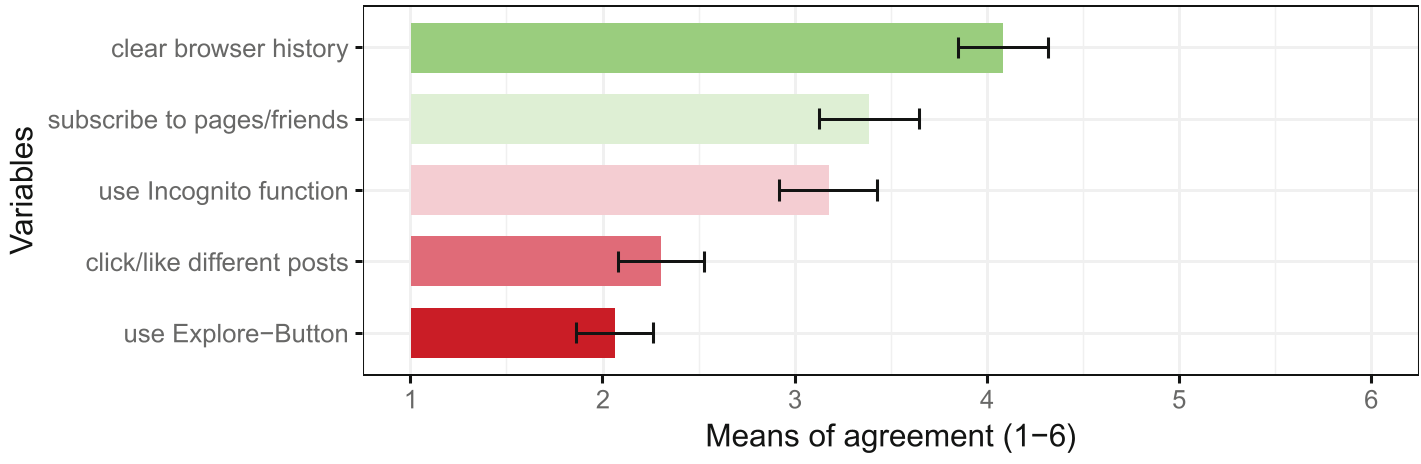 Figure 2: Frequency of used avoidance strategies. Clearing history remains the most common, while proactive "forcing of diversity" via the Explore button is rare.
Depth Insight: The "Opinion Expression" Catalyst
The most interesting finding is the role of Opinion Expression. If you use social media simply to see photos of friends, the "Bubble" is actually a feature—it keeps things pleasant. However, if you view yourself as a participant in democratic discourse, the bubble becomes a cage.
The regression model () indicates that when these three factors align—Awareness, Problem Recognition, and Opinion Expression—users graduate from passive observers to active system-subverters.
Critical Analysis & Conclusion
The Awareness-Action Gap
The study exposes a massive 42% gap: 73% of people know about bubbles, but only 31% take action. This suggests that current "digital literacy" campaigns that focus simply on explaining algorithms are failing. We don't just need to know bubbles exist; we need tools that make bursting them as easy as clicking "Like."
Limitations
The sample was "young and well-educated," which likely overestimates the general population's awareness. Furthermore, "clearing browser history" (the most used strategy) is often done for general privacy or speed, rather than a conscious effort to diversify news feeds.
Takeaway for the Future
To protect democratic stability, we must move beyond awareness. The future of the social web lies in Design-based Solutions:
- Transparency Dashboards: Showing users their "Political Diversity Score" (e.g., the Munson et al. histogram).
- Frictionless Diversity: Making the "Explore" or "Randomize" functions more central to the user experience.
In summary, the "Bubble Trouble" isn't a lack of knowledge—it's a lack of targeted agency. If we want to pop the bubble, we have to give users a reason to want to see the "other side."