
Balancing the Map: Dynamic Incentive Mechanisms in Spatial Crowdsourcing
Budget-Aware Dynamic Incentive Mechanism in Spatial Crowdsourcing
This paper introduces a budget-aware dynamic incentive mechanism for Spatial Crowdsourcing in Worker Selected Tasks (WST) mode. It proposes two novel algorithms, DFBA (Dynamic Fixed Budget Allocation) and DABA (Dynamic Adjusted Budget Allocation), designed to mitigate data imbalance by dynamically adjusting task prices across different locations.
TL;DR
Spatial crowdsourcing often results in data "clustering" around popular areas while remote spots remain ignored. This paper introduces DFBA and DABA, two algorithms that treat task pricing as a dynamic resource allocation problem. By shifting higher rewards to "under-served" locations across different time segments, these methods ensure a more uniform data distribution and higher task completion rates within a fixed budget.
Proximity vs. Quality: The Crowdsourcing Dilemma
In Worker Selected Tasks (WST), workers are autonomous agents. Their behavior is governed by two constraints:
- Proximity: Why travel 10 miles for $5 when I can do a task next door for $4?
- Information Asymmetry: Workers don't know which locations are already saturated with data.
This leads to the "Hot Spot" problem. For a researcher studying PM2.5 levels, 1,000 data points in a city center are less valuable than 100 points distributed evenly across the city. Previous SOTA methods focused on maximizing the total number of tasks but ignored the spatial equilibrium.
Methodology: Levering "Potential" and Price
The core innovation lies in the definition of Potential (). The potential represents how much "work" is left for a specific location .
The Two-Step Solution:
- DFBA (Dynamic Fixed Budget Allocation): The total budget is split into segments. In each segment, locations with higher "Potential" (lower completion) receive a larger slice of that segment's budget, increasing the reward (price leverage) for workers to go there.
- DABA (Dynamic Adjusted Budget Allocation): Improving on DFBA, DABA recognizes that fixed segments are inflexible. It uses a Locally Weighted Linear Regression to predict the future completion rate and dynamically shrinks or expands the budget for the current segment to ensure the task finishes on time.
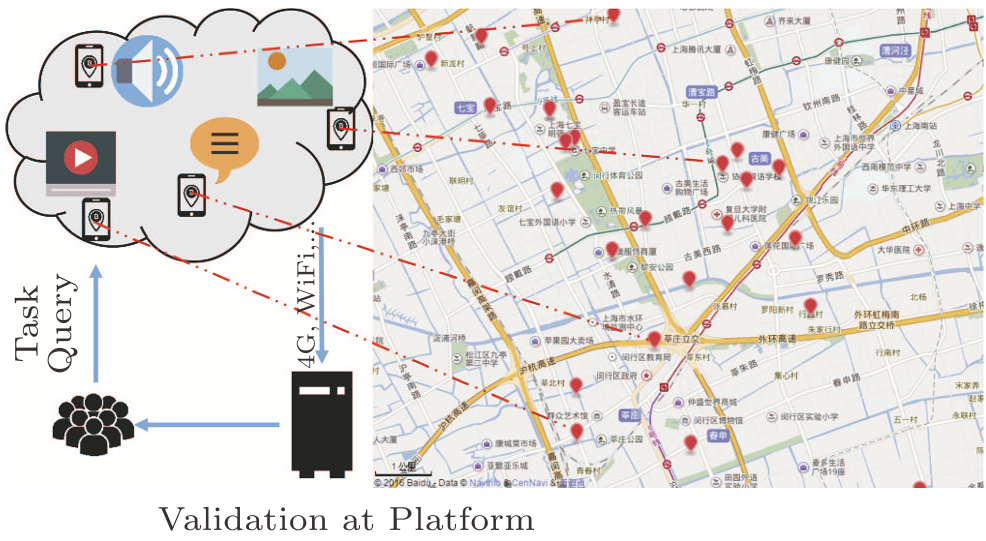 Fig. 1: Illustration of the spatial crowdsensing system where workers choose tasks based on location and reward.
Experiments and Insights
The authors tested their algorithms against a baseline (constant pricing). The metrics were:
- Completion Rate: How many total sensing tasks were done.
- Equilibrium Degree: How evenly distributed the collected data was across all target locations.
Key Findings:
- Remote Sensitivity: Both DFBA and DABA started slower in completion rate because they "saved" budget to incentivize remote locations. However, as time progressed, they achieved much better spatial coverage than the baseline.
- Stability: The parameter (used in potential calculation) showed high robustness, meaning the system doesn't require extreme hyper-parameter tuning to function.
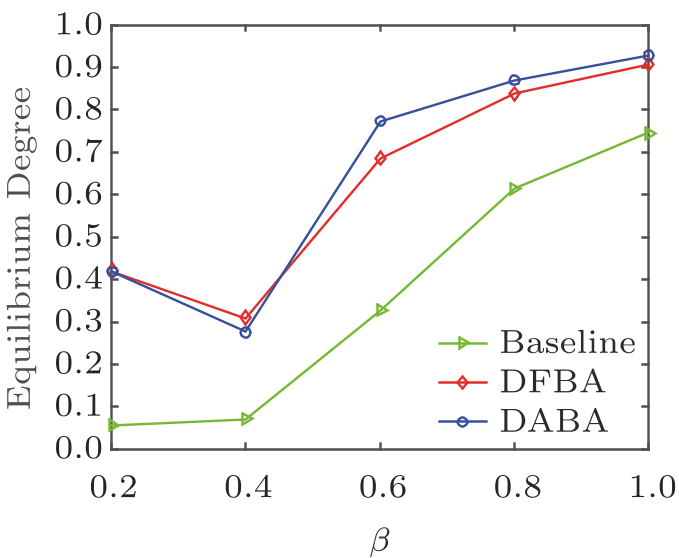 Fig. 2: Impact of different parameters (Confidence, Budget Factor, Workers, Locations) on the system's performance.
State Transitions
The paper categorizes locations into five states (Extreme Shortage to Saturate). In DABA, we see a beautiful migration: locations in "Extreme Shortage" receive the highest budget early on, eventually shifting to "Saturate" or "Sufficient" states, proving the incentive is working.
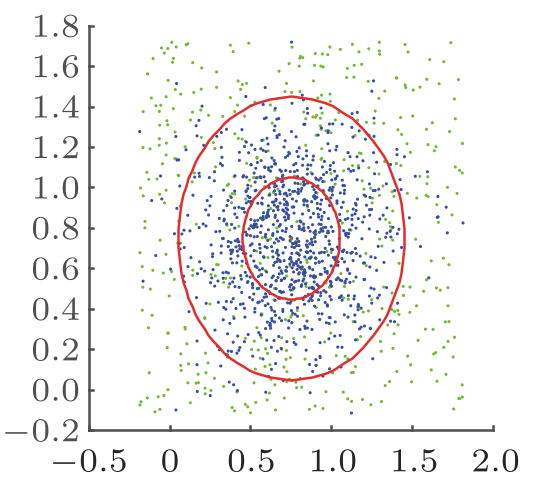 Fig. 3: Completion rates across hot, normal, and remote locations, demonstrating the eventual convergence of data collection.
Conclusion and Academic Outlook
The work by Liu et al. provides a solid mathematical framework for a common real-world problem. By moving from static pricing to dynamic, budget-aware allocation, they solve the spatial imbalance problem without increasing the total cost for the task publisher.
Limitations: The model assumes workers react rationally to price changes instantly. In reality, there might be a "lag" in worker movement. Future Work: Incorporating worker travel cost models and real-time routine prediction could further refine the "Potential" calculation, making the incentives even more surgical.