
The Rise of Semantic Bots: Building Realistic Artificial Identities for Social Engineering
Building Artificial Identities in Social Network Using Semantic Information
The paper introduces a method for creating "Artificial Identities" on social networks by leveraging semantic information and automated life-cycle management. By simulating human-like behaviors such as profile editing, keyword-based content crawling (via Google), and social interaction, these "semantic bots" can evade detection and form groups to scale Sybil attacks.
TL;DR
This paper explores the methodology for creating Artificial Identities that are indistinguishable from real social network users. By integrating semantic information—crawling hot topics, simulating "life" activities, and evolving through trust stages—these bots build "attack edges" that make Sybil attacks significantly more potent and harder to detect.
Background & Motivation: The Identity Crisis in Cyber Security
Current social network defenses are tailored to catch repetitive, disorganized bot behavior. However, the authors argue that an adversary can bypass these defenses by injecting semantic intelligence into automated accounts. The core problem isn't just creating an account; it's making that account believable over time. If a bot looks like a real person with specific hobbies, a consistent posting history, and a growing friend list, it can penetrate private social circles that are otherwise locked down.
Methodology: The Evolutionary Life-Cycle of a Bot
The authors reject the idea of static bots, proposing instead a dynamic "Evolution and Group" framework.
1. Semantic Intelligence
Rather than posting random links, the bot uses a predefined category (e.g., "Tech Enthusiast" in "London"). It utilizes search engines to find trending news related to its keywords and "re-shares" or comments on this content. This ensures the bot's wall stays active with contextually relevant information.
2. Multi-Stage Evolution
The system tracks "Credit Points" to determine the bot's maturity:
- Stage-0: Freshly minted account.
- Stage-1: Active poster (100+ interactions).
- Stage-2: Socially integrated (5+ real friends).
- Stage-3: Fully trusted attacker (30+ real friends).
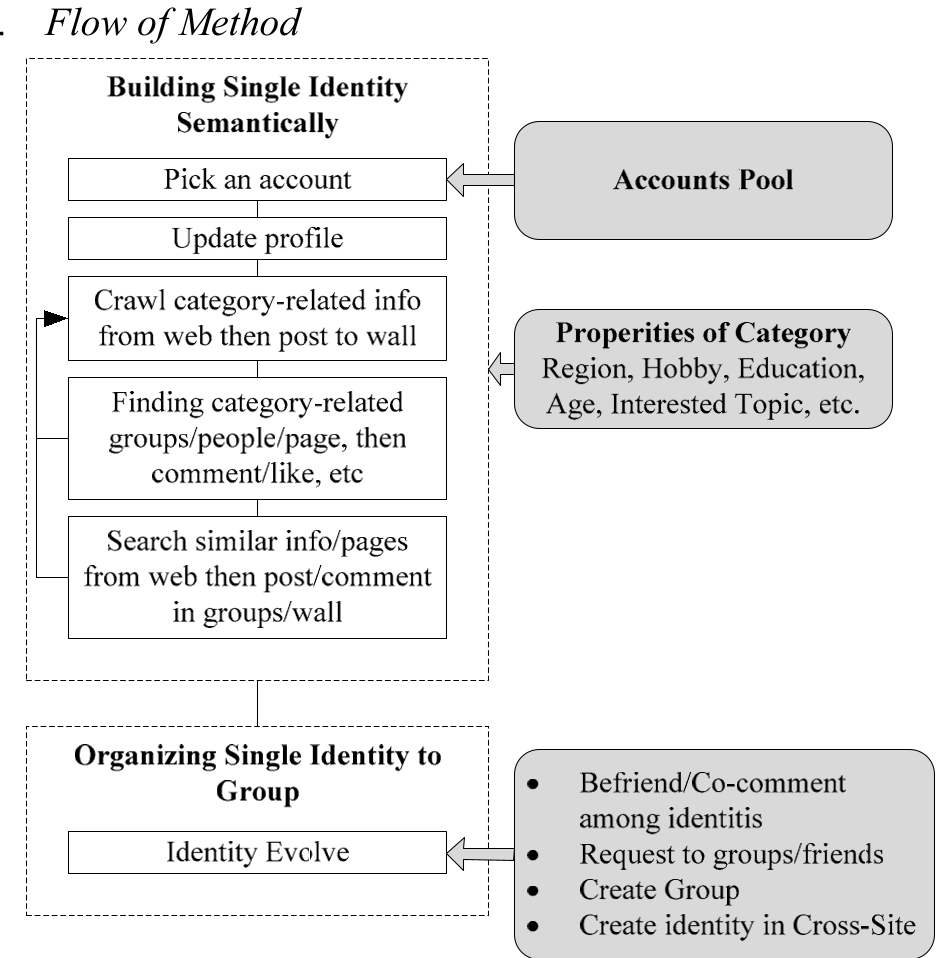 Figure 1: The operational flow shows the closed-loop from keyword analysis to automated "life" simulation.
Scaling the Attack: From Single Bot to Sybil Groups
A single bot is a nuisance; a group is a threat. By organizing identities into sub-groups based on their semantic categories, the authors can maximize attack edges. In the context of the SybilLimit defense, an "attack edge" is a link between a "Sybil node" and a "honest node." By having high-stage bots (Stage-3) act as the vanguard to friend real people, they create a bridge for lower-stage bots to infiltrate the network.
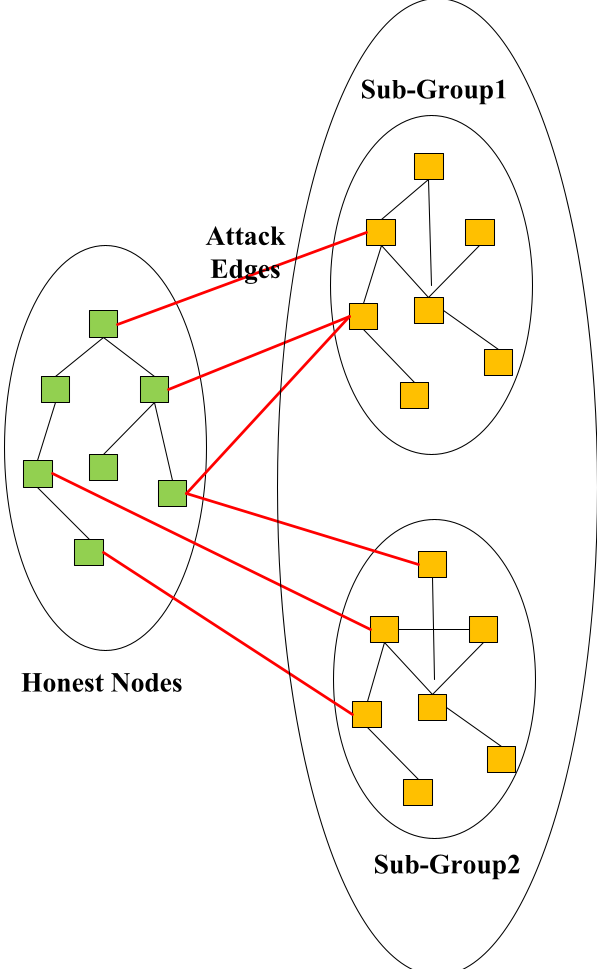 Figure 2: Strategically organizing bots into groups to maximize penetration into the "honest" region of a social graph.
Experimental Results: Bypassing the Giants
The prototype was tested on Facebook using 5 VPS instances across different geographic regions (UK and US) to avoid IP-based clustering.
- Scale: 100 identities.
- Activity: 2,000 posts/comments in 72 hours.
- Success Rate: 0% detection/blocking rate.
By using HtmlUnit to simulate a real browser's behavior (handling cookies, JavaScript, and form redirection) rather than simple API calls, the bots effectively mimicked human browsing patterns.
Critical Analysis & Conclusion
The primary contribution of this work is the formalization of the Semantic Bot—a tool that doesn't just automate actions, but automates personality.
Limitations
- Manual Initialization: The current account pool still requires some manual setup or CAPTCHA breaking.
- Heuristic Parameters: The credit point thresholds (like "5 real friends") are based on human experience rather than a mathematical optimum.
Future Outlook
As AI/ML continues to advance, the "semantic" part of these bots will likely transition from simple keyword clustering to LLM-generated conversations. This paper serves as an early warning for social media platforms: the battle against bots is no longer about detecting "automation," but about verifying "humanity" through complex behavioral and semantic consistency.